
Ægir and Rán form a sea-associated pair in medieval Norse tradition, representing different aspects of the ocean and its dangers.

Comparative mythology
Atlas of Deities & Sacred Figures
Explore historically documented identities, cultural connections, local syncretism, and modern spiritual associations without treating every similar deity as the same figure.
Relationship
Choose a pantheon
Explore the atlas
Choose how you want to investigate
Guided thematic routes
Drag to explore · Scroll or pinch to zoom · Select a figure or connection
Roman Venus became strongly identified with Greek Aphrodite. Venus nevertheless retained Roman titles, civic roles, and ancestral meanings that were not simply duplicates of every Greek cult.
Apollo entered Roman religion under the same name, with Greek cult, myth, and imagery adapted to Roman state and imperial settings.
Roman Mars was identified with Greek Ares, but Mars held broader agricultural, ancestral, and civic importance in Roman religion.
Roman Diana was identified with Greek Artemis, while retaining important Italic sanctuaries and Roman social functions.
The Greek cult of Asclepius was officially introduced at Rome, where the healing god was worshipped as Aesculapius.
Astarte and Aphrodite were connected through eastern Mediterranean contact and local syncretism, especially in places such as Cyprus. This does not make every form of Aphrodite a direct copy of Astarte.
Roman Minerva was closely identified with Greek Athena in art and literature, while serving distinct Roman professional and civic cults.
Anat is called Baal’s sister and acts as his powerful ally, especially in the conflict surrounding Baal, Mot, and the restoration of kingship.
Hadad and Mesopotamian Adad belong to a closely connected West Semitic and Mesopotamian storm-god complex. The atlas preserves their distinct cultural names and cult settings rather than treating them as universally interchangeable.
Baal Hammon and Roman Saturn became connected in North African religious practice, but scholarship cautions against describing this as a simple one-way replacement. Local continuity and Roman-era transformation both matter.
Baal and Mot, the power of Death, are opponents in the Baal Cycle. Their conflict is connected with royal order, death, rain, and seasonal fertility.
Baal battles and defeats Yamm, the Sea, in a mythic struggle that establishes Baal’s royal authority and control over destructive waters.
Roman Saturn was identified with Greek Cronus, but Saturn’s agricultural festival and Roman golden-age traditions developed distinct emphases.
The same medieval Slavic textual tradition identifies Helios with Dazhbog. It records a learned translation strategy rather than demonstrating that Greek and Slavic worshippers shared one ancient cult.
Roman Ceres was closely identified with Greek Demeter through agricultural and mystery traditions while retaining Roman civic roles.
Bacchus was a Roman cult name and form of Dionysus, adapted within Roman festival, artistic, and mystery contexts.
Sumerian Dumuzi and Akkadian Tammuz are historically corresponding forms of the shepherd god associated with death and lament.
El and Athirat form the elder divine pair at the head of the Ugaritic council. Athirat is El’s wife and a motherly figure among the gods.
Sumerian Enki and Akkadian Ea are historically corresponding names and traditions of the same major god of freshwater, wisdom, and magic.
Freyr and Freyja are brother and sister, commonly described as the children of Njord and prominent members of the Vanir.
Asclepius is a son of Apollo; traditions vary concerning his mortal mother.
Demeter is a daughter of Cronus and Rhea.
Hades is a son of Cronus and Rhea.
Hera is a daughter of Cronus and Rhea.
Hestia is a daughter of Cronus and Rhea.
Poseidon is a son of Cronus and Rhea.
Cronus and Rhea form the ruling Titan pair and are parents of the first Olympian generation.
Zeus is a son of Cronus and Rhea.
Persephone is the daughter of Demeter and Zeus.
Gaia is the mother of the Titan Cronus in Hesiod's genealogy.
Gaia is the mother of the Titan Rhea in Hesiod's genealogy.
Hades and Persephone form the royal pair of the underworld; the relationship is not a parent-child link.
Ares is a son of Hera and Zeus.
Hesiod presents Hera as the mother of Hephaestus without union; other traditions name Zeus as his father.
The Homeric Hymn to Pan names Hermes as Pan's father, while other ancient genealogies vary.
Demeter is a daughter of Rhea and Cronus.
Hades is a son of Rhea and Cronus.
Hera is a daughter of Rhea and Cronus.
Hestia is a daughter of Rhea and Cronus.
Poseidon is a son of Rhea and Cronus.
Zeus is a son of Rhea and Cronus.
Apollo is a son of Zeus and Leto.
Ares is a son of Zeus and Hera.
Artemis is a daughter of Zeus and Leto.
Athena is born from Zeus after he swallows Metis; the absent maternal branch is not collapsed into Zeus alone.
Dionysus is commonly presented as a son of Zeus and Semele.
Zeus and Hera are the principal royal pair of the Olympian generation.
Hermes is a son of Zeus and Maia.
Persephone is a daughter of Zeus and Demeter.
Artemis could assimilate local or marginal female divinities including Hecate. The relationship varied by place and title, so it is shown as contextual assimilation rather than a universal identity.
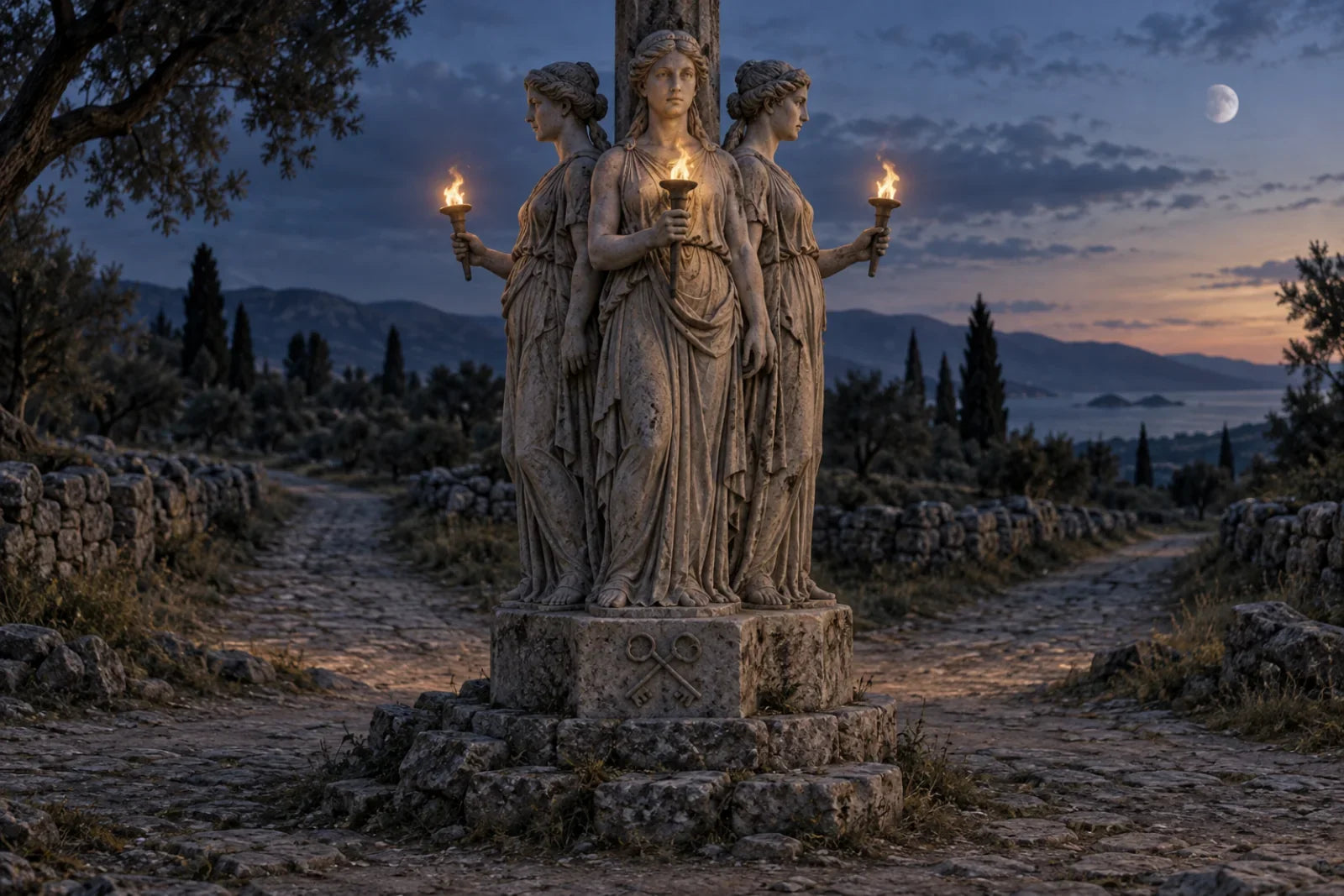
Hecate hears Persephone's cry and approaches Demeter with torches during the search. The relationship is securely literary and helps explain Hecate's associations with torchlight, guidance, and transitions.
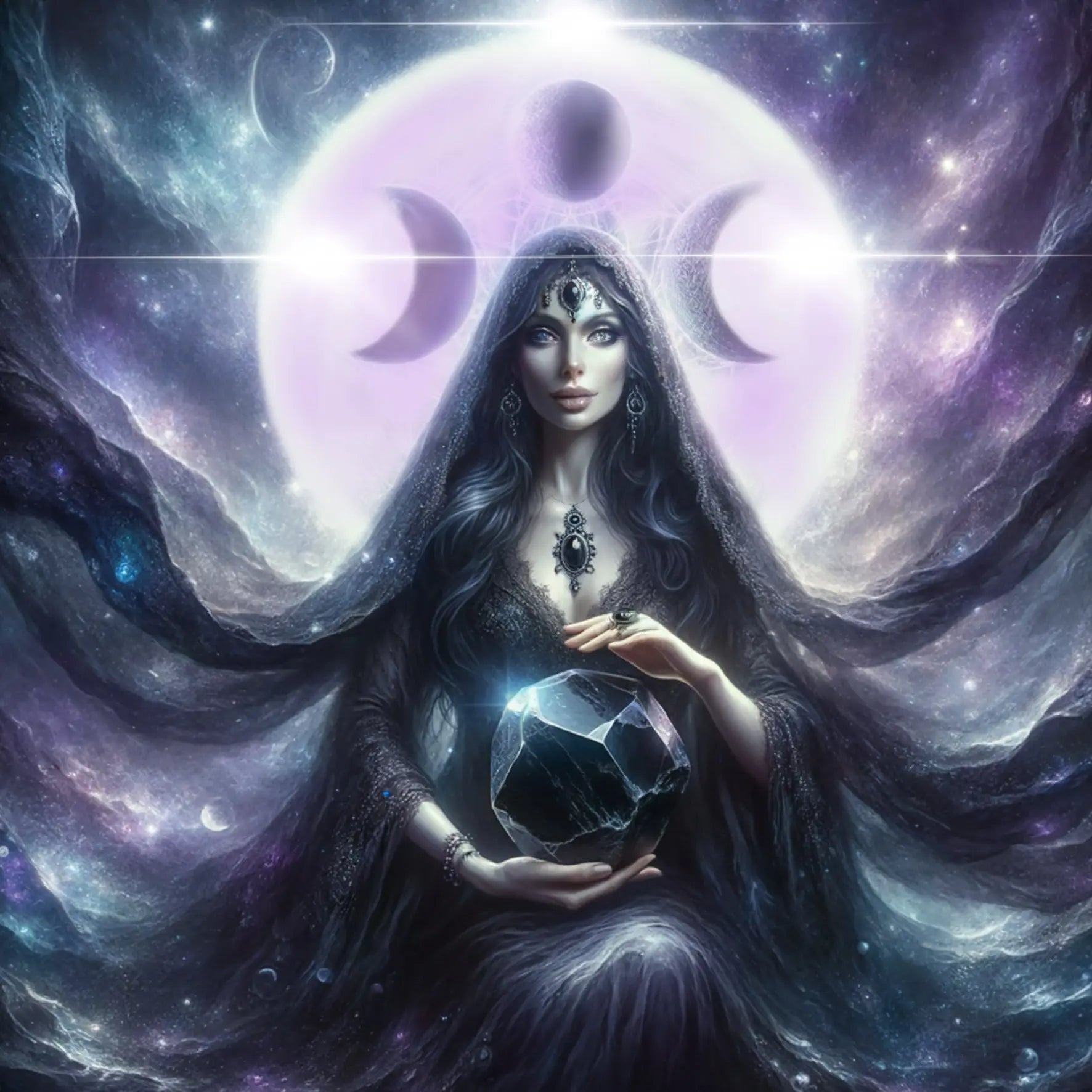
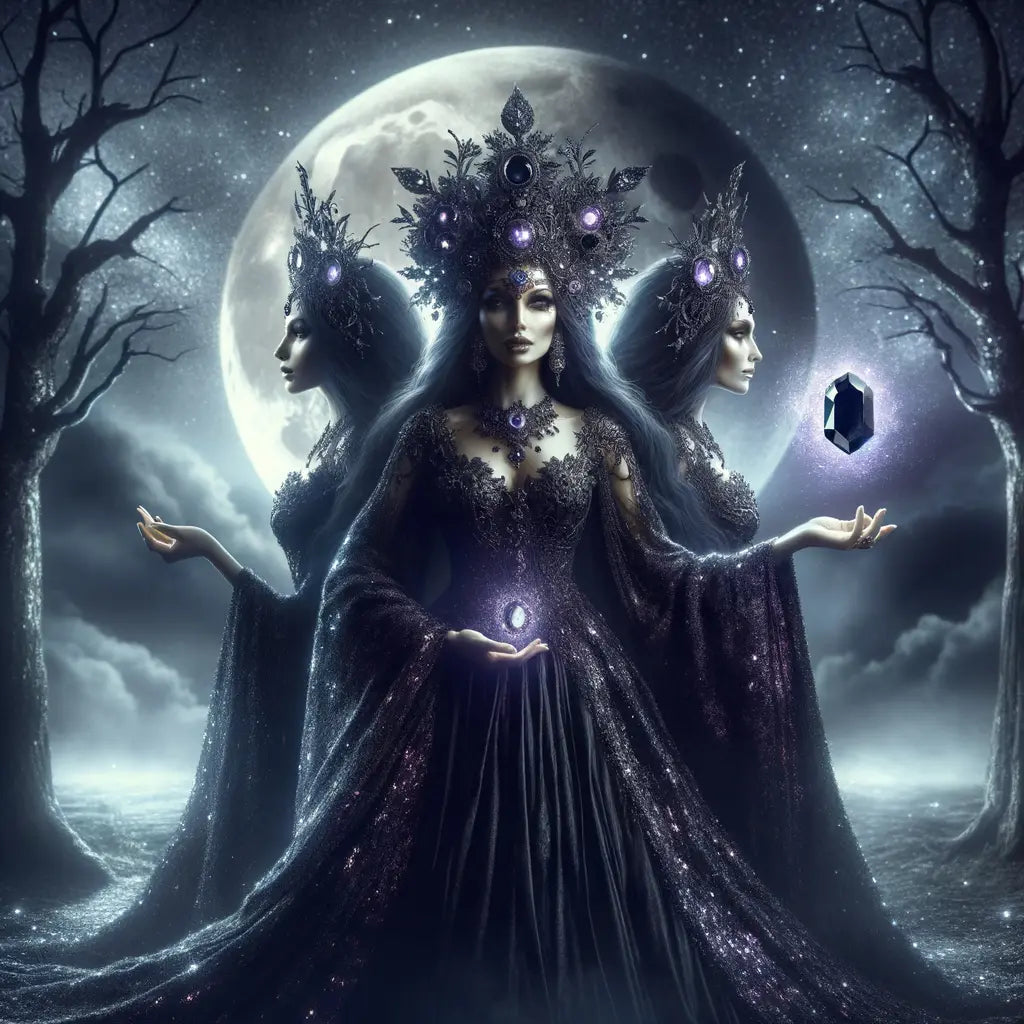
Modern practitioners sometimes connect Hecate’s threefold imagery with the Maiden–Mother–Crone framework and Triple Moon symbol. The familiar framework is modern and should not be presented as one universal ancient doctrine about Hecate.
After Persephone returns, the Homeric Hymn presents Hecate as her attendant and companion. This is a direct ancient literary relationship and should not be reduced to a modern Triple Goddess scheme.
Late antique ritual poetry could combine names and aspects of Hecate, Selene, Artemis, and Persephone into a many-faced lunar divinity. This ritual syncretism does not make their earlier cult histories identical.
Roman authors and worshippers associated Hecate with Trivia, the goddess or title of the three ways. The relationship reflects Hecate’s crossroads character within Roman religious interpretation.
Greek Helios and Roman Sol were frequently identified as sun gods, though their cult histories and later developments were not identical.
Roman Vulcan was identified with Greek Hephaestus, though Roman ritual also emphasized protection from destructive fire.
Roman Juno was identified with Greek Hera, but Juno also held distinct Roman civic, political, and protective roles.
Roman Mercury was identified with Greek Hermes through shared roles in movement, communication, exchange, and commerce.
Roman Vesta was identified with Greek Hestia as a hearth goddess, while Vesta’s state cult and priesthood were distinctively Roman.
Some modern Pagan and Wiccan interpretations connect the Horned God with Pan through horned imagery, wilderness, and vitality. This is a modern spiritual association, not an ancient historical identity.
Sumerian Inanna and Akkadian Ishtar became closely identified within Mesopotamian religion. Their traditions overlap substantially, although names, texts, and local emphases still need historical context.
Sumerian Ishkur and Akkadian Adad are historically corresponding forms of the storm god of rain and thunder.
Ishtar and Astarte belong to connected Near Eastern religious histories and were compared or identified in some later settings. They should not be treated as interchangeable names in every period or region.
Jarilo and Morana can be placed on a seasonal cycle of spring renewal and winter or death. Their pairing is a comparative reading of later folklore, not proof of a single ancient pan-Slavic myth.
Khors and Dazhbog appear together in Volodymyr’s recorded pantheon and have both been interpreted as solar. Their exact functions and relationship remain disputed.
Hel is presented as a child of Loki and ruler of the realm bearing her name. This mythic relationship should not be read through later Christian demonology.
Enlil appears as a son of Anu in important Mesopotamian traditions, although other genealogical systems also existed.
Ishkur is called a son of An in some Sumerian sources; other texts connect the storm god with Enlil.
Marduk is presented as the son of Ea, the Akkadian counterpart of Enki, and Damkina.
Nanshe is presented as a daughter of Enki in the Lagash theological tradition.
Nanna is described as the first-born son of Enlil and Ninlil.
Enlil and Ninlil are a divine pair in the Sumerian composition Enlil and Ninlil.
Ninurta is repeatedly called a son of Enlil; traditions about his mother vary.
Ereshkigal and Nergal become the royal pair of the underworld in the myth Nergal and Ereshkigal.
Inanna and Dumuzi form a prominent divine pair in Sumerian love poetry and descent traditions.
Nabu is the son of Marduk and Sarpanitum in first-millennium Babylonian tradition.
Marduk and Sarpanitum form the principal divine pair of Babylon.
Nabu and Tashmetu are paired in literary and cultic traditions.
Inanna is the daughter of Nanna and Ningal in a major tradition, while other texts name Anu or Enki as her father.
Utu is a child of the moon god Nanna and Ningal in the major Ur genealogy.
Ninlil is the mother of Nanna in Enlil and Ninlil.
Gula could be paired with Ninurta in important cultic settings, although her spouse varied by city and period.
Sarpanitum is the mother of Nabu in the established Babylonian divine family.
Many Wiccan systems place a Goddess and a nature-oriented Horned God in complementary divine relationship, but this model is not universal to modern Paganism.
The Triple Goddess can be understood as a threefold form of a wider Goddess concept; this is a modern theological framework rather than literal descent.
The Crone is one of the three modern aspects of the Maiden–Mother–Crone model; it is not presented as a biological child.
The Maiden is one of the three modern aspects of the Maiden–Mother–Crone model; it is not presented as a biological child.
The Mother is one of the three modern aspects of the Maiden–Mother–Crone model; it is not presented as a biological child.
Sumerian Nanna and Akkadian Sin are corresponding names and traditions of the Mesopotamian moon god.
Freyja is named as a child of Njord and belongs to the Vanir, while also holding distinct roles in love, seiðr, wealth, and the battle-dead.
Freyr is named as a child of Njord and belongs with him to the Vanir gods associated with prosperity and fertility.
Forseti is named as the son of Baldr and Nanna in the Prose Edda.
Bragi and Idunn are named as a married divine pair in the surviving Norse record.
Frigg is explicitly Baldr's mother in the surviving Norse literary record.
Njord and Skadi marry in the surviving myth, although their incompatible homes lead to separation.
Baldr is named as a son of Odin and Frigg in the Prose Edda tradition.
Ullr is identified as Sif's son; the surviving sources do not securely name his father.
Frigg is presented as Odin’s wife and a leading goddess of the Æsir, linking rulership, household authority, and foreknowledge.
Roman writers interpreted a major Germanic god through Mercury, and later evidence supports Odin/Wodan as the principal referent. This Roman translation is historically meaningful but does not make the two gods identical in all traditions.
In Hárbarðsljóð, Thor identifies himself as Odin's son. The atlas presents this as mythic genealogy preserved in medieval Norse literature, distinct from the cross-cultural comparison between Thor and Perun.
Scholars often reconstruct Perun and Veles as opposing powers connected with sky and thunder versus livestock, wealth, and the lower realm. The atlas marks this as reconstruction, not a directly preserved myth.
Roman Neptune became identified with Greek Poseidon, especially in maritime imagery and mythology, while retaining Roman cult contexts.
Phoenician inscriptions from Cyprus identify Resheph with Apollo in a local multilingual setting. This is evidence of situated syncretism, not proof that every form of Resheph and Apollo was identical.
Rod and the Rozhanitsy are repeatedly associated in sources concerning birth, kinship, fate, and commemorative offerings; their precise status remains debated.
Aesculapius is the Roman cult form of Asclepius and retains Apollo as his divine father.
Juno is the mother of Mars in the familiar Roman literary genealogy.
Vulcan is connected to Juno through the Roman adaptation of Hephaestus traditions; accounts of his parentage vary.
Roman Apollo retains the Greek genealogy that makes him a son of Jupiter and Latona.
Bacchus receives the genealogy of Dionysus as a son of Jupiter and Semele in Roman literature.
Diana absorbed the genealogy of Artemis as a daughter of Jupiter and Latona, while retaining an independent Italic origin.
Jupiter and Juno form the royal pair of familiar Roman literature, a relationship strongly shaped by identification with Zeus and Hera.
Mars is presented as a son of Jupiter and Juno in the familiar Roman literary genealogy.
Mercury receives the genealogy of Hermes as a son of Jupiter and Maia in Roman mythography.
Minerva receives the genealogy of Athena as a daughter of Jupiter in Hellenized Roman mythography.
Bellona is frequently presented as the sister of Mars and shares his martial sphere.
Ceres is included among the children of Saturn in Roman mythographic genealogy.
Juno is presented as a daughter of Saturn in the Hellenized Roman divine genealogy.
Roman authors inherited the genealogy in which Saturn is the father of Jupiter.
Neptune is included among the children of Saturn in Roman mythographic genealogy.
Vesta is included among the children of Saturn in Roman mythographic genealogy.
Greek Selene and Roman Luna were identified as personifications of the moon while participating in different local cult networks.
Svarozic literally suggests a son or descendant of Svarog, but scholars debate whether Svarozic was a separate figure or another form of Dazhbog.
A medieval Slavic translation of John Malalas presents Dazhbog as the son of Svarog. The passage is important evidence but does not define every regional Slavic tradition.
A Slavic translation and gloss of John Malalas identifies Hephaestus with Svarog. This is a medieval learned equivalence and should not be projected backward as proof of an ancient shared cult.
Svarozic can be interpreted as a patronymic meaning a descendant or son of Svarog, but sources and scholarly reconstructions do not support one uncontested relationship.
Tanit and Baal Hammon were frequently invoked together in Punic religious contexts. Their precise roles and relationship varied over time.
Thor and Perun can be compared as thunder-associated divine protectors with prominent weapons. The connection is a scholarly comparison of functions and motifs, not evidence of a shared cult or direct historical identity.
Sif is presented as Thor’s wife. Stories about her golden hair connect their household to the making of several divine treasures.
The Crone is one of the three aspects in the modern Maiden–Mother–Crone expression of the Triple Goddess.
The Maiden is one of the three aspects in the modern Maiden–Mother–Crone expression of the Triple Goddess.
The Mother is one of the three aspects in the modern Maiden–Mother–Crone expression of the Triple Goddess.
Sumerian Utu and Akkadian Shamash are historically corresponding forms of the sun god associated with justice and divination.
Baal Hammon and Tanit form a principal divine pair in the Punic religious sphere.
Baal bears the title son of Dagon in Ugaritic texts, while his broader relation to El's divine family remains complex.
Anat belongs to the generation of the divine children around El and Athirat; Ugaritic kinship language can be both genealogical and hierarchical.
Mot belongs to El's divine household and is addressed as a divine son in the Ugaritic mythic system.
Shapash is placed within the generation of El's divine children in Ugaritic tradition.
Yamm is addressed within El's divine household and is commonly treated as one of El's divine sons.
Melqart and Astarte could be paired in Phoenician royal and civic cult contexts; this was not universal across all cities.
Many Wiccan traditions use a complementary Goddess and Horned God framework, but modern Pagan theology is diverse and not all practitioners share this model.
Roman Jupiter was strongly identified with Greek Zeus, while Roman civic titles and cult practices remained historically specific.

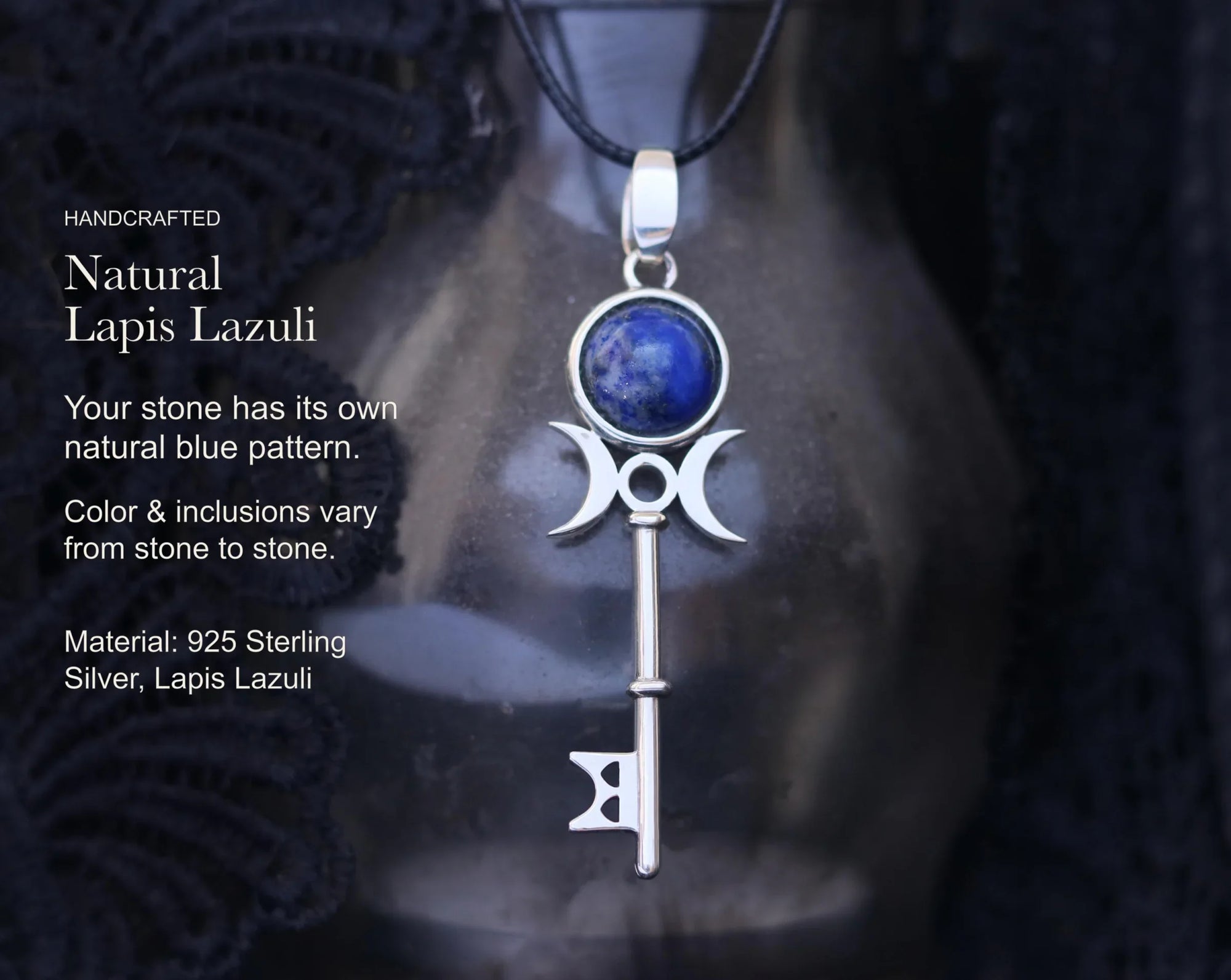
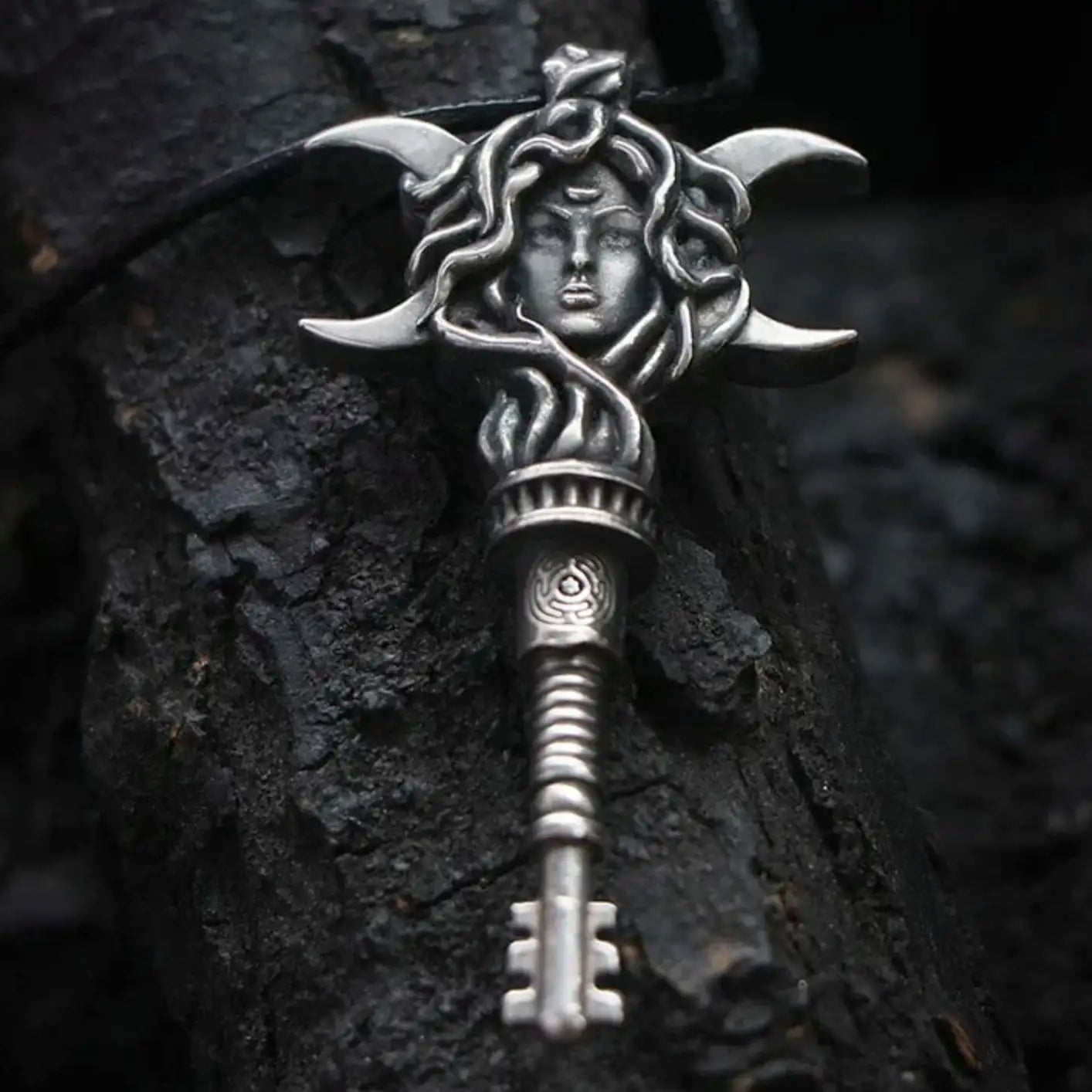
Hecate Necklace Meaning: Keys, Torches, Wheels, and Modern Devotion

Does Hecate Like Black Obsidian? History and Modern Practice