
Reviewed and updated Jul 27, 2026
An evidence-led guide to Osiris, regenerated ruler among the dead, model of justified kingship, and one of ancient Egypt’s most enduring gods.
Open the interactive Atlas of Deities, select Osiris, and explore pantheon, family-tree, timeline, and relationship views. The atlas node links back to this guide.
Osiris at a glance
- Ruler and judge among the dead: an attested or carefully qualified part of the deity’s historical profile.
- Regeneration and renewed life: an attested or carefully qualified part of the deity’s historical profile.
- Legitimate kingship: an attested or carefully qualified part of the deity’s historical profile.
- Fertile Nile and cultivated land: an attested or carefully qualified part of the deity’s historical profile.
- Funerary transformation: an attested or carefully qualified part of the deity’s historical profile.
Who is Osiris?
Osiris is the regenerated king and ruler among the dead. Deceased people could be identified with Osiris in funerary texts, expressing the hope that death would lead to vindication and renewed existence rather than simple disappearance.
The Osiris myth
Seth kills Osiris; Isis and allies recover and restore him; Horus becomes his heir and contests kingship. The full popular narrative is reconstructed from sources of different dates, including funerary texts, hymns, ritual scenes, and later authors.
Osiris and judgment
In funerary tradition Osiris presides over the tribunal of the dead. The weighing of the heart belongs to a wider process involving Ma’at, Anubis, Thoth, and other deities. Osiris is the enthroned ruler rather than the embalmer.
Regeneration and agriculture
Black and green colors, grain imagery, and ritual beds connect Osiris with fertility and renewed life. This is regeneration through death, not a simple modern resurrection analogy.
Abydos and worship
Abydos became one of the most important centers of Osiris worship. Festivals, processions, memorial monuments, and pilgrimage connected individuals with the god’s myth and sacred landscape.
Osiris and other funerary gods
Anubis protects embalming and transition; Osiris rules and judges among the dead. Isis restores and protects; Horus establishes succession. Their roles overlap without becoming interchangeable.
Osiris symbols
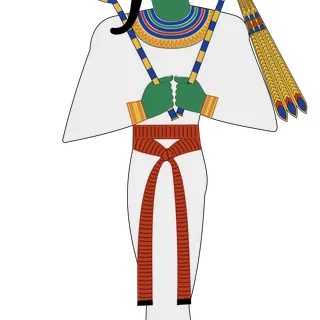
These symbols come from texts, cult titles, art, ritual objects, or later reception. Their evidence is not equal, and no attribute should be identified without context.
- djed pillar
- Atef crown
- crook and flail
- wrapped royal body
- green or black skin
- grain and germination
Related guides in this cluster
- The Myth of Osiris: Isis, Seth, Horus, Death, and Regeneration
- Osiris Symbols: Djed Pillar, Atef Crown, Crook, and Flail
- Osiris vs Anubis: What Is the Difference Between the Gods of the Dead?
Related symbols and products
No product is presented here as an ancient sacred object merely because it shares a color, stone, or aesthetic. Related workshop items will be added only when the symbolic connection is explicit and responsibly labelled.
Frequently asked questions
What is Osiris the god of?
Osiris is ruler and judge among the dead and is associated with regeneration, legitimate kingship, fertility, and renewed existence.
Who killed Osiris?
Egyptian traditions identify Seth as the killer, while the details and sequence vary across sources.
What is the djed pillar?
The djed signifies stability and became closely associated with the backbone and restored power of Osiris.
Are Osiris and Anubis the same?
No. Anubis is strongly linked with embalming and protection; Osiris is the regenerated king and ruler among the dead.
Sources and further reading
Last reviewed: July 27, 2026. Ancient evidence, scholarly interpretation, and modern Pagan practice are distinguished throughout.
How Osiris became central to the Egyptian afterlife
Osiris is securely attested by the late Old Kingdom, but his origins remain debated. At Abydos he became closely identified with the earlier local god Khentiamentiu, “Foremost of the Westerners.” The west, where the sun set and many cemeteries lay, was a direction of the dead. This local connection helped Abydos grow into one of Egypt’s most important pilgrimage centers.
Early royal funerary texts focus on the king’s transformation and divine company. Across later periods, Osirian hopes became available more broadly to non-royal people who could afford funerary preparation. Scholars sometimes call this a “democratization of the afterlife,” though the process was gradual and still shaped by status, resources and local practice.
The Osiris myth is a library, not one original story
Egyptian sources often allude to the death and restoration of Osiris rather than narrating every event. Pyramid Texts, Coffin Texts, temple inscriptions, hymns and ritual scenes preserve different pieces. Plutarch’s On Isis and Osiris gives the most continuous surviving account, but it was written in Greek under Roman rule and must not be projected uncritically back into the Old Kingdom.
The familiar sequence - Seth kills Osiris, Isis and Nephthys mourn and restore him, Horus contests the kingship, and Osiris rules the dead - is a responsible synthesis when the gaps and changing sources remain visible. See The Myth of Osiris for that source history.
Judgment, justification, and the realm of the dead
Osiris presides over the judgment of the deceased in famous New Kingdom scenes. The heart is weighed against the feather of Ma’at while Anubis, Thoth and other divine figures perform distinct roles. The aim is not simply punishment but becoming maa-kheru, “true of voice” or justified, and entering a renewed form of existence.
The Egyptian afterlife was not one unchanging map. Texts describe sky, underworld, field, solar journey and Osirian transformation in overlapping ways. Ra and Osiris can be united in nightly regeneration without becoming one permanently identical god.
Abydos festivals and ritual remembrance
Festival processions at Abydos dramatized Osiris’s triumph and drew pilgrims who left stelae and chapels near the sacred route. Ritual mourning by Isis and Nephthys, the raising of the djed pillar and the planting of “Osiris beds” connected death with stability, germination and renewed life. Grain imagery should not be reduced to the modern phrase “vegetation god,” but agricultural regeneration was genuinely part of his symbolism.
Why green skin, mummy form, crook, flail, and djed matter
Green or black skin can signify fertile soil, vegetation and regeneration. The wrapped body expresses successful preservation rather than lifeless decay. The crook, flail and Atef crown locate Osiris within kingship, while the djed pillar evokes stability and was closely joined to his backbone in later interpretation. Read Osiris Symbols for the visual evidence.
Continue the learning path