
Reviewed and updated Jul 27, 2026
Follow Cernunnos from named ancient images and antlered figures into the living Horned God traditions that meet him in forest, animal life, prosperity, and renewal.
Open the interactive Atlas of Deities, select Cernunnos, and explore pantheon, family-tree, timeline, and relationship views. The atlas node links back to this guide.
Cernunnos at a glance
- Antlered divine imagery: an attested or carefully qualified part of the deity’s historical profile.
- Animals and wild abundance: an attested or carefully qualified part of the deity’s historical profile.
- Torcs and status: an attested or carefully qualified part of the deity’s historical profile.
- Wealth and exchange: an attested or carefully qualified part of the deity’s historical profile.
- Modern nature-centered devotion: an attested or carefully qualified part of the deity’s historical profile.
Who is Cernunnos?
Cernunnos is the conventional name for an antlered deity known from limited inscriptions and a wider body of horned or antlered imagery. The Pillar of the Boatmen from Roman Paris preserves a form of the name beside an antlered figure.
The problem of limited evidence
No surviving ancient narrative gives Cernunnos a complete genealogy, list of myths, or universal domain. Scholars compare images and inscriptions across regions, but resemblance is not the same as a name label.
Gundestrup Cauldron
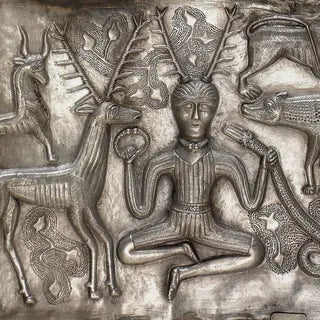
A famous panel shows an antlered figure holding a torc and ram-horned serpent among animals. The object was found in Denmark and reflects complex artistic contacts. The figure is often called Cernunnos, but the cauldron itself does not inscribe that name.
Symbols and possible meanings
Antlers can evoke animals, power, renewal, and the wild; the torc can express status and sacred wealth; animals and coin-like objects may suggest abundance or exchange. These remain contextual interpretations, not a decoded universal creed.
Cernunnos and the Celtic world
The word Celtic covers many peoples, languages, regions, and periods. A Gaulish or Romano-Celtic image can remain rooted in its Gaulish and Romano-Celtic landscape while speaking powerfully to Pagans elsewhere.
Modern Pagan meaning
Modern practitioners often approach Cernunnos through forests, wildlife, embodied life, prosperity, death and renewal, or masculine divinity. This layered history allows modern devotion to flourish without manufacturing ancient certainty.
Cernunnos symbols
These symbols come from texts, cult titles, art, ritual objects, or later reception. Their evidence is not equal, and no attribute should be identified without context.
- antlers or horns
- torc
- ram-horned serpent
- stag and other animals
- cross-legged seated posture
- coins or grain-like objects
Related guides in this cluster
- Who Is Cernunnos? Ancient Inscriptions, Images, and What We Know
- Cernunnos Symbols: Antlers, Torc, Serpent, Animals, and Meaning
- Cernunnos vs the Horned God and Pan: Important Differences
Related symbols and products
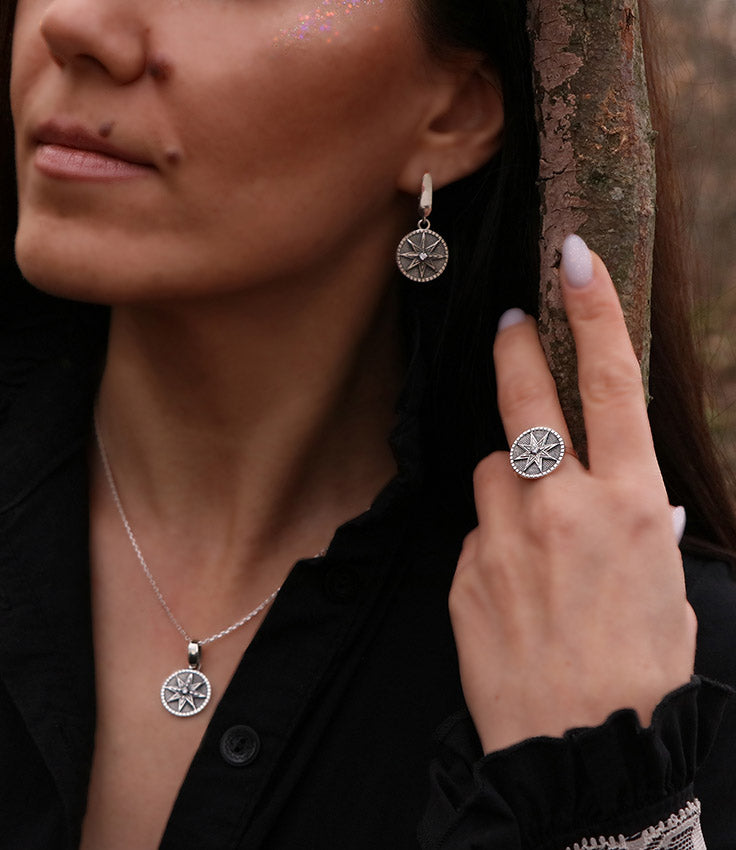
The workshop currently carries a Cernunnos altar image. It is a modern devotional artwork, not an archaeological reproduction.
Frequently asked questions
What is Cernunnos the god of?
Ancient evidence does not preserve one definitive domain. Animals, antlers, torcs, wealth, abundance, and wild nature are common interpretations.
Is Cernunnos the Horned God?
Modern Pagans often connect them, but the Wiccan Horned God is a modern religious figure and can be approached as a living religious relationship alongside the ancient images.
Is Cernunnos a Celtic god?
The name and related imagery belong to Gaulish and Romano-Celtic contexts, but there was no single uniform Celtic pantheon.
What are Cernunnos’s symbols?
Antlers, a torc, animals, and a ram-horned serpent are the most recognizable elements of horned-god imagery associated with him.
Sources and further reading
- British Museum - Torcs and Gundestrup imagery
- British Museum - Who were the Celts?
- Musée de Cluny - Pillar of the Boatmen
Last reviewed: July 27, 2026. Ancient evidence, scholarly interpretation, and modern Pagan practice are distinguished throughout.
What evidence for Cernunnos actually survives?
The name Cernunnos appears only a small number of times, and several inscriptions are damaged or uncertain. The clearest famous example is the Pillar of the Boatmen from Roman Paris, where a horned figure is labelled Cernunnos. This gives scholars a name and image together, but it does not provide a narrative biography, genealogy or list of universal powers.
The name is usually connected with a Celtic word for “horn,” also seen in names and terms across Celtic languages. Even this etymology does not tell us whether every antlered figure was Cernunnos or whether communities used the name in the same way.
The Gundestrup Cauldron and other horned figures
The antlered figure on the Gundestrup Cauldron holds a torc and a ram-horned serpent and is surrounded by animals. It is frequently called Cernunnos, but the object was found in Denmark, made with mixed artistic influences, and carries no identifying inscription. “Cernunnos-like” or “commonly identified as Cernunnos” is more accurate than certainty.
Other relevant images include a seated horned god from Reims with a bag or stream of abundance near a bull and stag, and rock art or reliefs from different regions. Shared antlers, torcs or animals invite comparison, but regional gods and unnamed divine figures should not automatically be collapsed into one pan-Celtic deity.
Cernunnos in Roman Gaul
Most evidence comes from the religious world often called Gallo-Roman: Celtic-speaking communities living within the Roman Empire, using Latin inscriptions and combining local and imperial artistic forms. This was not a pure timeless “Celtic religion” untouched by contact. Religious identity could be local, bilingual and adaptive.
Unlike Mercury, Mars or Apollo, Cernunnos is not securely paired with one Roman god through a standard interpretatio. That absence may reflect a local function without an obvious Roman equivalent or simply the accidents of survival.
Animals, prosperity, exchange, and the limits of interpretation
Antlers and surrounding beasts support connections with animal life and wild landscapes. Torcs can signify status, sacred value and exchange. Coins, grain or overflowing bags in some images suggest prosperity. The serpent may link earth, renewal, danger or abundance, but no ancient text supplies one official explanation.
It is reasonable to discuss Cernunnos through animals, wealth, liminality and fertility if each claim is tied to evidence. It is not responsible to invent a detailed spouse, festival date, sacred crystal and personality profile as though they were recorded facts.
Cernunnos and the modern Horned God
Modern Wicca and related Pagan traditions often understand a Horned God as consort of the Goddess, ruler of forest and animals, or figure of seasonal death and rebirth. Cernunnos can be honored within that theology, but the modern Horned God is a new synthesis shaped by folklore, ceremonial magic, Romanticism and twentieth-century Paganism.
Separating the ancient evidence from living practice does not diminish modern devotion. It lets a practitioner say clearly: “this image is ancient,” “this interpretation is scholarly,” and “this ritual meaning is part of my contemporary tradition.” For a focused comparison, read Cernunnos vs the Horned God and Pan.
Continue the learning path
Explore supporting guides


From the workshop