

Reviewed and updated Jul 27, 2026
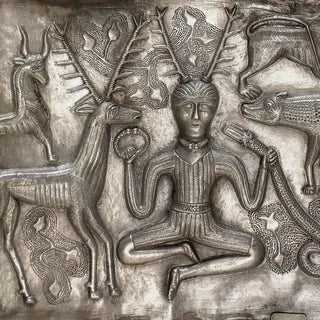
Cernunnos is an antlered deity named in a small number of inscriptions. Most additional claims come from comparing unnamed horned figures, animals, torcs, and regional religious imagery.
This guide belongs to the Cernunnos pillar. You can also select Cernunnos in the interactive Atlas of Deities to view documented relationships.
Quick answer
A source-first answer to who Cernunnos was and why the evidence is narrower than many modern biographies suggest.
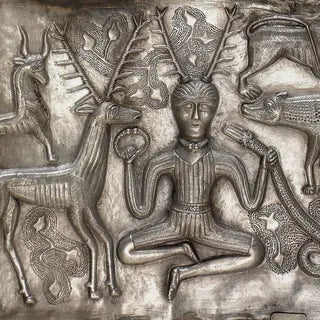
Pillar of the Boatmen
The Paris monument provides the most famous named image: an antlered figure appears with the inscription Cernunnos or a closely related form.
Other inscriptions
A few damaged or regional inscriptions may preserve related names. Their small number makes certainty about a continent-wide cult impossible.
Unnamed horned figures
Horned and antlered gods appear on several objects. Scholars compare them with the named Paris figure, but each image must retain its own provenance.
What can be said responsibly
Cernunnos is securely connected with antlered divine imagery. Domains such as wildlife, prosperity, liminality, and renewal are interpretations of patterns, not surviving doctrine.
Ancient evidence and modern interpretation
Modern spiritual, psychological, and artistic readings can be meaningful. They are labelled separately here so that contemporary practice does not become a fabricated ancient quotation or universal historical rule.
Frequently asked questions
Where is Cernunnos named?
The Pillar of the Boatmen from Roman Paris preserves the best-known inscribed form of his name.
Do we have myths about Cernunnos?
No complete ancient mythological narrative securely names Cernunnos.
Continue exploring
Sources and further reading
- British Museum - Torcs and Gundestrup imagery
- British Museum - Who were the Celts?
- Musée de Cluny - Pillar of the Boatmen
Last reviewed: July 27, 2026.