


Reviewed and updated Jul 27, 2026
Osiris is the regenerated king and ruler among the dead. Anubis protects embalming, cemeteries, the body, and the transition into judgment. Both are funerary gods, but their roles are distinct.
This guide belongs to the Osiris pillar. You can also select Osiris in the interactive Atlas of Deities to view documented relationships.
Quick answer
A concise comparison that clarifies why Osiris and Anubis share funerary space without being the same god.
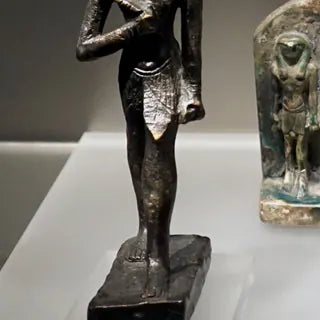
Osiris as ruler
Osiris sits enthroned in the tribunal and represents justified, regenerated existence after death.
Anubis as protector and embalmer
Anubis guards the body, oversees embalming, and participates in the weighing of the heart.
Overlapping histories
Anubis held major funerary authority early and later appears within an Osirian system. Religious change added relationships rather than deleting the older god.
How to identify them
Osiris is a wrapped crowned king with crook and flail; Anubis appears as a black canid or canid-headed man.
Ancient evidence and modern interpretation
Modern spiritual, psychological, and artistic readings can be meaningful. They are labelled separately here so that contemporary practice does not become a fabricated ancient quotation or universal historical rule.
Frequently asked questions
Who weighs the heart, Anubis or Osiris?
Anubis conducts the weighing, Thoth records it, and Osiris presides over the tribunal among other divine participants.
Is Anubis Osiris’s son?
Some later traditions make Anubis the son of Osiris and Nephthys, but Egyptian genealogies vary by period and place.
Continue exploring
Sources and further reading
Last reviewed: July 27, 2026.