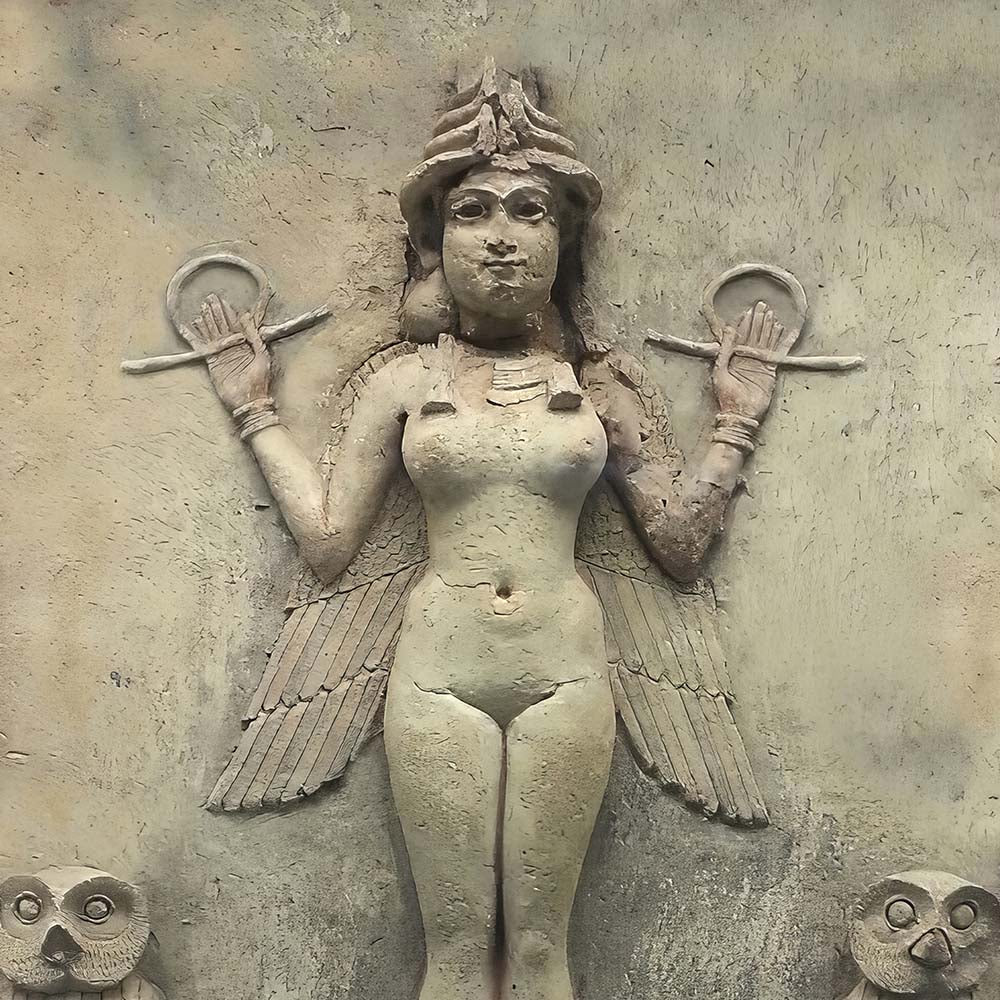
Hecate's epithets are titles that identify a place, power, relationship, or form of approach. Enodia evokes the road, Propylaia the gateway, Kleidouchos the key-bearing guardian, Phosphoros the bringer of light, and Trivia the later Latin image of three-way places. An epithet is not merely a poetic nickname: it helps us understand how worshippers encountered the goddess in different settings.
At a glance
- Greek deities could have many epithets, varying by city, sanctuary, poem, and ritual.
- An epithet can describe location, function, genealogy, cult, or literary character.
- Hecate's road, threshold, key, torch, and underworld aspects overlap but are not identical.

How divine epithets work
Ancient Greek religion did not require one exhaustive biography for a god. A deity could be approached under titles tied to a sanctuary, civic role, festival, myth, or immediate need. The title does not always create a separate deity; neither should every local form be flattened into one generic personality.
Enodia - of the road
Enodia means “of the road” or “in the road.” Enodia also appears as a Thessalian goddess with whom Hecate became closely associated. The title connects divine presence with routes, movement, boundaries, and places where travelers leave one ordered space for another.
Modern readings often focus on life choices. That can be meaningful, but the historical road also involved travel, civic territory, danger, procession, and access.
Propylaia - before the gate
Propylaia places Hecate before a gate or entrance. Images of Hecate could stand at doors and gateways, where protection and admission meet. The epithet helps explain why modern devotees connect her with household boundaries and why keys feel appropriate even when a particular image does not hold one.
Kleidouchos - key bearer
Kleidouchos means key bearer or key holder. The key can signify authorized access, guardianship, custody, and responsibility. Hecate's sanctuary at Lagina also had an important Procession of the Key. These strands support modern key symbolism, though not every popular claim about a “key to all worlds” comes directly from one ancient source.
Phosphoros - light bearer
Phosphoros means light bearer. Hecate's torches are among her most securely attested attributes. In the Homeric Hymn to Demeter, she carries light in the search connected with Persephone. The title can suggest illumination and guidance, but not necessarily an instant answer: torchlight reveals the next ground more readily than the entire road.
Chthonia, Brimo, and underworld language
Chthonia means of the earth or underworld and situates Hecate within chthonic religious language. Brimo, “the terrible” or “mighty,” appears in mystery and magical contexts and may be applied to more than one goddess. These titles should not reduce Hecate to a goddess of death alone; they name particular powers within a much wider profile.
Trivia and the three ways
Trivia is Latin for “of the three ways” and became an important Roman name linked with crossroads and with the identification of Hecate, Diana, and related lunar or underworld forms. It should not be retrojected unchanged into every early Greek source. The title helps explain later triple imagery, while modern Maiden-Mother-Crone interpretations belong to a different, much later framework.
Using an epithet in modern devotion
Choose an epithet because its evidence and meaning fit the practice. A short prayer might address Hecate Enodia before travel, Propylaia at a household threshold, Kleidouchos when reflecting on access and responsibility, or Phosphoros when seeking clarity. State openly that the prayer is modern unless you are quoting a translated ancient text.
Frequently asked questions
Are epithets different goddesses?
Sometimes local identities are complex, but an epithet usually identifies an aspect, place, or function within worship rather than a simple separate personality.
Is “Triple Goddess” an ancient epithet?
Triple-form images of Hecate are ancient, but the modern Maiden-Mother-Crone scheme is not the documented explanation of those figures.
Which epithet is connected with keys?
Kleidouchos, the key bearer, is the clearest title.
Continue exploring
Sources and further reading
- Perseus Digital Library - Greek and Latin texts
- Theoi - Hecate source collection
- Homeric Hymn to Demeter
Last reviewed: October 2026. Historical evidence and modern spiritual interpretation are identified separately where they differ.