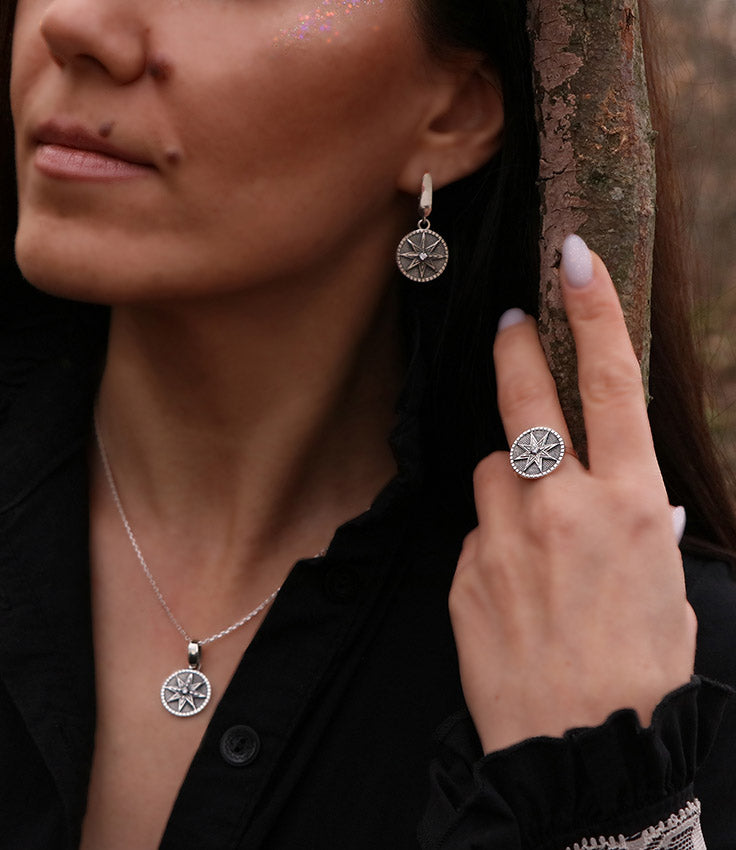

Reviewed and updated Jul 19, 2026
Hecate (also spelled Hekate) is an ancient Greek goddess whose identity developed across many centuries. She is best known today as a goddess of magic, crossroads, boundaries, torches, keys, night, and the restless dead. The earliest surviving Greek account, however, presents her more broadly: Hesiod describes a powerful goddess honored by Zeus with a share in the sky, the earth, and the sea.
This guide follows Hecate from ancient sources through later religious developments and modern Pagan interpretation. Her familiar Maiden-Mother-Crone form is one powerful contemporary framework growing from the triple imagery of ancient Greek worship.
Who is Hecate?
Hecate is a goddess of ancient Greek religion and mythology. In Hesiod's Theogony, she is the daughter of the Titans Perses and Asteria. Hesiod does not introduce her only as a dark or underworld figure. He says that Zeus continued to honor her and that she could grant success in public life, war, games, horsemanship, fishing, herding, and the raising of children.
This early portrait is important because it shows that Hecate's identity was never limited to a single function. Her later associations with magic, ghosts, night, doorways, and crossroads became especially prominent from the Classical period onward. Ancient communities could emphasize different aspects of the same goddess depending on place, time, and ritual context.
What is Hecate the goddess of?
The most accurate short answer is that Hecate is a goddess of boundaries and transition whose powers came to include magic, night, crossroads, protection, and contact with the unseen. Her major associations include:
- Magic and witchcraft: Hecate became closely connected with spells, ritual specialists, and magical literature, particularly in later Greek and Roman sources.
- Crossroads and doorways: Images and offerings associated with Hecate were placed at points of passage, including road junctions and household entrances.
- Torches and guidance: The Homeric Hymn to Demeter shows Hecate carrying a torch when she meets Demeter during the search for Persephone.
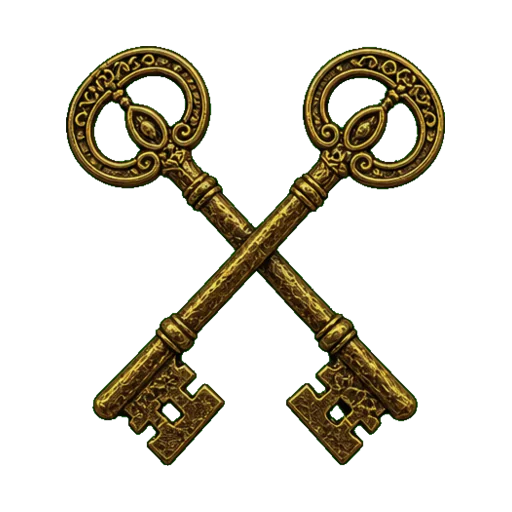
- Keys and guardianship: Keys could express authority over gates, sacred spaces, and transitions. At Hecate's sanctuary at Lagina, a key-bearer played a central role in a major civic procession.
- Night, ghosts, and the underworld: These associations are especially strong in later antiquity and in Hecate's role as a companion of Persephone.
- Protection: Hecate could be approached as a guardian of homes, travelers, communities, and people facing uncertain transitions.
Calling Hecate simply “the goddess of witchcraft” therefore captures only one part of a much larger religious history.
Hecate, Demeter, and Persephone
One of the clearest early appearances of Hecate comes from the Homeric Hymn to Demeter. Hecate hears Persephone's cry during her abduction but does not see who has taken her. Carrying a torch, she joins Demeter as Demeter searches for the truth. After Persephone returns, Hecate becomes her companion.
This episode helps explain several enduring features of Hecate: torchlight, guidance through darkness, movement between realms, and closeness to Persephone. It does not reduce Hecate to a ruler of the underworld, but it places her beside a goddess who passes between the world above and the world below.
Hecate at crossroads and thresholds
Crossroads are places where routes meet, choices are made, and one space becomes another. Hecate's connection with them fits her wider role at boundaries. Ancient evidence associates her with road junctions, doorways, city gates, and other transitional spaces.
Food offerings known as Hecate's suppers were left at crossroads around the end of the lunar month. These practices could be connected with purification, protection of the household, and the appeasement of Hecate and the restless dead associated with her in later traditions.
Modern devotees often interpret the crossroads psychologically as well as physically: a symbol of decision, change, and the moment before a new path begins. That is a meaningful modern interpretation, but it should be identified as interpretation rather than presented as a quotation from ancient belief.
Explore the focused guide to Hecate and the crossroads.
Symbols of Hecate
Torches
Torches are among Hecate's clearest ancient attributes. They connect her with the search for Persephone, movement through darkness, ritual illumination, and guidance at uncertain boundaries.
Keys
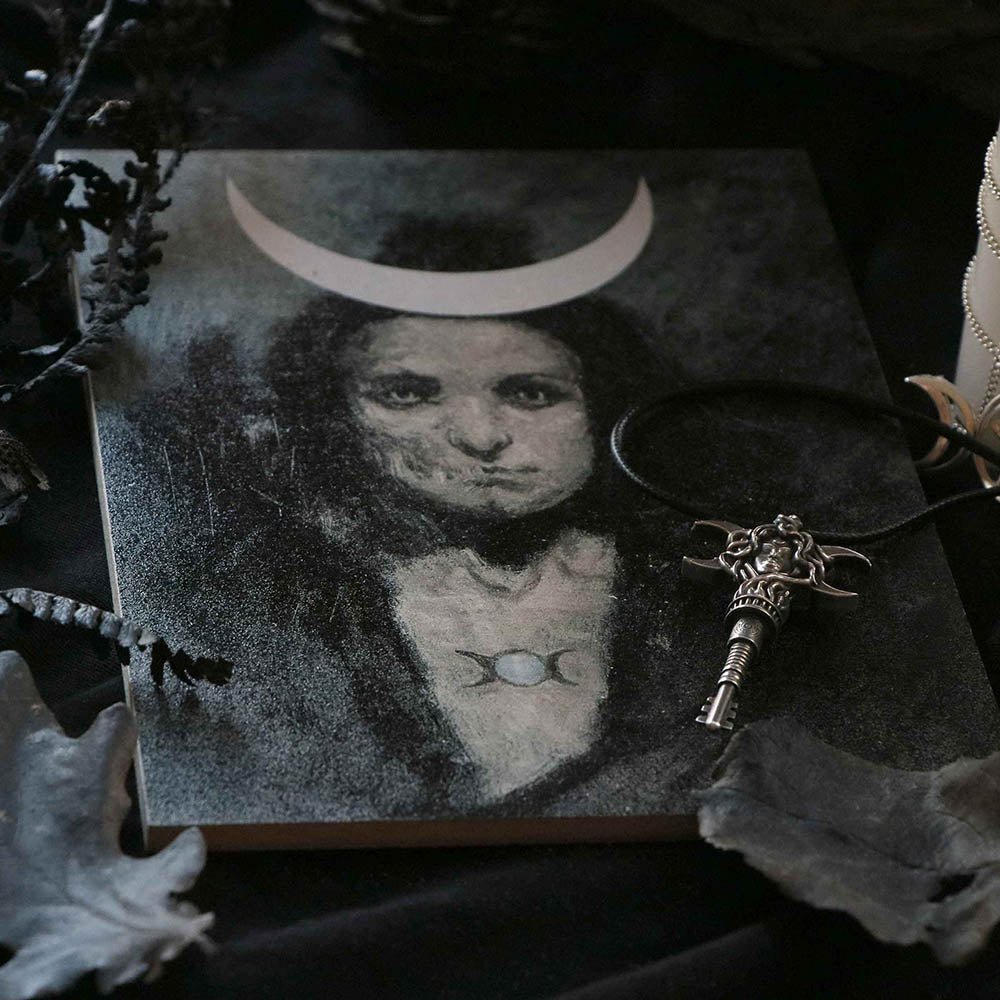
The key represents guardianship and controlled access. Ancient evidence includes Hecate as a key-bearer and the important Procession of the Key at Lagina. Modern spiritual and jewelry symbolism often expands this into unlocking hidden knowledge, opening new paths, and protecting personal boundaries.
Read the complete guide to the meaning of Hecate's keys.
Dogs
Dogs are strongly associated with Hecate in ancient literature, ritual, and art. They can reflect guardianship, night, the edge of the household, and the boundary between the living and the dead. The dog's connection to Hecate is better attested than the owl, whose role is often emphasized more strongly in modern symbolism than in surviving ancient evidence.
The Moon
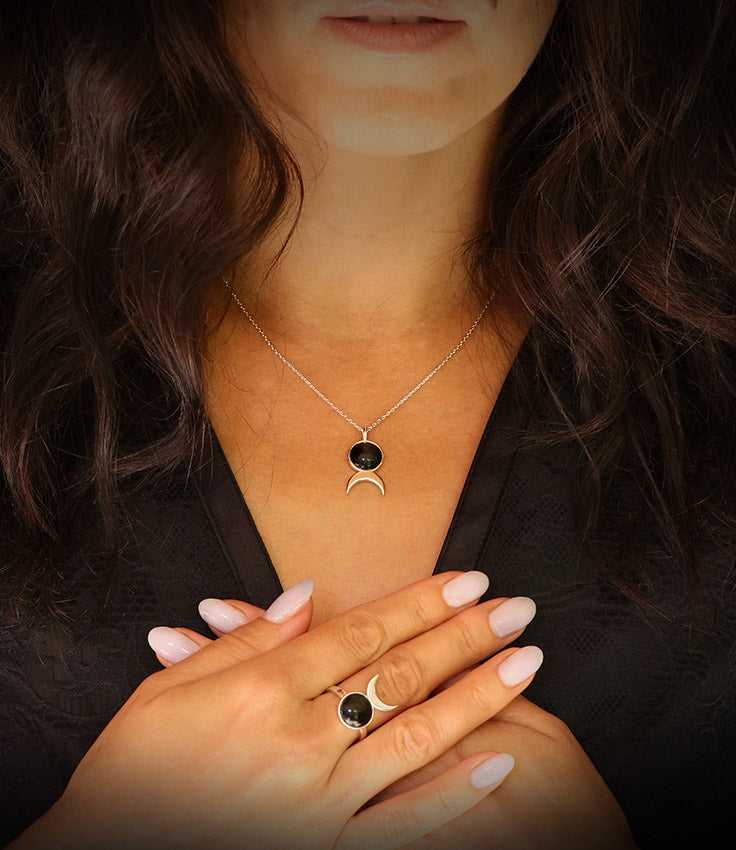
Hecate acquired lunar associations in antiquity, but ancient sources do not present one single, timeless lunar theology. Her identification with moon goddesses and her role in end-of-month rites developed alongside other aspects of her worship. The familiar triple-moon emblem used by many modern Pagans is not the same thing as an ancient Greek symbol belonging exclusively to Hecate.
Why is Hecate shown in three forms?
Hecate is often represented as three figures or three bodies arranged back to back. Pausanias credited the sculptor Alcamenes with an early threefold image of Hecate in fifth-century BCE Athens. Later hekataia could face multiple directions and were well suited to crossroads and entrances.
This ancient triple form also inspires the influential modern Maiden, Mother, and Crone reading. That life-stage model is influential in modern Paganism, but it is not the explanation given by the ancient evidence for Hecate's three-bodied iconography. A responsible modern guide can discuss both traditions without treating them as identical.
Learn more about Hecate's three forms and modern Triple Goddess interpretations.
Ancient worship and modern devotion
Hecate was worshipped in different ways across the Greek world. Pausanias records an important annual rite on Aegina. At Lagina in Caria, Hecate had a monumental sanctuary and served as a civic protector; inscriptions describe festivals and the prominent Procession of the Key. Household and crossroads observances existed alongside these organized civic cults.
Today, Hecate is honored in Hellenic polytheism, modern Paganism, witchcraft, and individual devotional practice. Some practitioners reconstruct ancient customs; others develop new rituals around protection, shadow work, personal transformation, or the dark moon. These approaches are not interchangeable, and contemporary practices should be described as contemporary unless they are supported by ancient evidence.
Read about Hecate in ancient Greek religion and modern spiritual traditions.
Frequently asked questions
Is Hecate evil?
No. Ancient Greek gods were not organized around a simple modern opposition between good and evil. Hecate could protect and guide, but she could also be approached with caution, particularly in later traditions involving ghosts, magic, and purification.
Is Hecate the goddess of the moon?
Hecate has genuine lunar associations, especially in later antiquity and in rites linked to the end of the lunar month. However, she was not only a moon goddess, and her earliest surviving portrait gives her a much broader range of powers.
Is Hecate a Maiden-Mother-Crone goddess?
That interpretation belongs mainly to modern Pagan Triple Goddess theology. Ancient art does show Hecate in triple form, but the surviving evidence does not define those three bodies as Maiden, Mother, and Crone.
What are Hecate's best-attested symbols?
Torches, keys, dogs, doorways, crossroads, and threefold images are among her strongest historical associations. Modern devotees may also use lunar, crystal, owl, or wheel imagery, but the origin and evidence for each symbol should be considered separately.
Continue exploring Hecate
Continue the learning path
Explore supporting guides

Hecate
What Religion Is Hecate From? Ancient Worship and Modern Paganism
Read the guide
Hecate
Hecate, Goddess of Crossroads: History, Symbols, and Offerings
Read the guide
Hecate
Hecate's Three Forms: Ancient Triple Images and Modern Meaning
Read the guide
Hecate
Is the Owl a Symbol of Hecate? History and Modern Meaning
Read the guide
Hecate
Hecate's Key Meaning: Symbolism, History, and Modern Practice
Read the guide
Hecate
Stones for Hecate: Obsidian, Moonstone & Devotional Use
Read the guide
Hecate
Does Hecate Like Black Obsidian? History and Modern Practice
Read the guide
Hecate
Hecate Necklace Meaning: Keys, Torches, Wheels, and Modern Devotion
Read the guide
Hecate
Hecate in Popular Culture: Books, Games, Comics, and Modern Myth
Read the guideFrom the workshop