

Reviewed and updated Jul 20, 2026
The short answer: Inanna and Ishtar are closely connected Mesopotamian goddesses whose traditions became identified with one another. Inanna is the Sumerian name; Ishtar is the Akkadian name of a goddess who was merged with her. Their roles include sexual love, desire, warfare, royal power, and the planet Venus as the morning and evening star.
They were not simply “goddesses of love” in the modern romantic sense. Ancient hymns and myths present a powerful and sometimes paradoxical deity who could grant favor, overturn status, accompany kingship, and bring both attraction and conflict. This guide separates ancient evidence from later interpretation and links to focused guides where a symbol or material needs fuller treatment.
Inanna and Ishtar at a glance
| Question | Concise answer |
|---|---|
| Who is Inanna? | A major Sumerian goddess associated with sexual love, warfare, political power, and Venus. |
| Who is Ishtar? | A major Akkadian-speaking Mesopotamian goddess whose identity and traditions merged with Inanna. |
| Are they the same? | They became identified with one another, but their names and traditions developed in different linguistic and historical settings. |
| What planet represents them? | Venus, visible as the morning star and evening star. |
| What are their best-known symbols? | The star or rosette and the lion; weapons also appear in martial images of Ishtar. |
| What is the best-known myth? | Inanna’s descent to the netherworld is among the most widely read surviving narratives. |
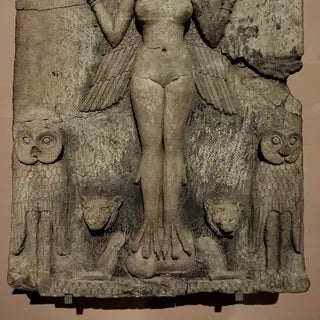
Are Inanna and Ishtar the same goddess?
Inanna is the Sumerian name, commonly written Inana in specialist publications. Ishtar, or Ištar, is the Akkadian name. The relationship is more precise than saying that one name is merely a translation of the other. The Ancient Mesopotamian Gods and Goddesses project explains that the Semitic Ishtar originally belonged to an independent goddess who was later merged and identified with Sumerian Inanna.
As languages, kingdoms, and religious traditions interacted, their identities became deeply intertwined. Modern readers can therefore use “Inanna/Ishtar” when discussing the connected tradition as a whole, while still naming Inanna in a specifically Sumerian text and Ishtar in an Akkadian, Babylonian, or Assyrian context.
The meaning of Inanna’s name is debated. “Lady of Heaven” is a familiar interpretation, but it should not be presented as certain. Ancient religion also varied by city and period, so no short list captures every local form, title, genealogy, or cult of the goddess.
Where and when were Inanna and Ishtar worshipped?
Inanna appears among the most important deities of ancient Sumer. Uruk in southern Mesopotamia was one of her principal cult centers, and its Eanna sacred precinct remained associated with her through a long history. The Metropolitan Museum of Art’s overview of Mesopotamian deities identifies Inanna with Uruk and describes how older Sumerian and later Semitic religious traditions interacted.
Ishtar became prominent across Akkadian-speaking Mesopotamia and was worshipped in several local forms. Assyrian tradition, for example, distinguished important manifestations such as Ishtar of Nineveh and Ishtar of Arbela. The goddess’s identity was not frozen: her cult, imagery, titles, and political significance changed across more than two millennia of Mesopotamian history.
Ancient worship centered on temples, cult images, offerings, festivals, hymns, lamentations, and the work of priests and priestesses. These practices belonged to particular institutions and communities; they should not be reconstructed from a few modern correspondence lists as though every city followed one universal ritual.
What were Inanna and Ishtar goddesses of?
Sexual love, desire, and attraction
Inanna/Ishtar is strongly associated with sexual love and desire. This domain includes attraction, fertility, abundance, courtship, and the power to form or disrupt relationships, but it should not be reduced to a modern idea of gentle romance. Ancient compositions can portray sexuality as joyful, commanding, politically significant, or dangerous.
War, kingship, and political power
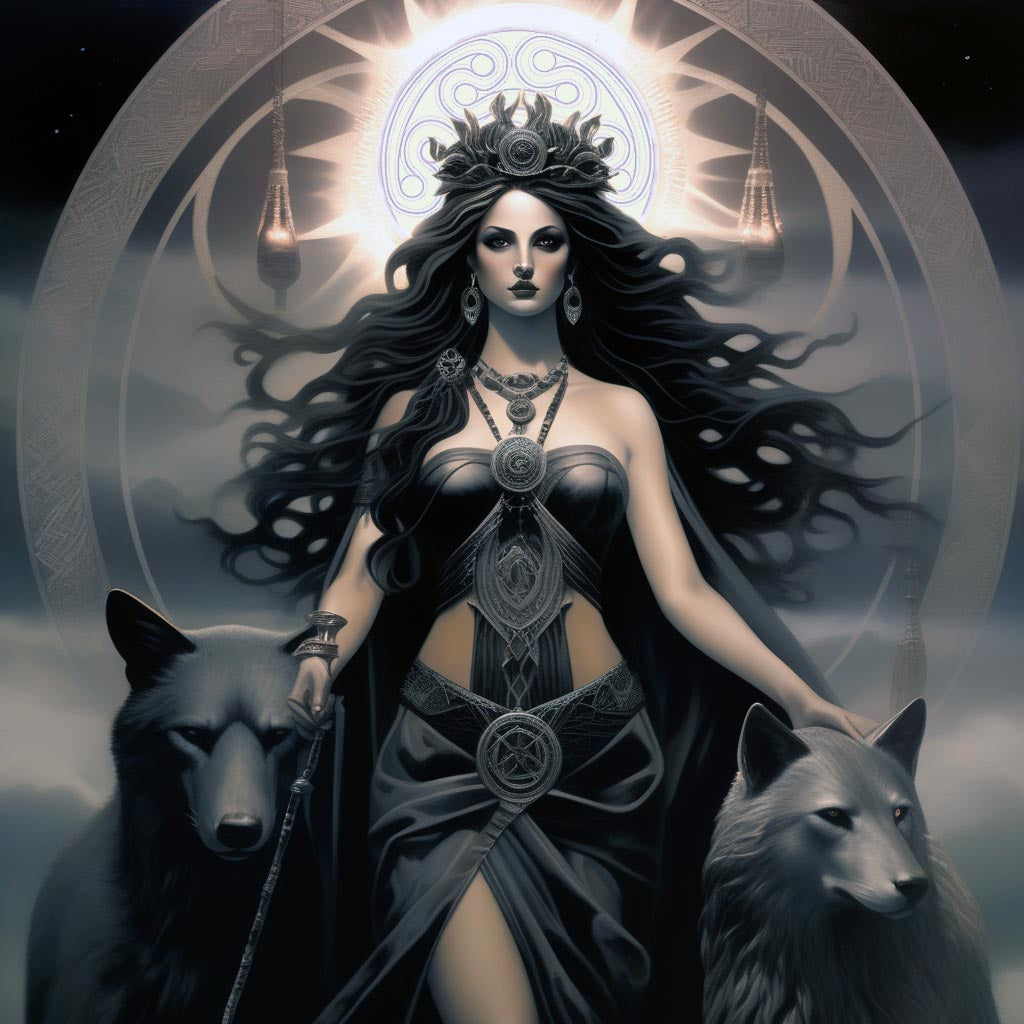
The same goddess is also prominent in warfare. Texts and images can present her as armed, accompanied by lions, or supporting royal authority. A British Museum cylinder seal shows Ishtar with weapons, standing on a lion beneath an eight-rayed star. Her combination of desire and battle is not an accidental contradiction; ancient sources repeatedly treat both as expressions of her capacity to transform circumstances and reverse established order.
Inanna/Ishtar could also legitimize rulers and appear in royal hymns, prayers, and propaganda. That political role means modern summaries such as “goddess of love and war” are useful starting points, not complete definitions.
Venus, the morning star and evening star
In her astral aspect, Inanna/Ishtar is Venus. Because Venus appears close to sunrise or sunset, it was observed as both a morning star and an evening star. Ancient literature uses this brilliance, movement, and changing visibility to describe the goddess’s celestial power.
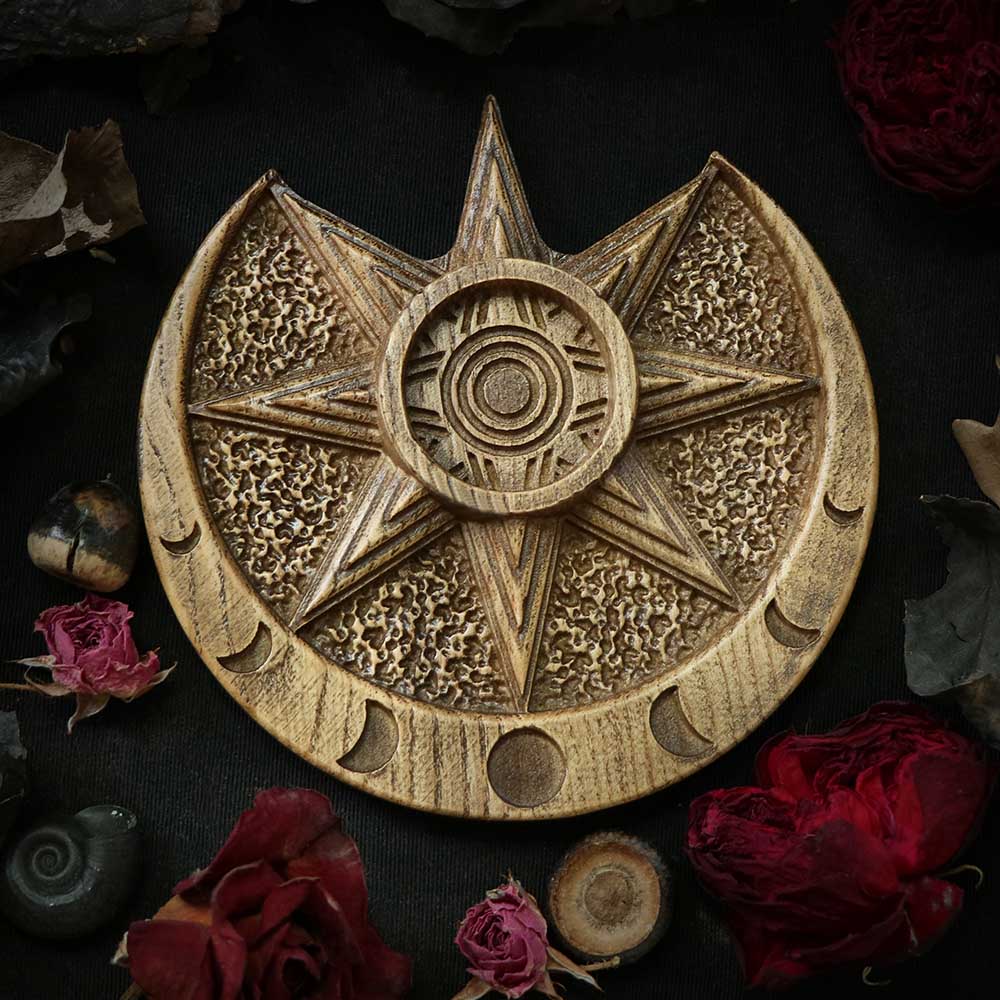
Venus is a planet, not a literal eight-pointed object in the sky. The star emblem is an artistic and religious sign associated with her astral identity. Our separate guide explains the Star of Ishtar, its eight points, Venus, and related symbols without making the identity pillar repeat the entire symbol article.
Important myths and texts about Inanna
Inanna’s descent to the netherworld
In the Sumerian composition commonly called Inanna’s Descent to the Netherworld, the goddess leaves her domains and travels to the realm ruled by her sister Ereshkigal. At seven gates she is stripped of items associated with power before being killed; her return requires intervention and has consequences for Dumuzi.
The story is often interpreted today as a simple cycle of death and rebirth or a personal initiation. Those readings let the complex ancient text continue speaking through personal initiation, descent, loss, power, and return. Readers can consult the Electronic Text Corpus of Sumerian Literature translation and see where the surviving tablets are fragmentary or uncertain.
Inanna and the divine powers
Other narratives connect Inanna with the me, divine powers or ordinances associated with the organization of civilization and society. Their meanings do not map neatly onto modern “energies.” In the story usually called Inanna and Enki, she obtains these powers and brings them to Uruk, reinforcing both her authority and the importance of her city.
Enheduanna and the hymns to Inanna
Enheduanna, daughter of Sargon of Akkad and high priestess at Ur, is the earliest known author whose name is associated with a substantial body of literature. The composition known as The Exaltation of Inanna praises the goddess’s authority while also addressing the author’s political crisis and restoration. The ETCSL translation of The Exaltation of Inanna displays the intensity of this literary tradition without reducing the goddess to a single modern archetype.
Symbols of Inanna and Ishtar
Ancient images and objects identify the goddess through several attributes:
- Star: commonly eight-rayed and connected with her astral identity as Venus.
- Rosette: an important emblem that could stand in for the star in some contexts.
- Lion: an animal associated with her formidable and martial power.
- Weapons: bows, arrows, or weapons emerging from her shoulders emphasize warfare.
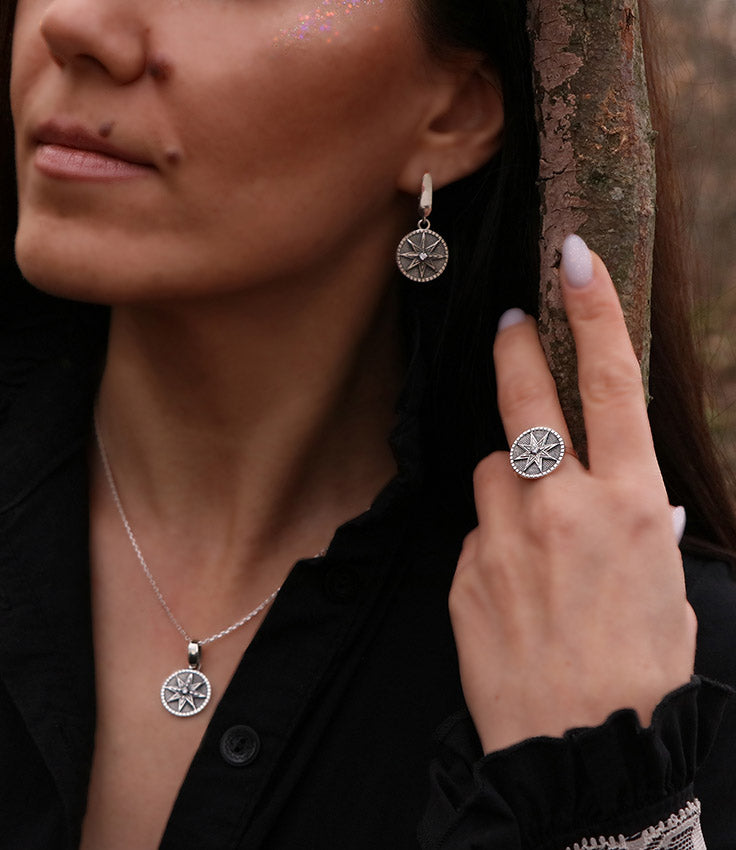
The crescent moon is primarily associated with the moon god Nanna/Sin, not the defining symbol of Ishtar. Modern jewelry may combine stars, crescents, and other motifs for artistic or spiritual reasons, but a modern design can be appreciated as a new devotional composition inspired by ancient iconography.
For a detailed, illustrated explanation, continue to What Is the Symbol of Ishtar?. Focused supporting guides also examine the rose and rosette question and gemstones associated with Ishtar.
Inanna and Ishtar in modern Pagan practice
Some contemporary Pagans, polytheists, reconstructionists, and independent practitioners honor Inanna, Ishtar, or both. Modern devotion can include study, prayer, offerings, art, meditation, or community ritual. These practices are living modern expressions; they are not automatically continuous with temple cults of ancient Uruk, Babylon, Nineveh, or Arbela.
A historically responsible approach begins with sources and context:
- Decide whether you are addressing Inanna, Ishtar, or the connected tradition and explain why.
- Read translated primary texts alongside current scholarship rather than relying only on correspondence lists.
- Distinguish ancient evidence from a personal experience or modern spiritual interpretation.
- Avoid claims that one color, crystal, flower, offering, or ritual is universal across every period.
- Treat museum objects and archaeological sites as cultural heritage, not designs without historical context.
No purchase is required for study or devotion. Jewelry and altar objects can serve as personal reminders when their modern purpose is described honestly. Readers looking for handcrafted pieces can explore the Ishtar and Inanna jewelry collection.
Sources and further reading
- ORACC: Inana/Ištar - names, functions, historical development, cult centers, astral identity, and bibliography.
- The Metropolitan Museum of Art: Mesopotamian Deities - city cults, symbols, divine images, and the relationship between Sumerian and later Mesopotamian traditions.
- ETCSL: Inanna’s Descent to the Netherworld - translated Sumerian literary text.
- ETCSL: The Exaltation of Inanna - translated hymn associated with Enheduanna.
- British Museum: cylinder seal depicting Ishtar - material evidence for the lion, weapons, and eight-rayed star.
Last reviewed: July 20, 2026. Ancient evidence, scholarly interpretation, and modern Pagan practice are identified separately throughout this guide.
Continue the learning path
Explore supporting guides


From the workshop