

Hades is the Greek ruler of the underworld and the dead. He is not the Greek equivalent of the Christian Devil, and the realm called Hades includes several different destinations and conditions rather than one simple place of punishment.
Explore this figure in the interactive Gods & Goddesses Atlas.
Hades at a glance
- Culture: Ancient Greek
- Key attributes: underworld kingship, scepter, Cerberus, the helm, wealth below the earth, and Persephone
- Hades belongs to the generation of Zeus, Poseidon, Hera, Demeter, and Hestia.
- His name can refer to the god or the underworld realm.
- Plouton emphasizes wealth from below the earth and becomes an important title or identity.
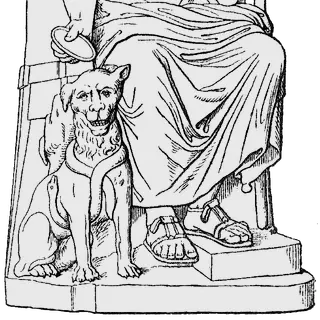
- Cerberus, the scepter, and Persephone commonly appear in his imagery.
Historical evidence and cult context
Hades belongs to the generation of Zeus, Poseidon, Hera, Demeter, and Hestia.
His name can refer to the god or the underworld realm.
Plouton emphasizes wealth from below the earth and becomes an important title or identity.
Cerberus, the scepter, and Persephone commonly appear in his imagery.
Myths and relationships
The most influential narrative is the abduction or marriage of Persephone and Demeter’s grief, preserved in the Homeric Hymn to Demeter. Other stories involve Heracles, Orpheus, Theseus, and underworld judgment.
Symbols and how to read them
underworld kingship, scepter, Cerberus, the helm, wealth below the earth, and Persephone. Attributes identify a deity within specific artistic and ritual contexts; a modern symbol list should not be mistaken for one ancient universal code.
Modern Pagan reception
A modern practice can center mortality, inheritance, boundaries, grief, and responsible stewardship. Avoid romanticizing coercion in the Persephone myth or claiming that all Greek afterlife traditions were identical.
Continue exploring
Frequently asked questions
Is Hades evil?
No. He is stern and feared, but Greek religion does not cast him as a cosmic opponent of goodness.
Is Hades the same as Pluto?
Greek Plouton and Roman Pluto overlap strongly with Hades, especially around wealth and the underworld, but the names have different linguistic and cultural histories.
What are Hades’s symbols?
Cerberus, the scepter, helm, cypress, keys, and cornucopia in Plouton imagery are common associations.
Sources and further reading
Last reviewed: August 1, 2026. Ancient evidence, later reception, and modern practice are labelled separately.