Reviewed and updated Jul 19, 2026
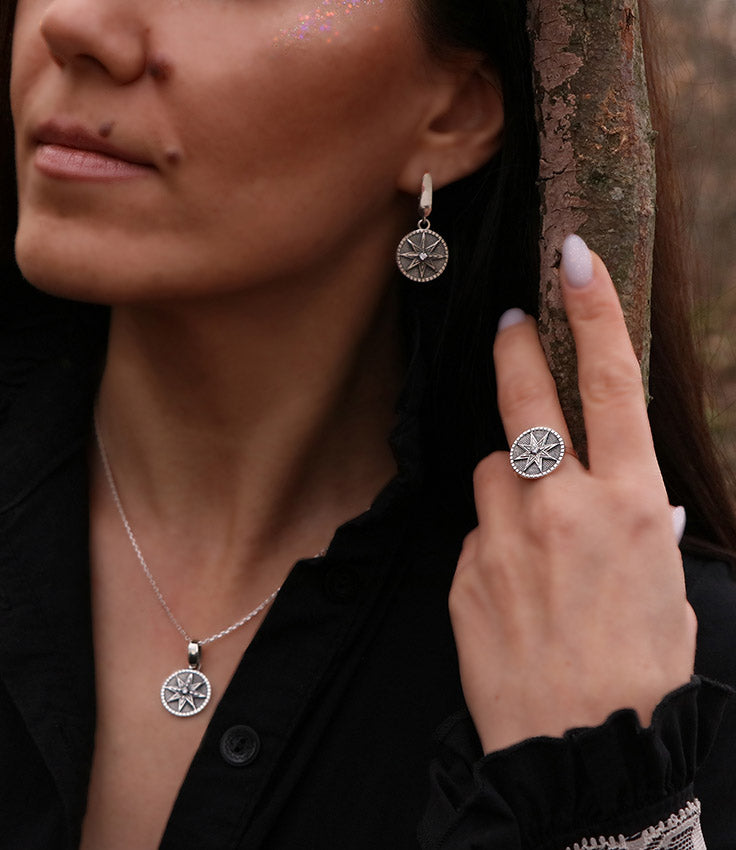
A Hecate necklace is a modern piece of jewelry that can express devotion, identity, remembrance, protection, or interest in the goddess's history. Its meaning depends first on the motif-such as a key, torch, dog, triple figure, crossroads, moon, or modern Hecate wheel-and then on the intention of the person who wears it.
Ancient Greeks used jewelry and amulets, but there is no requirement in surviving Hecate cult that a devotee wear a particular necklace. A modern pendant can draw on ancient attributes without becoming an ancient artifact or guaranteeing spiritual protection.
What does a Hecate necklace mean?
For one wearer, it may identify a devotional relationship with Hecate. For another, it may symbolize standing at a crossroads, protecting personal boundaries, seeking clarity, or remembering that access and responsibility belong together. Someone else may simply appreciate the mythology and design.
No pendant has one compulsory meaning. Product descriptions should explain the symbol that is actually present instead of promising that the object automatically contains Hecate's power, attracts the goddess, or shields its owner from harm.
What does a Hecate key necklace symbolize?
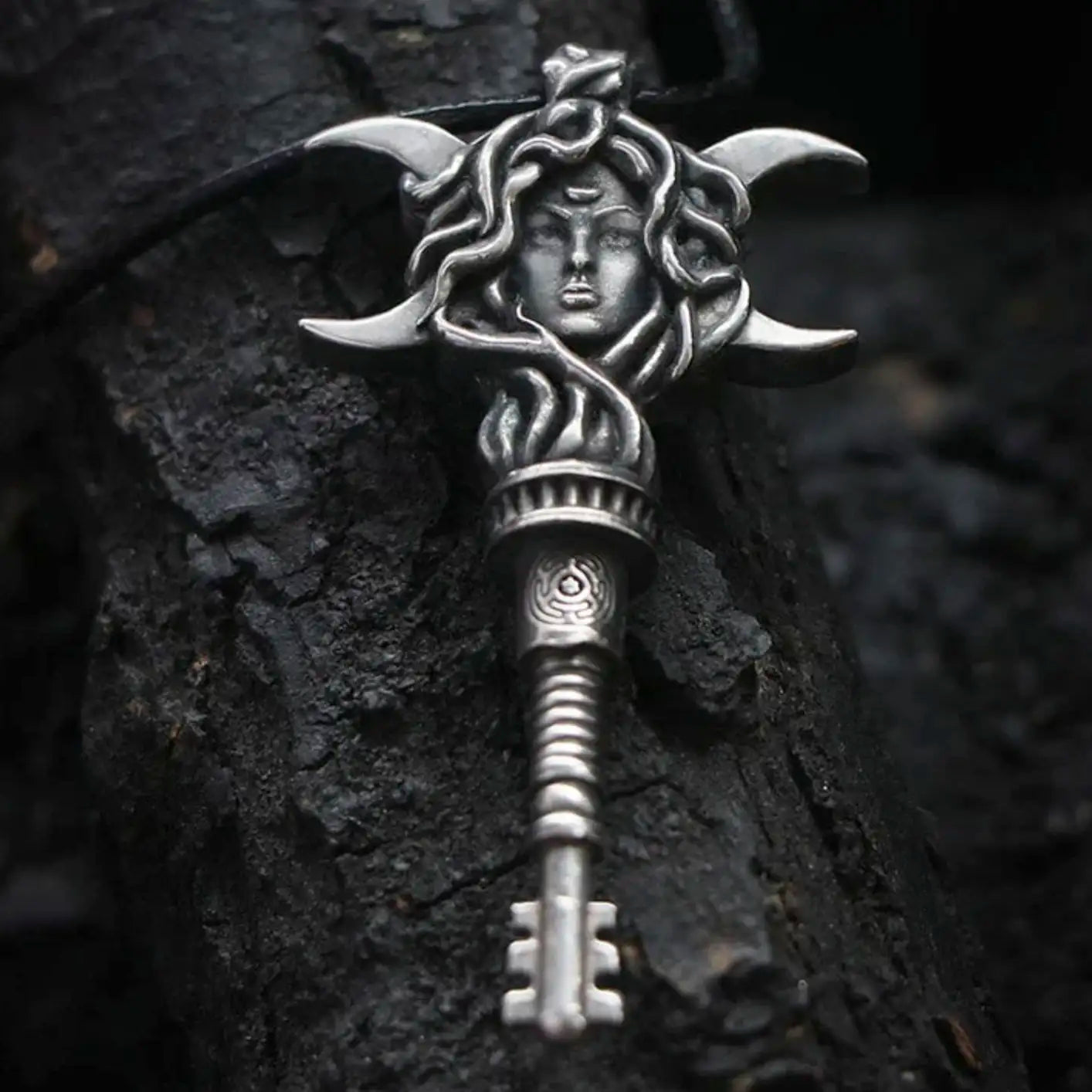
The key is connected with access, guardianship, sacred or civic authority, and controlled passage. Hecate's association with keys appears in later ancient evidence, while the Procession of the Key held a prominent place at her sanctuary at Lagina.
In modern jewelry, a key can represent opening a new path, closing a harmful one, protecting a private boundary, or accepting responsibility for what is admitted. It can be approached as a key to the underworld, sacred access, guardianship, or controlled passage according to the face of Hecate honored by the wearer.
For the detailed evidence, read Hecate's Key Meaning: Symbolism, History, and Modern Practice.
Torches, crossroads, and triple-form pendants
Torches
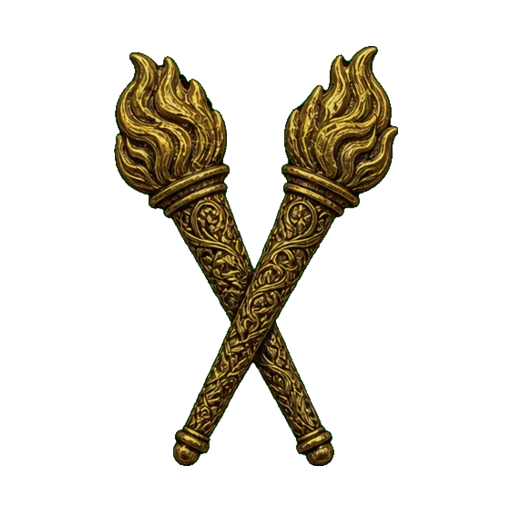
Torches are among Hecate's strongest ancient visual attributes. In the Homeric Hymn to Demeter, she carries light while assisting in the search for Persephone, and Greek art frequently depicts her with one or two torches. A torch pendant can symbolize illumination, searching, witness, or finding enough light for the next step.
Crossroads
A crossroads design represents boundaries and movement between routes. Modern wearers often use it for decision-making, but the ancient association also involved household entrances, offerings, purification, and protection. Read the Hecate crossroads guide for the full context.
Triple figures or three faces
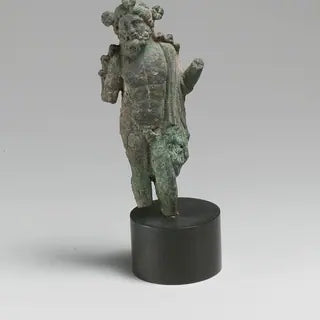
Triple Hecate imagery allowed the goddess to face several approaches at once. Maiden-Mother-Crone, moon phases, and past-present-future are later or modern interpretive systems rather than the documented labels of the ancient figures. A pendant can use those modern meanings when its description identifies them honestly.
Is Hecate's wheel an ancient symbol?
The familiar labyrinth-like design sold today as “Hecate's wheel” or “Strophalos” is best treated as a modern emblem unless a seller can document the specific design's provenance. Ancient and late-antique sources do refer to a strophalos of Hecate, especially in a Chaldean theurgical context, but the word describes a ritual spinning device or top-not clearly the same fixed labyrinth logo common on modern pendants.
This distinction does not make the modern wheel meaningless. Contemporary devotees may use its threefold, winding pattern for movement, initiation, cycles, or finding a center. The accurate description is “a modern Hecate wheel inspired by later Strophalos traditions,” rather than “the exact ancient symbol worn by Hecate's Greek worshippers.”
Moon and dog motifs
Crescent and triple moon
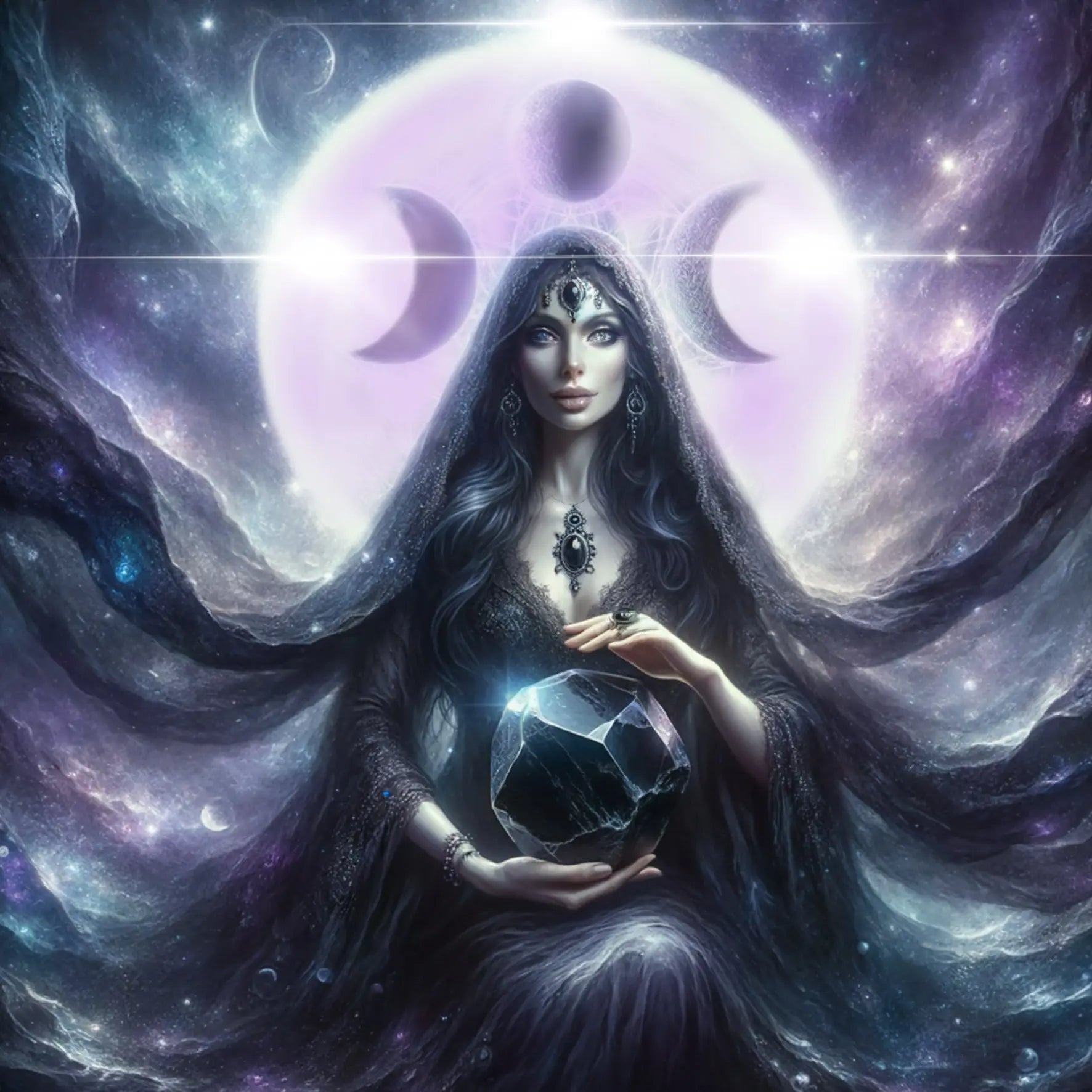
Hecate acquired important lunar associations, especially in later antiquity and through connections with Selene and Artemis. The modern triple-moon design is widely used in Pagan jewelry, but it should not be confused with the original form or purpose of every ancient hekataion.
Dogs
Dogs have a strong ancient relationship with Hecate in literature, ritual, and art. In jewelry they can symbolize guardianship, alertness, companionship, or the boundary between domestic space and the road beyond. A dog motif has firmer historical support than the owl as Hecate's standard animal.
How to choose a Hecate pendant
- Choose the motif first. Decide whether key, torch, crossroads, dog, triple figure, moon, or modern wheel best expresses your purpose.
- Check the description. Prefer clear historical and modern labeling over promises of guaranteed magical effects.
- Check dimensions. Product photographs can make a pendant look larger or smaller than it is.
- Consider weight and chain length. A devotional object should still be comfortable and secure in ordinary use.
- Confirm the material. “Silver-colored,” plated metal, and sterling silver are different specifications.
- Consider skin sensitivity. Ask about nickel or other alloys if you react to jewelry metals.
- Look at craftsmanship and sourcing. A handmade object can have personal value, but handmade status does not automatically create sacred energy.
Silver, bronze, gold, steel, wood, and stone do not carry one scientifically measurable Hecate correspondence. Their color, durability, cost, history, and meaning to the wearer are more useful selection criteria than the particular relationship a wearer builds with the material.
How can a Hecate necklace be used in modern devotion?
A wearer may dedicate a necklace through prayer, place it on an altar when it is not worn, touch the pendant as a reminder of a commitment, or use it to mark the beginning of study or meditation. None of these practices is mandatory.
A necklace is not a substitute for practical protection, medical care, or informed decision-making. If it represents boundaries, let it remind you to take concrete actions: lock a door, document an agreement, ask for help, leave an unsafe situation, or gather reliable information before choosing a path.
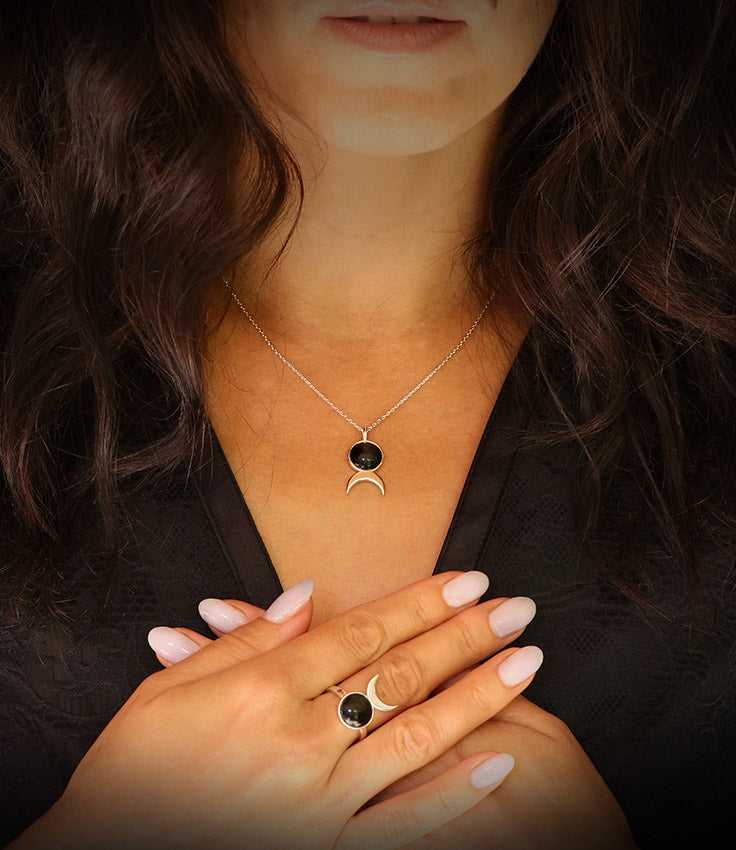
After comparing the symbols, explore the complete Hecate jewelry and necklace collection, including the handcrafted Hecate Triple Moon necklace.
Jewelry care and safety
Follow the maker's instructions for cleaning. Water, salt, chemicals, oils, and polishing cloths affect metals, coatings, stones, and patinas differently. Remove jewelry when it can catch on tools, machinery, exercise equipment, or sleeping materials. Small pendants and chains should be kept away from children and animals.
Frequently asked questions
Do I need a necklace to honor Hecate?
No. Jewelry is optional. Study, prayer, ethical action, an image, a key, or care for a household threshold can be equally meaningful.
Can I wear a Hecate necklace without being Pagan?
People wear mythological jewelry for many reasons. Learn the symbol's context and avoid claiming a religious identity or historical meaning that is not yours.
Does a pendant need to be consecrated?
No universal rule requires it. A modern practitioner may dedicate the object, while another may wear it without ritual.
Which Hecate necklace is most historically grounded?
Designs featuring torches, keys, dogs, crossroads, or triple Hecate draw on well-attested attributes. Historical grounding still depends on how accurately the individual design and description use them.
For the complete overview, return to Hecate: Goddess of Magic, Crossroads, Keys, and the Night.
Continue exploring
From the workshop