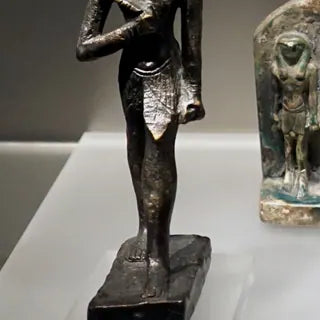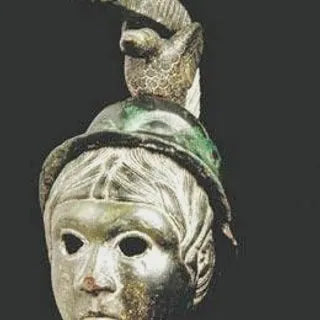


Marduk began as the city god of Babylon and rose with that city to become a supreme figure of Babylonian kingship, creation, ritual order, and learned theology. His prominence was historically produced—it did not erase the older Mesopotamian gods or make one Babylonian story universal.
Explore this figure in the interactive Gods & Goddesses Atlas.
At a glance
- Culture: Babylonian and wider Mesopotamian religion
- Principal sanctuary: Esagila in Babylon; the associated ziggurat was Etemenanki.
- Roles: city protector, kingship, divine assembly, creation, justice, magic, and ordered rule.
- Symbols: the spade and the mušḫuššu, a composite dragon or serpent creature.
- Major text: Enūma Eliš; major civic festival: Akitu.
From city god to divine king
Marduk’s earliest profile is tied to Babylon. As the city gained political importance in the second millennium BCE, priests and scholars increasingly placed its god at the summit of the pantheon. His genealogy commonly makes him the son of Ea or Enki and Damkina, connecting Babylon’s rising deity with an older god of wisdom, ritual skill, and freshwater.
This ascent was neither instantaneous nor accepted in exactly the same way everywhere. Assyrian theology could transfer features of Marduk’s story to Ashur, while other cities continued to honor their own chief gods. Mesopotamian religion remained local, political, and plural.
Enūma Eliš and the battle with Tiamat
The Babylonian creation epic Enūma Eliš describes conflict among generations of gods. Marduk agrees to face Tiamat on condition that the assembly grants him supreme authority. He defeats her, forms the ordered cosmos from her body, arranges heavenly signs, and receives fifty names.
The poem is simultaneously cosmology, praise of Marduk, and a statement about Babylon’s place in the world. It should not be treated as “the Mesopotamian creation myth,” because Sumerian and Akkadian cultures preserved several different creation accounts.
Akitu festival and kingship
During Babylon’s New Year festival, Akitu, divine images moved in procession and texts associated with Marduk’s victory and royal legitimacy were performed or recited. The king’s relationship with the god was ritually renewed, binding political authority to divine order.
The festival cannot be reduced to a modern spring celebration. It involved temples, priesthoods, images, city space, empire, and a social structure that modern practitioners do not reproduce.
Nabu, Zarpanitu, and the divine family
Marduk’s consort was Zarpanitu, and Nabu, god of writing and wisdom, was treated as his son. Nabu’s own center at Borsippa and his arrival in Babylon formed an important part of festival life.
Later learned texts sometimes absorb the functions of many gods into Marduk through his fifty names. This is theological exaltation rather than proof that every deity was merely another label for Marduk.
Symbols and identification
The spade is Marduk’s principal emblem and may appear on boundary stones. His creature, the mušḫuššu, combines serpent, feline, and birdlike features and is famously represented on Babylon’s Ishtar Gate. The dragon is not generic fantasy imagery: its identification depends on Babylonian iconography and inscriptions.
Modern Pagan reception
A contemporary reading might focus on responsibility, civic order, leadership under obligation, and the dangers of power acquired through conflict. Anyone developing devotional practice should clearly distinguish personal ritual from documented Babylonian temple religion.
Avoid ancient-astronaut claims, treating Tiamat as a modern chaos-monster detached from her text, or calling every dragon image Marduk’s mušḫuššu. Translation and historical context matter.
Continue exploring
- Mesopotamian Pantheon: gods, cities, and symbols
- Ishtar and Venus: divine star symbolism
- Ereshkigal: goddess of the underworld
Frequently asked questions
What was Marduk the god of?
He was Babylon’s city god and became associated with kingship, creation, justice, magic, and cosmic order.
Who did Marduk defeat?
In Enūma Eliš, he defeats Tiamat after receiving supreme authority from the divine assembly.
What is Marduk’s symbol?
The spade is his principal emblem; the mušḫuššu is his associated composite creature.
Is Marduk the same as Bel?
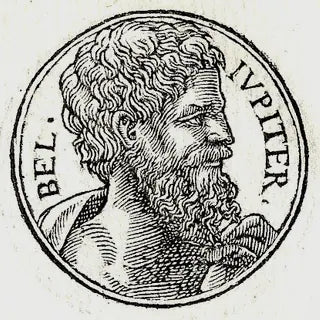
Bēl means “lord.” In first-millennium Babylonia it often refers to Marduk, but it is a title rather than his original personal name.
Sources and further reading
Last reviewed: August 1, 2026. Ancient evidence, later reception, and modern practice are labelled separately.