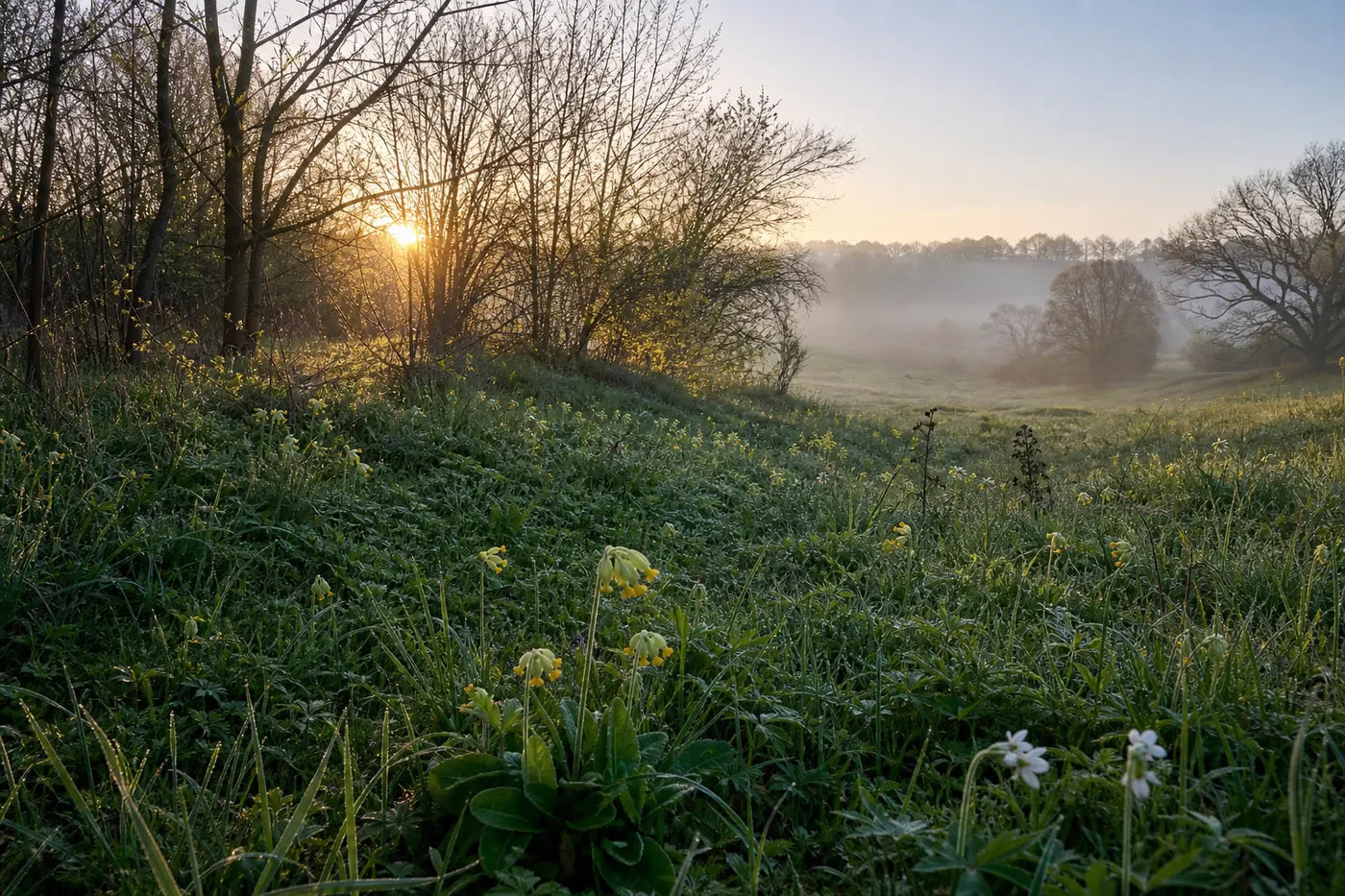


Beltane, or Bealtaine, is a Gaelic May festival traditionally marking the beginning of summer. Historical customs emphasize fire, protection, livestock, household well-being, flowers, and communal transition. Modern Pagan Beltane often expands these themes to vitality, creativity, relationship, and sacred union.
Open the interactive Wheel of the Year to compare this festival with all eight seasonal points.
Beltane at a glance
- Traditional date: May 1, often beginning on the preceding evening
- Southern seasonal counterpart: commonly observed around October 31-November 1
- Festival type: Gaelic cross-quarter or fire festival
- Core themes: protection, vitality, summer’s arrival, community
- Evidence note: historically documented festival; many current ritual details are modern
What is Beltane?
Beltane was observed in Ireland, Scotland, and the Isle of Man as a threshold into the summer half of the year. Recorded customs include bonfires, the protection of cattle, the renewal of household fire, May flowers, decorated branches, visits to wells, and communal gatherings. Practices varied by place and period; there was never one universal Beltane ceremony.
Fire is central in many accounts. Cattle could be driven between fires or past their smoke as a protective act before summer grazing. Modern retellings sometimes turn every recorded custom into evidence of a single prehistoric religion, but the surviving material is a mixture of medieval references, later folklore, regional practice, and modern reconstruction.
The contemporary Beltane Fire Festival in Edinburgh began in 1988. Its organizers explicitly describe it as a modern celebration inspired by older traditions rather than a literal reconstruction. That distinction is a useful model for contemporary Pagan observance.
Meaning and seasonal themes
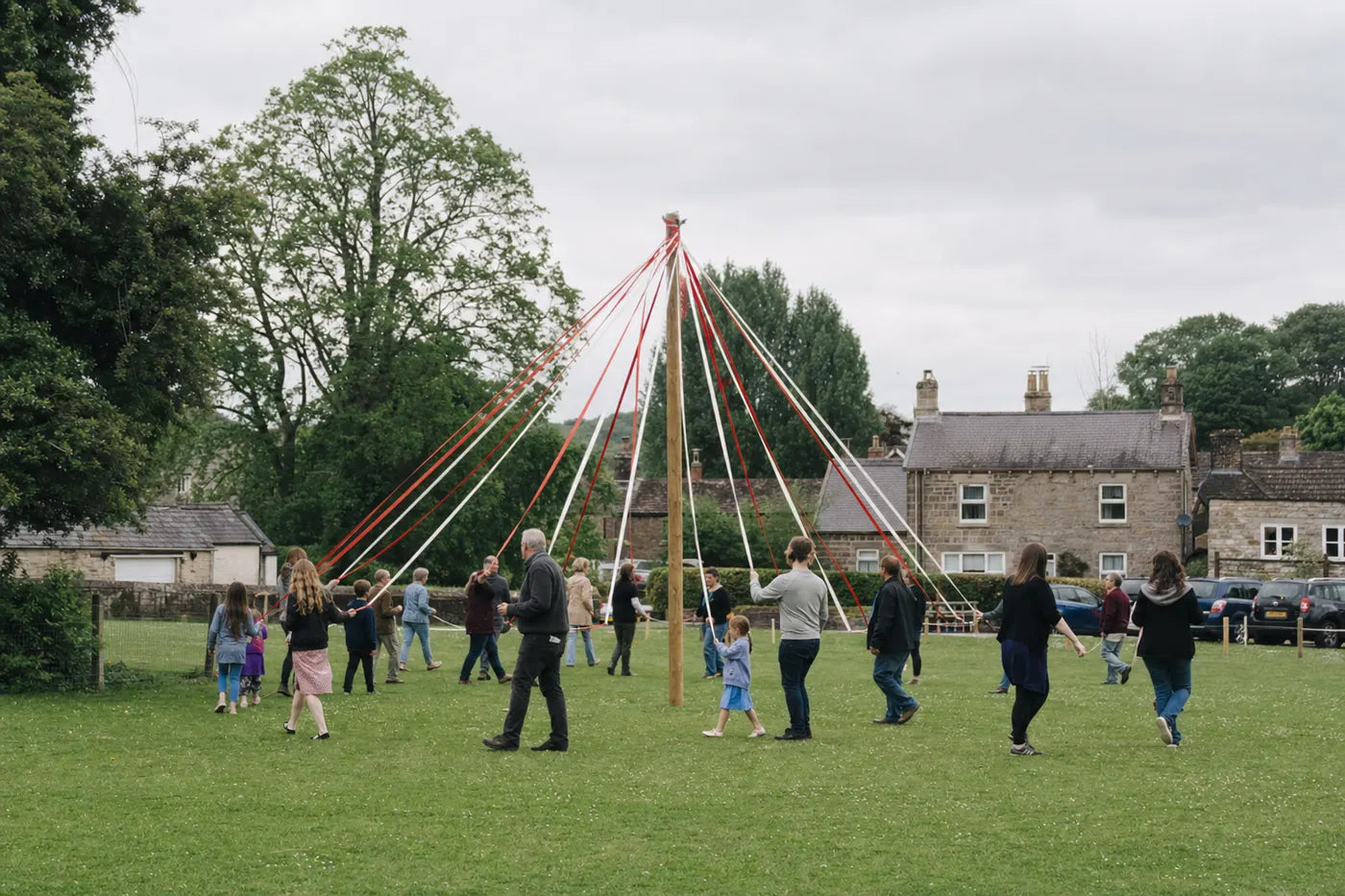
Beltane celebrates life moving outward: warmer weather, growing plants, livestock in pasture, public gathering, attraction, and creative energy. Protection is as important as celebration. Historically, the opening of summer also involved real risks to animals, crops, and households.
A modern Beltane can therefore hold two ideas together: welcome vitality, and care for the conditions that allow life to flourish. Consent, ecological responsibility, fire safety, and respect for cultural context belong naturally within that approach.
Symbols and correspondences
- Fire and smoke - protection, transition, and communal renewal
- May blossoms and green branches - the arrival of summer
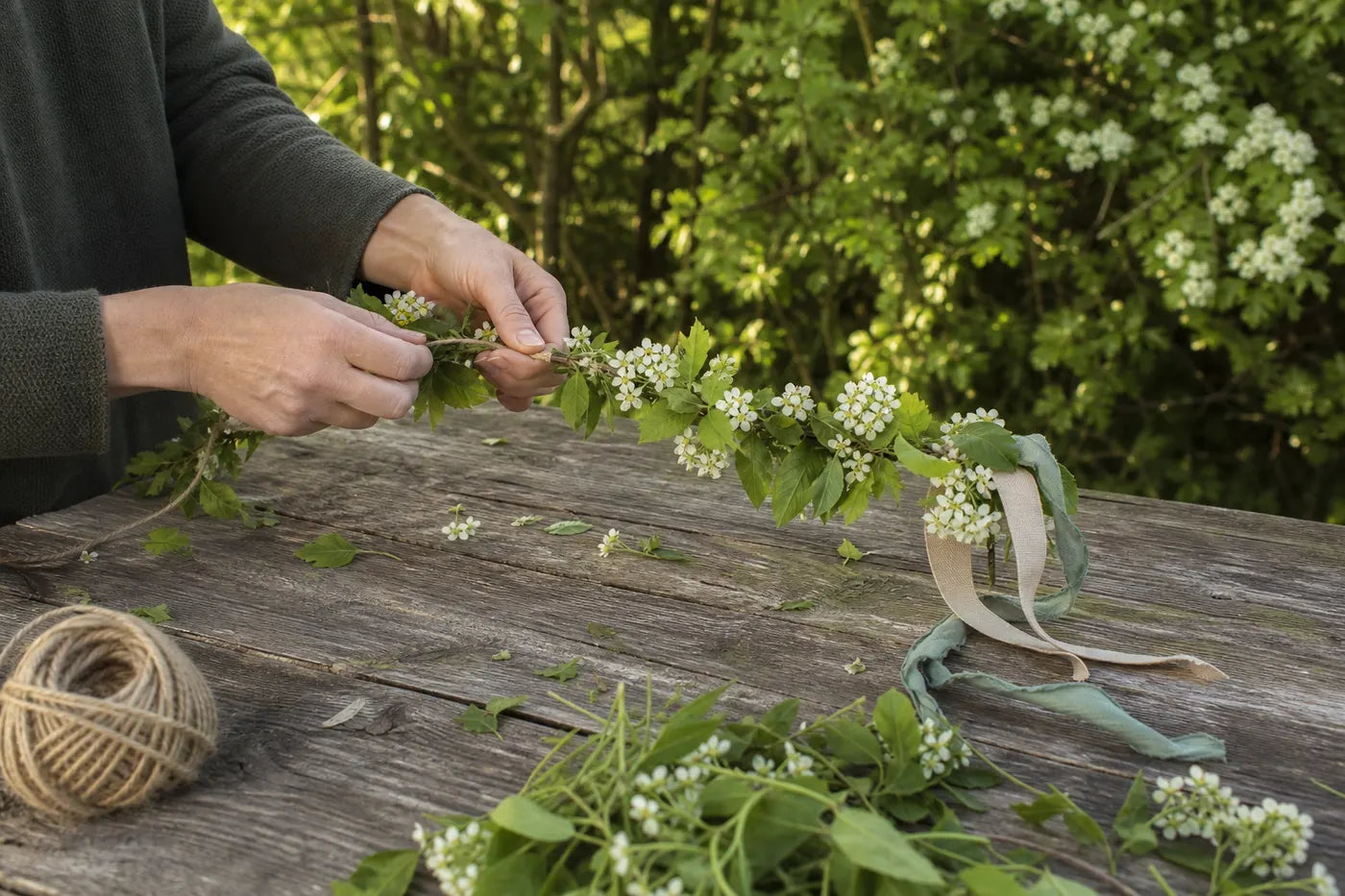
- Hawthorn - important in regional May customs; harvest responsibly
- Ribbons and garlands - modern and folk expressions of festivity
- Cattle and pasture - reminders of the festival’s agricultural setting
Associated deities and cultural context
Modern associations may include Áine, Belenus, Flora, the May Queen, or Green Man imagery. These figures come from different sources and cultures. Present them as tradition-specific or modern associations rather than as a single historical Beltane pantheon.
How to observe Beltane today
- Light one candle or use an electric light if open flame is unsafe.
- Decorate with locally abundant flowers without damaging wild populations.
- Share food outdoors and acknowledge the people and ecosystems that produced it.
- Make a protection plan for the coming active season: home, health, animals, or creative work.
- Celebrate vitality through dance, music, craft, or consensual relationship rituals.
Choose practices that fit your climate, tradition, ability, and household. Avoid unsafe fire, unsustainable plant gathering, and claims that one modern correspondence was universal in the ancient world.
Northern and Southern Hemispheres
The Wheel describes seasonal relationships, not one fixed global weather pattern. Many Southern Hemisphere practitioners shift the festival by roughly six months so that its meaning follows the local season. Others keep ancestral or community dates. The most useful approach is to state clearly which calendar you follow and observe what is actually happening in your local ecology.
A living tradition with many layers
Beltane’s fertility current grows broader and stronger when joined with seasonal transition, cattle, fire, protection, household welfare, and community. A historically responsible guide keeps that wider picture visible.
Continue exploring
Sources and further reading
Continue the learning path