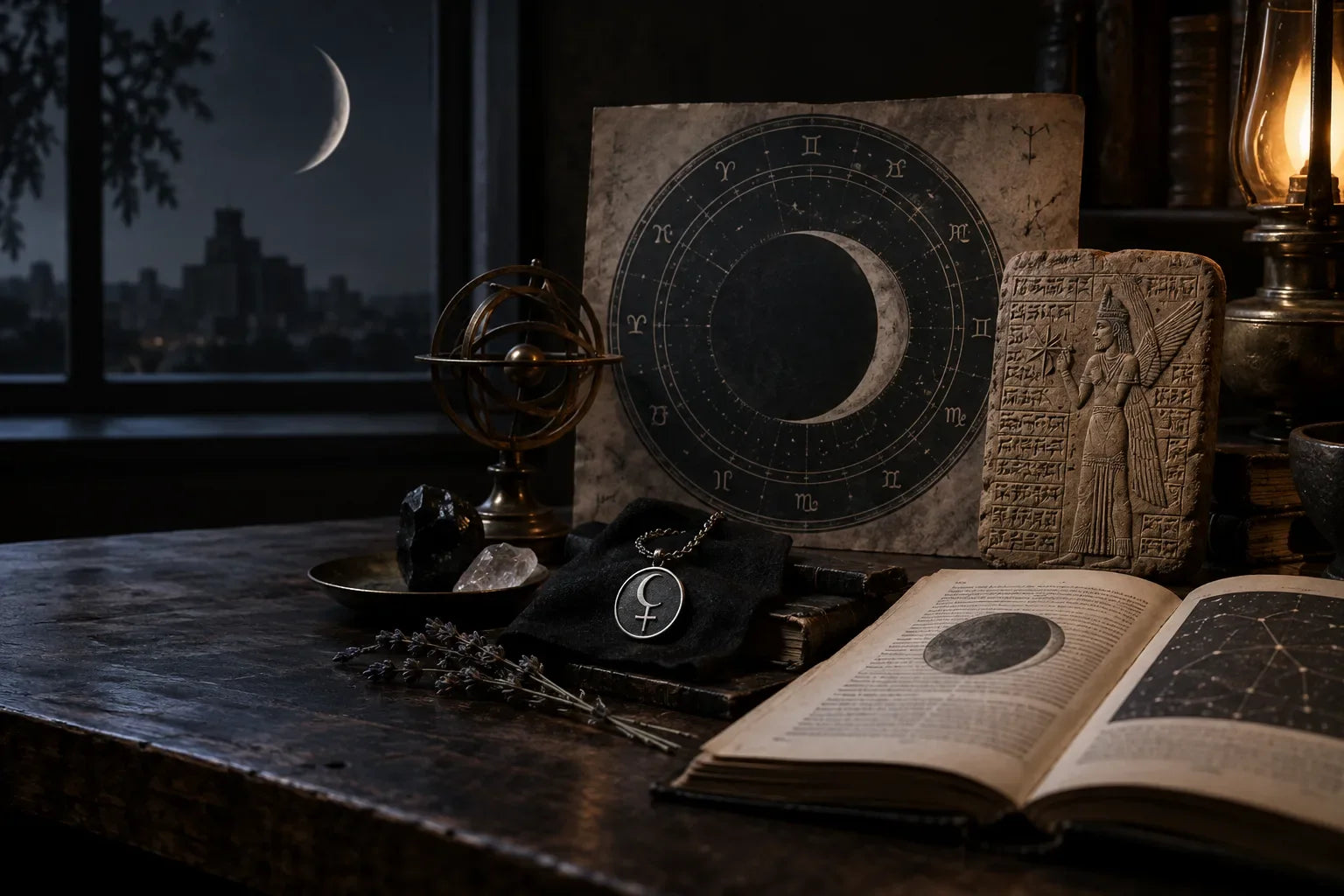
To begin honoring Inanna or Ishtar respectfully, start with study, a clean space, a simple offering, and a short honest prayer. You do not need an elaborate altar or a claim of perfect ancient reconstruction. The most responsible beginning distinguishes documented Mesopotamian evidence from modern devotional choices.
At a glance
- Inanna is the Sumerian name; Ishtar is the Akkadian name used widely in Babylonian and Assyrian sources.
- The goddess was associated with Venus, love, warfare, kingship, and political power.
- Fresh water, bread, dates, or a spoken hymn can form a modest modern beginning.
- No surviving source gives one universal ritual for every city and century.

Are Inanna and Ishtar the same goddess?
Inanna and Ishtar became closely identified, but the names come from different languages and long histories. Inanna belongs to Sumerian traditions; Ishtar is Akkadian and appears in Babylonian and Assyrian contexts. Local forms such as Ishtar of Nineveh or Ishtar of Arbela could have their own cult, titles, and political role. Use the name that matches the text or devotional framework you are studying, and avoid treating two thousand years of evidence as one unchanging system.
Begin with study, not certainty
Read a reliable overview, then encounter translated primary texts. Notice who translated them and when the tablet was written. Myths, hymns, royal inscriptions, lexical lists, and ritual texts answer different questions.
Good starting points include the ORACC overview of Inanna/Ishtar, the Electronic Text Corpus of Sumerian Literature, and museum collections. Our guide to Ishtar's historical worship brings these strands together.
Create a simple devotional space
A small clean surface is enough. You might place a bowl or cup, a candle used safely, an image you understand, or an eight-pointed star referring to Venus. A lion or rosette can also evoke the goddess, but context matters. Do not claim that every modern eight-pointed star is an ancient consecrated emblem.
What offerings can you give?
Mesopotamian texts attest food, beer, incense, oil, garments, animals, and precious gifts in different temple and ritual settings. One learned prayer ritual to Ishtar includes purification, a portable altar, dates, flour, cake, honey, ghee, and beer. That specific list is evidence for one context, not a mandatory modern recipe.
For a modest modern practice, fresh water, bread, dates, or non-alcoholic drink can be enough. Consider allergies, animals, fire safety, local law, and respectful disposal. Expense does not measure devotion.
Prayer, hymns, and your own words
You can read a translated hymn, speak a short modern prayer, or write down what you are asking and what responsibility you accept. Label your own prayer as modern. Avoid copying attractive lines without checking whether they are genuine translations.
A simple prayer might include praise, identification of the goddess by name and symbol, the reason for approaching, an offering, and a closing promise to continue learning.
A seven-day beginning
- Day 1: read a scholarly overview and note questions.
- Day 2: learn the relationship between the goddess and Venus.
- Day 3: read one hymn in translation.
- Day 4: clean a small space and offer water.
- Day 5: speak a short prayer in your own words.
- Day 6: learn one local or historical form of Ishtar.
- Day 7: reflect on what practice can remain honest and sustainable.
What should a beginner avoid?
- Claiming an invented ritual is exactly ancient.
- Reducing Ishtar only to sex or romance and ignoring warfare, kingship, and astral power.
- Treating modern intuition as archaeological evidence.
- Promising that an offering forces a divine response.
- Using unsafe fire, food, or disposal practices.
- Buying many objects before learning the symbols.
Frequently asked questions
Do I need to choose between Inanna and Ishtar?
Not immediately. Study how each name functions in its linguistic and historical context, then use it deliberately.
Can I worship Ishtar if I am not Mesopotamian?
Modern people do approach her across cultures. Do so with careful study, respect for Iraq's heritage, and honesty about what is ancient and what is modern.
Do I need an altar?
No. Reading, prayer, ethical attention, and a simple offering can begin without permanent furniture.
What day belongs to Ishtar?
Modern devotees often connect her with Friday because of Venus, but a universal weekly Friday practice is not a simple rule preserved from all Mesopotamian cults.
Continue exploring
Sources and further reading
Last reviewed: October 2026. Historical evidence and modern spiritual interpretation are identified separately where they differ.