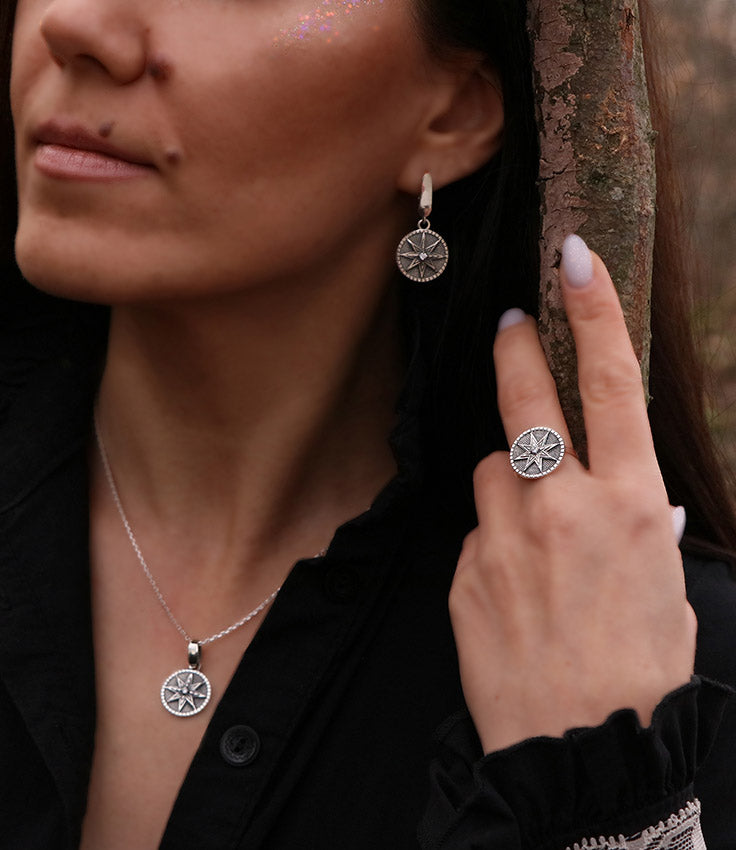

Pagan jewelry can be decorative, devotional, protective in a symbolic sense, or simply a quiet reminder of a value a person wants to carry. There is no single Pagan authority that assigns one fixed meaning to every pendant. A symbol may come from an ancient culture, a later magical tradition, a modern Pagan movement, or a personal story. Understanding that context makes choosing a piece more meaningful.
What pagan jewelry means
The term covers jewelry inspired by pre-Christian religions, reconstructed traditions, modern Pagan paths, witchcraft, folklore, mythology, and nature-centered spirituality. Some people wear a pendant as an expression of faith. Others are drawn to its history, geometry, craftsmanship, or connection with a deity. A respectful maker should explain what is historically documented and what belongs to modern interpretation.
Jewelry is not automatically an ancient talisman because it carries an old-looking design. Many popular motifs have changed meaning across centuries. The story should be presented with care rather than with invented promises of guaranteed protection, luck, or power.
Common pagan symbols
Pentacle and pentagram
A pentagram is a five-pointed star. A pentacle is commonly understood today as a pentagram enclosed by a circle, although historical use of the words was not always consistent. Modern practitioners may connect the five points with earth, air, fire, water, and spirit. Learn more in our guide to pentacle meaning.
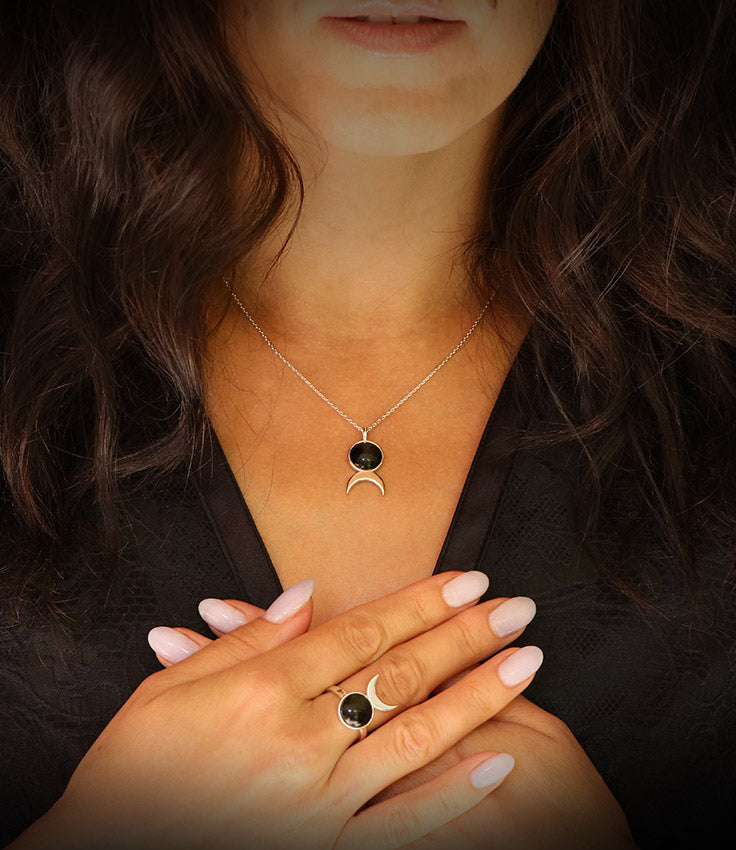
Triple Moon
The waxing, full, and waning moons are widely read as symbols of change and cyclical time. The familiar Maiden-Mother-Crone interpretation is influential in modern Paganism, but it should not be described as a universal ancient doctrine. See the full Triple Moon guide.
Hecate’s key and strophalos
Keys express access, guardianship, thresholds, and the power to open or close. The strophalos, often called Hecate’s wheel today, has a more complex history and modern reception. Both connect naturally with Hecate’s liminal imagery. Explore the meaning of Hecate’s keys.
Star of Ishtar and Inanna
The eight-pointed star is associated with Inanna-Ishtar and with Venus in Mesopotamian visual culture. It evokes sovereignty, desire, conflict, and the bright morning and evening star. Our article on the symbol of Ishtar separates archaeological evidence from modern spiritual readings.
Runes
The Elder Futhark was a writing system, not merely a collection of magical icons. Modern divination gives runes additional meanings, but the historical letter name, sound, inscriptions, and later interpretation should be kept distinct.
Choosing materials
Material changes the way a piece ages, feels, and can be cared for. Sterling silver is normally 92.5 percent silver alloyed for strength. It can tarnish, but it can also be cleaned and worn for decades. Bronze develops a living patina and has a warm historical character. Brass is bright and affordable but may react with skin. Plated alloys can look similar in photographs yet wear through over time.
Ask whether the material description names the actual metal, whether stones are natural or synthetic, and whether the seller explains finishes and care. “Silver color” is not the same as sterling silver.
Handmade or mass-produced?
Handmade does not mean that every step must avoid tools or molds. A small workshop may sketch, model, carve, cast, solder, finish, oxidize, polish, and assemble a piece through a combination of traditional and modern processes. What matters is honest authorship and production.
- Look for original photographs from several angles.
- Read whether the design belongs to the maker or is resold from a catalog.
- Check dimensions, weight, material, and production time.
- Compare identical images across marketplaces; widespread duplicates can indicate wholesale resale.
- Be cautious when solid 925 silver is offered at a price that would barely cover the raw metal.
How to choose your piece
Start with the story rather than the trend. Which tradition or figure are you approaching? What does the symbol mean in its original context? Would you wear it every day or only in ritual? Consider pendant size, weight, chain length, allergies, and the care the metal requires.
If a symbol belongs to a living or historically marginalized culture, learn before wearing it. Appreciation begins with accurate naming, context, and respect.
From symbol to finished jewelry
At Pagan Workshop, Gor develops original designs and makes them in small batches in Ukraine. The Hecate Key Necklace, Star of Ishtar Necklace, and Classic Pentagram Necklace show three different symbolic traditions interpreted through hand-finished metalwork. The object can hold personal meaning, but its value also comes from design, material, and human craft.
Frequently asked questions
Does pagan jewelry have to be blessed?
No. Some owners consecrate a piece within their tradition, while others wear it without ritual. There is no universal requirement.
Can anyone wear a pentacle?
In general, yes, but learning its history and modern religious significance is more respectful than treating it as an empty aesthetic.
Is sterling silver better than plated jewelry?
Sterling silver usually lasts longer and can be refinished, while plating may wear away. The better choice depends on budget, skin sensitivity, and intended use.
Does a pendant guarantee protection?
No object can guarantee a supernatural or physical result. Jewelry can act as a personal reminder of boundaries, commitments, or beliefs.