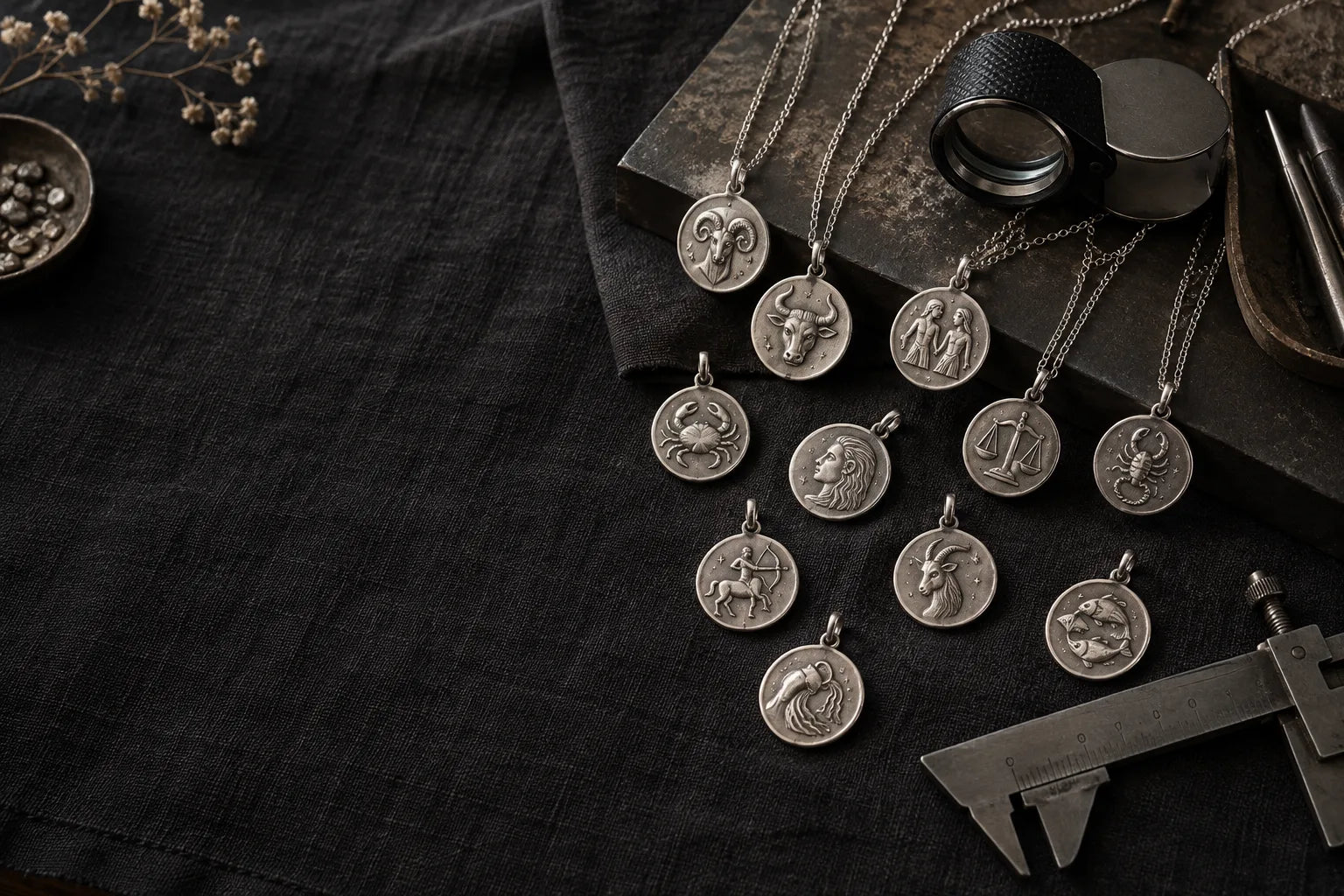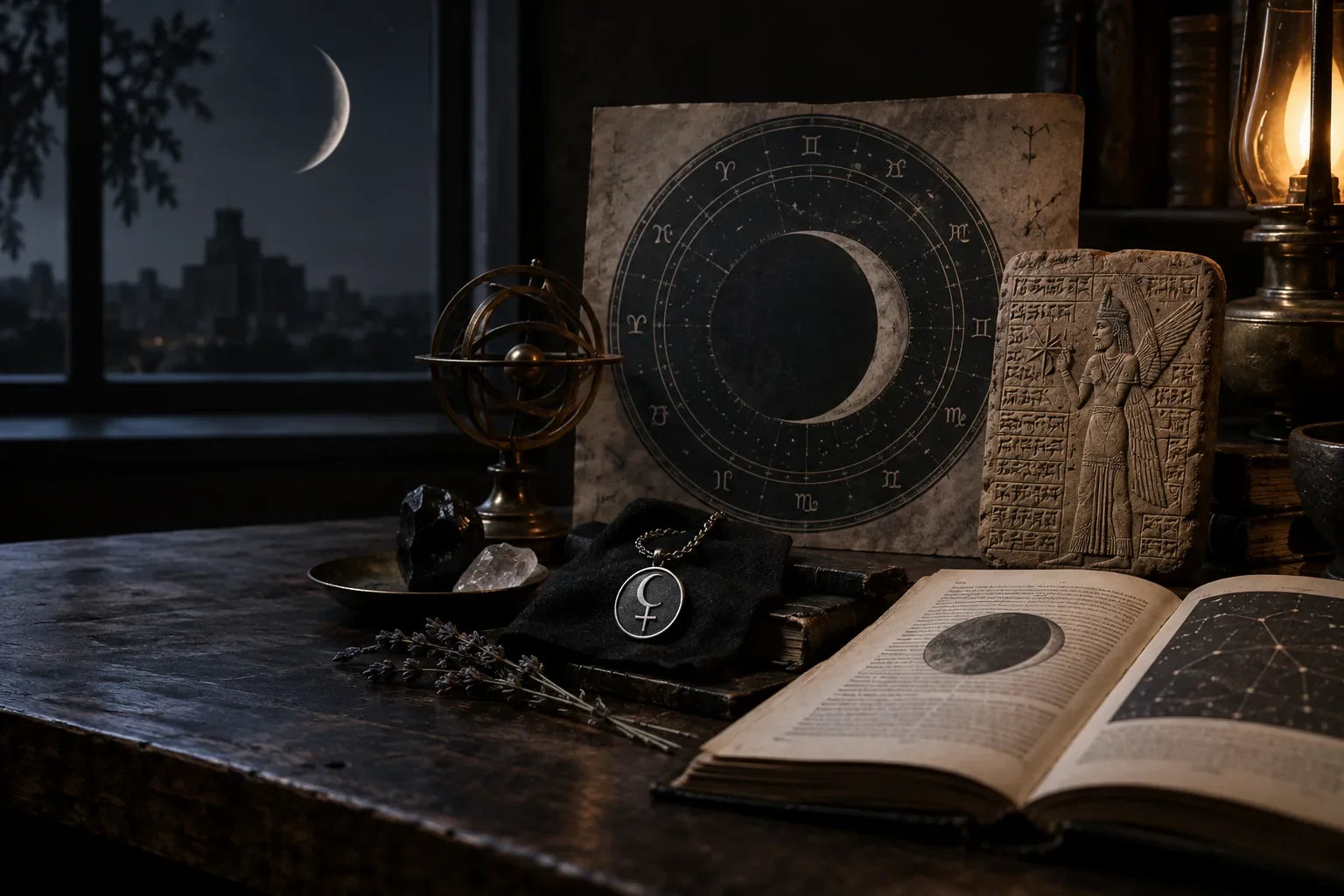
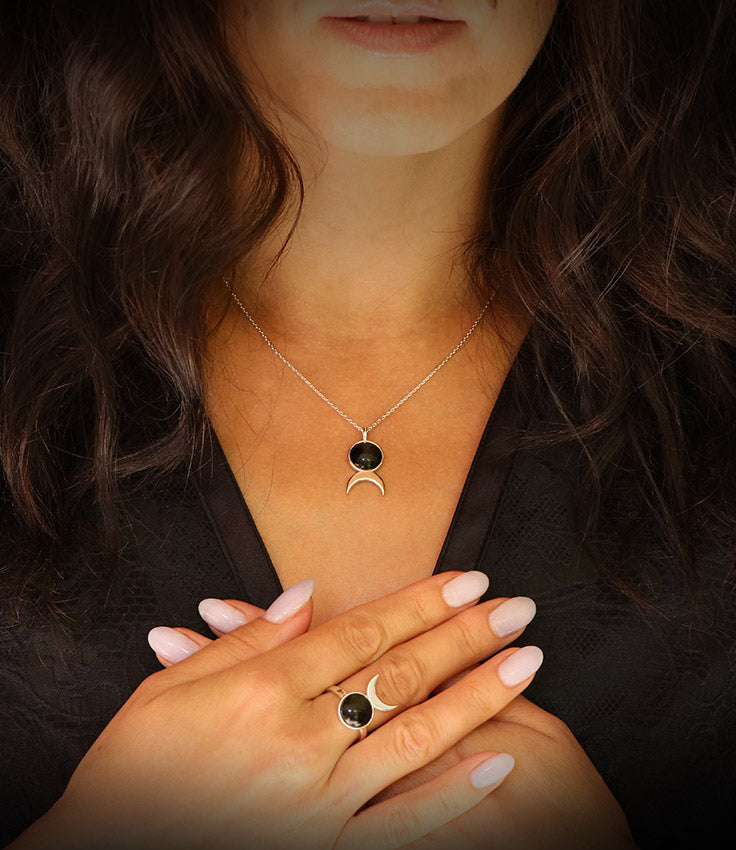
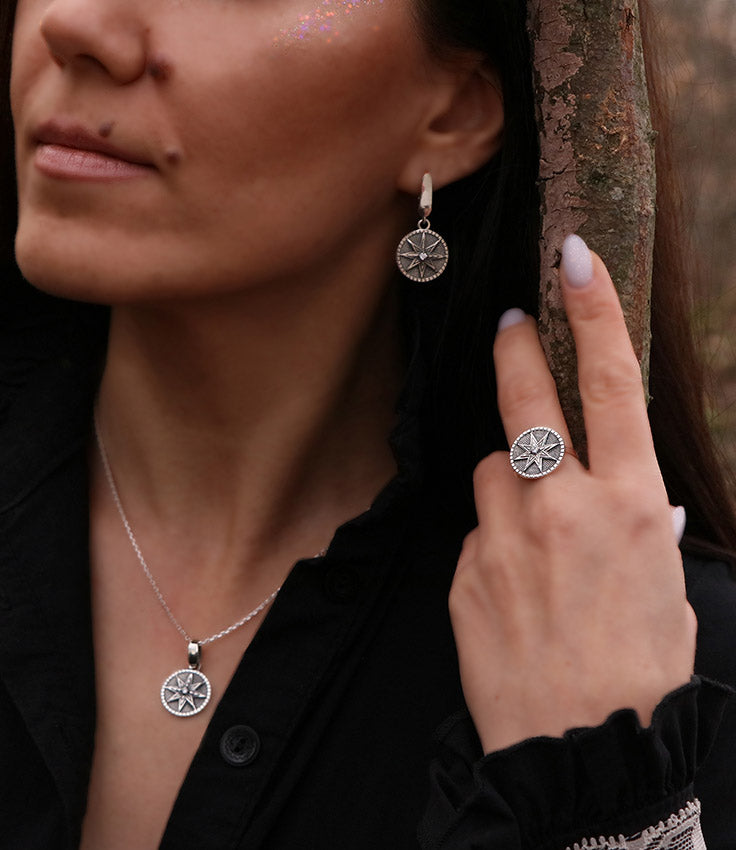

The words “handmade,” “925 silver,” and “artisan” appear on thousands of listings, but they do not always describe the same thing. A factory-made alloy pendant can be photographed and resold by many shops while each seller presents it as a personal creation. Learning to read a listing carefully helps you choose jewelry whose design, material, and price match the claims being made.
What authentic handmade jewelry means
Authentic does not mean primitive or made without technology. A small workshop may use digital modeling, wax carving, casting equipment, rotary tools, soldering, hand engraving, oxidizing, and polishing. The important questions are who created the design, who controls production, where the work is finished, and whether the description is honest.
Some makers produce every element from raw metal. Others work with specialist casters and then complete assembly and finishing in their own studio. Both can be legitimate forms of studio production when explained clearly. The problem is not the use of tools; it is presenting anonymous wholesale merchandise as an original handmade design.
Original design and authorship
Look for a consistent visual language across the shop, sketches or workshop images, and descriptions that explain why a design has a particular form. Search the main product image with an image-search tool. If identical photographs and objects appear in dozens of unrelated stores at radically different prices, the piece is likely distributed through a wholesale catalog.
Symbols deserve the same attention. A responsible maker distinguishes ancient evidence, later occult development, and modern Pagan interpretation. Complicated invented legends may sound impressive but are not proof of authenticity. Our Pagan Jewelry Guide explains the context behind several widely worn motifs.
Read the material description
Sterling silver normally means an alloy containing 92.5 percent silver. A 925 mark can support the description, but a stamp alone is not independent proof because stamps can be copied. The seller should also state whether chains, findings, solder, and stones differ from the main pendant.
Silver-plated jewelry has a thin silver layer over another metal. It may be attractive and affordable, but the coating can wear through. “Silver tone,” “Tibetan silver,” “German silver,” and “silver color” usually do not mean solid sterling silver. Nickel silver, for example, typically contains copper, nickel, and zinc rather than elemental silver.
Bronze and brass are valid materials when named honestly. Both can develop patina and may leave a temporary mark on skin. That is different from claiming they are precious metal.
Why handmade prices differ
The price of a handmade sterling silver pendant includes more than raw metal. It may cover research, design, prototyping, molds, casting loss, soldering, stone setting, finishing, photography, taxes, platform fees, packaging, and the time required to correct failed pieces. A workshop producing small batches cannot match the unit price of a factory casting thousands of copies from a design it did not develop.
A high price alone does not prove quality, but an implausibly low price can be a warning. Compare the stated weight with the current value of silver and ask whether the total could realistically cover material and labor.
Photographs and product details
- Look for front, back, side, scale, and worn views.
- Check exact dimensions rather than relying on close-up photography.
- Read the weight, metal, finish, stone identity, and chain information.
- Notice whether every image shows the same design details.
- Be cautious when a listing uses only renders or heavily altered images.
A genuine maker should be able to describe small variations caused by hand finishing instead of promising that every piece will be microscopically identical.
Questions to ask a maker
Useful questions include: Is this your original design? Where is it made? Is the entire piece sterling silver or only the surface? Is the stone natural, laboratory-grown, glass, or resin? How long does production take? Can the finish be repaired? A clear reply is often more revealing than a long marketing description.
How Pagan Workshop works
Gor develops Pagan Workshop designs and produces them in small batches in Ukraine. Pieces such as the Star of Ishtar Necklace, Hecate Key Necklace, and Classic Pentagram Necklace are based on original workshop models and finished by hand. Product pages identify available metals and variants so a bronze option is not confused with sterling silver.
Frequently asked questions
Does 925 always mean genuine sterling silver?
No. It is a useful mark, but it can be copied. Seller transparency, testing, reputation, and realistic pricing also matter.
Can cast jewelry still be handmade?
Yes. Casting is an old metalworking process. A studio can create the model, manage small-batch casting, and complete soldering, finishing, and assembly by hand.
Why do handmade pieces vary slightly?
Polishing, patina, stone pattern, and small finishing details naturally vary. The core design and stated dimensions should remain consistent.
Is mass-produced jewelry always bad?
No. The issue is honest labeling. A factory-made piece can be affordable and useful, but it should not be sold through a false story of personal craftsmanship.