
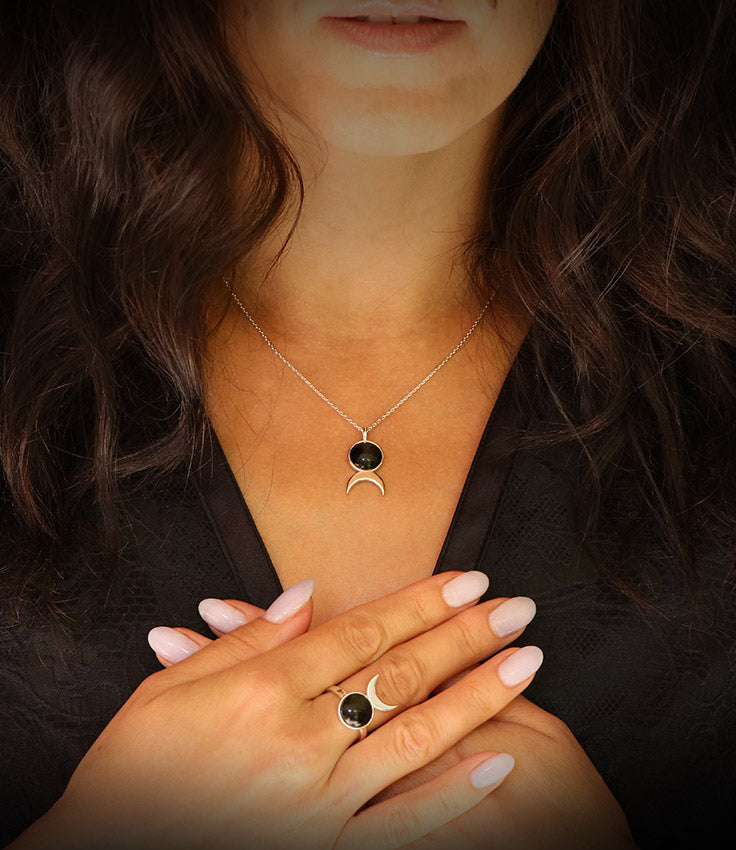


Sterling silver is made to be worn, but it changes with air, moisture, skin chemistry, cosmetics, and time. A darker surface does not automatically mean that the metal is poor quality. Tarnish is a normal chemical reaction, and on symbolic jewelry it often settles into recesses in a way that makes the design easier to read.
The safest cleaning method is usually the least aggressive one. Before using a dip, paste, or home remedy, consider whether the piece contains a stone, glued element, deliberate blackening, or a fragile chain.
Why sterling silver tarnishes
Sterling silver is typically 92.5 percent silver combined with other metals, most often copper, to make it stronger. Sulfur-containing compounds in the air and environment react with the surface and form a darker layer. Humidity, sweat, perfume, lotions, household chemicals, wool, rubber, and some storage materials can accelerate the process.
Tarnish is different from plating wearing off. Solid sterling silver can generally be cleaned and refinished because the silver alloy continues beneath the surface. A plated object requires more caution because aggressive polishing can remove the thin silver layer.
Routine cleaning
- Wash and dry your hands before handling the piece.
- Wipe the jewelry gently with a clean silver-polishing cloth.
- Follow the direction of the metal rather than scrubbing one spot repeatedly.
- Use a dry soft brush to remove dust from deep texture when needed.
- Stop when the raised surfaces brighten and the intended dark detail remains.
For plain sterling silver without porous stones or intentionally oxidized areas, a brief wash in lukewarm water with a small amount of mild unscented dish soap may help. Use a very soft brush, rinse carefully, and dry completely with a lint-free cloth. Do not soak the piece unless you know every component can tolerate water.
When deeper cleaning is needed
If ordinary wiping does not remove heavy tarnish, contact the maker or a professional jeweler. They can identify whether the surface is solid silver, plated, lacquered, or deliberately oxidized. Mechanical polishing can restore a badly darkened solid-silver piece, but it also removes a microscopic amount of metal and can soften fine details when repeated too often.
Commercial silver dips work quickly because they chemically remove tarnish. They can also strip the dark patina placed in recessed lines and may harm stones, adhesives, or finishes. Use them only when the manufacturer confirms compatibility with the entire piece.
What to avoid
- Toothpaste and abrasive household powders, which can scratch polished surfaces.
- Chlorine bleach, pool water, and strong cleaning chemicals.
- Repeated baking-soda scrubbing on detailed or oxidized jewelry.
- Ultrasonic or steam cleaning without confirming that the stone and construction are suitable.
- Pulling a polishing cloth hard across delicate chains or projecting details.
- Storing damp jewelry in a closed container.
Jewelry with stones and darkened details
Porous stones such as turquoise, opal, pearl, amber, and some treated gems require special care. Even harder stones can be damaged by heat, sudden temperature changes, or chemicals. Clean around a stone with a lightly dampened cloth and avoid soaking unless the maker confirms it is safe.
Many Pagan Workshop pieces use deliberate oxidation to emphasize symbols. The dark areas in a Hecate Key Necklace or Classic Pentagram Necklace are part of the finish. Polish the raised surfaces gently instead of trying to make every recess bright.
Storage and daily wear
Store clean, dry pieces separately in small anti-tarnish bags or lined boxes. Keep chains fastened to reduce tangling. Silica gel can help control moisture, but it should not touch delicate surfaces and must be kept away from children and animals.
Apply perfume, lotion, sunscreen, and hair products before putting jewelry on. Remove silver before swimming, household cleaning, or working with chemicals. Daily wear can keep some smooth areas bright through gentle friction, while recessed areas develop a natural contrast.
When to contact the workshop
If a clasp fails, a stone becomes loose, or a finish changes unexpectedly, stop wearing the piece and ask before attempting a repair. The Star of Ishtar Necklace and other detailed designs can usually be assessed more accurately from clear front, back, and side photographs. Include the order information and describe which cleaning products have been used.
Frequently asked questions
Does real sterling silver turn black?
Yes. Genuine sterling silver can tarnish dark gray or black. Tarnish alone does not prove that a piece is fake.
Can I shower while wearing sterling silver?
Plain silver tolerates occasional clean water, but soaps, hard-water minerals, stones, cords, and finishes complicate the answer. Removing the piece is the safer routine.
Can I use baking soda and aluminum foil?
The method can remove tarnish but may also strip intentional oxidation and affect stones or mixed materials. It is not the default choice for detailed artisan jewelry.
How often should silver be polished?
Only when needed. Gentle wiping after wear and dry storage reduce the need for stronger cleaning.