
The short answer: Pagan astrology is not one ancient system or one modern religion. The phrase usually describes contemporary ways of bringing astrology into Pagan, polytheist, witchcraft, or nature-centered practice. A grounded approach begins with the history of astrology, learns one chart system clearly, and treats deity and element correspondences as tradition-specific rather than universal facts.
Pagan astrology at a glance
- Astrology: a family of systems that interpret relationships between celestial movements and life on Earth.
- Paganism: a broad family of modern religious and spiritual paths, not one church with a required astrology.
- Common meeting points: planetary deities, lunar calendars, seasonal festivals, elements, ritual timing, and personal reflection.
- Historical caution: Greek, Roman, Egyptian, Mesopotamian, Indian, and modern occult systems should not be blended without context.
What is Pagan astrology?
Pagan astrology is a modern umbrella term rather than the name of one standardized historical tradition. A Hellenic polytheist may study planets through Greek religious and astrological sources. A modern witch may use moon phases or a natal chart in ritual reflection. A nature-centered Pagan may connect the zodiac year with local seasonal observation.
These approaches can overlap, but they do not become identical simply because they look at the same sky. The most reliable practice names its sources and separates historical evidence, later esoteric correspondence, and personal experience.
Did ancient Pagans practice astrology?
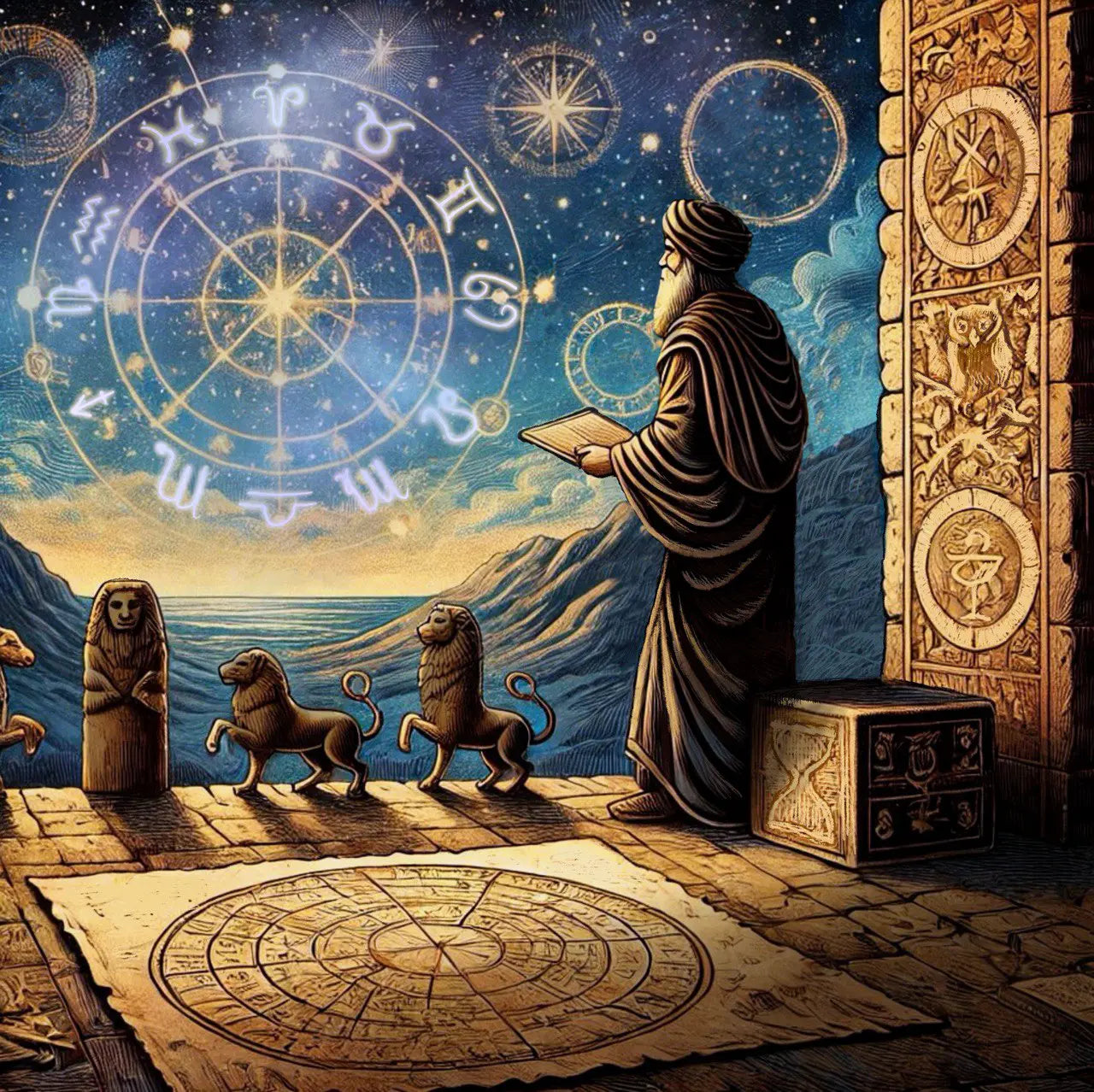
Several ancient societies practiced forms of celestial divination and astrology, but “ancient Pagans” were not one people. Mesopotamian scholars recorded celestial omens; Hellenistic astrologers developed techniques using planets, signs, houses, and aspects; Roman, Egyptian, Persian, and later Arabic scholars transmitted and transformed astrological knowledge.
Modern Pagan astrology inherits from this long, complicated history through translations, occult revivals, popular sun-sign astrology, and living religious reconstruction. It should not be described as one unchanged secret system preserved from prehistory.
The seven traditional planets
Traditional Western astrology works with seven visible celestial powers: Sun, Moon, Mercury, Venus, Mars, Jupiter, and Saturn. The Sun and Moon are called planets in this technical astrological framework even though modern astronomy classifies them differently.
- Sun: vitality, visibility, authority, and coherence.
- Moon: change, habit, body, memory, and cyclical time.
- Mercury: speech, writing, exchange, travel, and interpretation.
- Venus: attraction, relationship, value, beauty, and agreement.
- Mars: assertion, conflict, courage, separation, and effort.
- Jupiter: growth, law, generosity, rank, and confidence.
- Saturn: limits, duration, responsibility, consequence, and age.
These are broad astrological themes, not promises about what a planet will cause on a specific day.
Planets and deities
Planetary names in English preserve Roman divine names, but celestial bodies were understood through several cultures long before and after Rome. Comparison is useful when it respects differences between languages, cults, and periods.
Venus offers a clear example. In Mesopotamian religion, Inanna and Ishtar had an astral identity connected with Venus as morning and evening star. This relationship is historically grounded, but it does not mean that Roman Venus, Greek Aphrodite, and Mesopotamian Ishtar were simply one unchanged goddess. Read Ishtar and Inanna: Goddess, History, Myths, and Symbols and the Star of Ishtar guide for the Mesopotamian context.
Is Hecate a Moon goddess in astrology?
Hecate acquired strong lunar and nocturnal associations, especially in later antiquity and through connections with Artemis and Selene. Modern astrologers may connect Hecate with the Moon, crossroads in a chart, particular asteroids, or times of transition.
Those modern techniques should be labelled clearly. Hecate is not one of the seven traditional planets, and no single asteroid placement can define a person’s devotional relationship with her. Historical attributes such as torches, keys, dogs, boundaries, and crossroads remain important alongside later lunar symbolism.
The zodiac, houses, and aspects
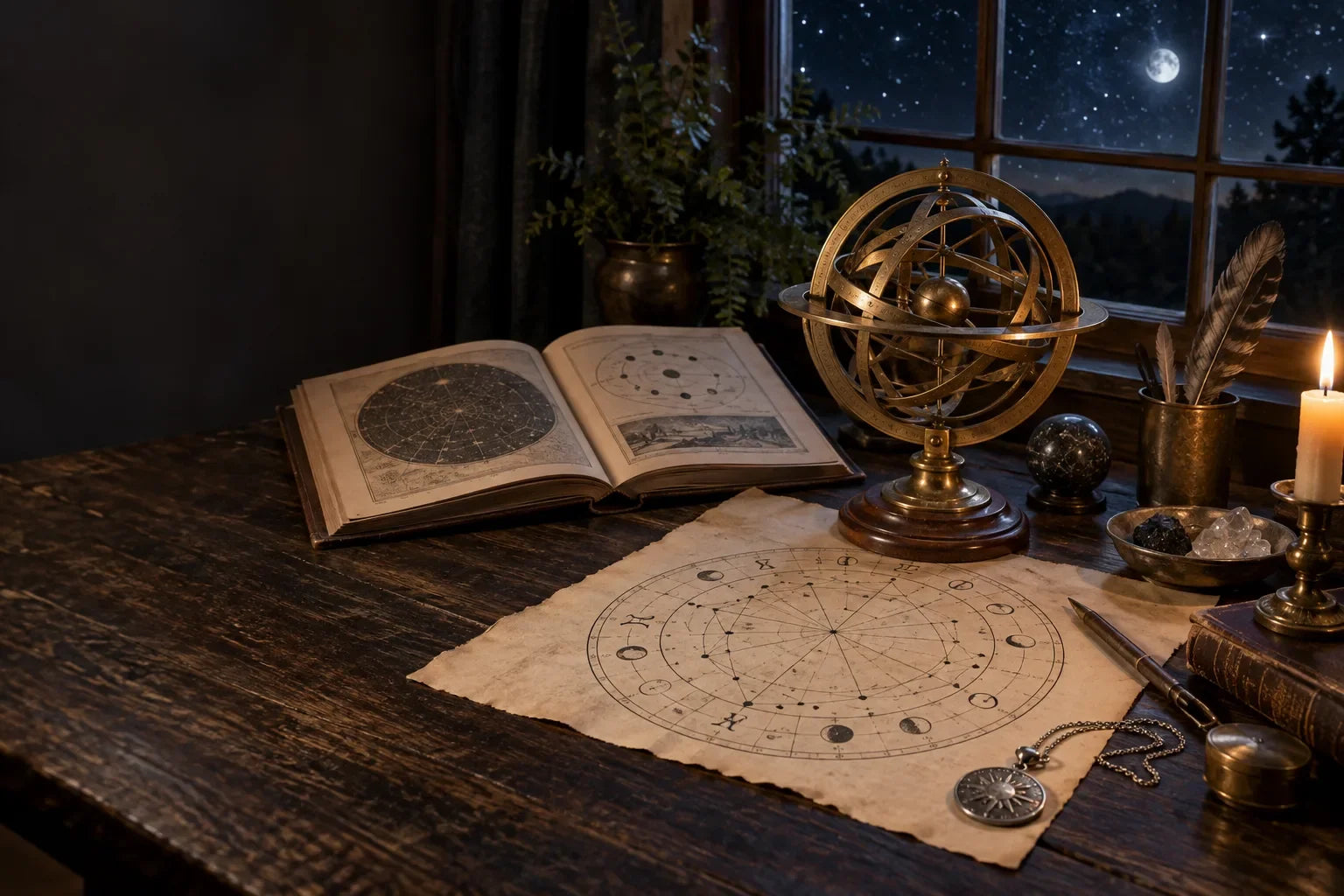
A natal chart is a map of the sky calculated for a time and place. Its main components include:
- Planets: what kind of function or activity is being described.
- Signs: how that function tends to express itself.
- Houses: where in life the theme becomes visible.
- Aspects: angular relationships showing how chart factors interact.
Sun-sign descriptions use only one part of this structure. They can be an accessible doorway, but they are not the whole chart.
Elements in astrology and Pagan practice
Western astrology groups zodiac signs into fire, earth, air, and water. Many modern Pagan systems also use these four elements, sometimes adding spirit as a fifth ritual principle. The systems overlap historically through philosophy, medicine, ceremonial magic, and later occultism, but their tables are not interchangeable in every detail.
Use correspondences as a documented framework rather than an absolute natural law. Our five elements guide explains how the modern Pagan model developed.
Moon phases and modern practice
Many practitioners use the lunar month as a simple rhythm for observation:
- New Moon: rest, planning, or beginnings in modern correspondence.
- Waxing Moon: building, learning, and sustained effort.
- Full Moon: visibility, culmination, celebration, or review.
- Waning Moon: release, reduction, completion, and recovery.
These meanings are living modern conventions, not scientifically measurable forces. A useful lunar practice begins by observing the real Moon, recording experience, and avoiding fear-based claims about eclipses or retrogrades.
Astrology and the Wheel of the Year
The solstices and equinoxes are astronomical events caused by Earth’s orbit and axial tilt. The modern Pagan Wheel of the Year combines these solar points with several seasonal festivals. Zodiac seasons also follow the Sun’s annual cycle, creating natural opportunities for comparison.
Do not let a generalized Northern Hemisphere chart replace local ecology. Seasons reverse in the Southern Hemisphere, and climate does not follow one European agricultural calendar everywhere.
How to begin a Pagan astrology practice
- Learn the basic language of planets, signs, houses, and aspects from one coherent tradition.
- Keep an observation journal before adding many correspondences.
- Choose one celestial rhythm - lunar phases or the solar year - and follow it for several months.
- Study a deity through historical and religious sources before assigning the deity to a planet or sign.
- Label personal experiences as personal rather than universal.
- Use astrology for reflection, not to replace medical, legal, financial, or safety decisions.
Do you need jewelry, crystals, or ritual tools?
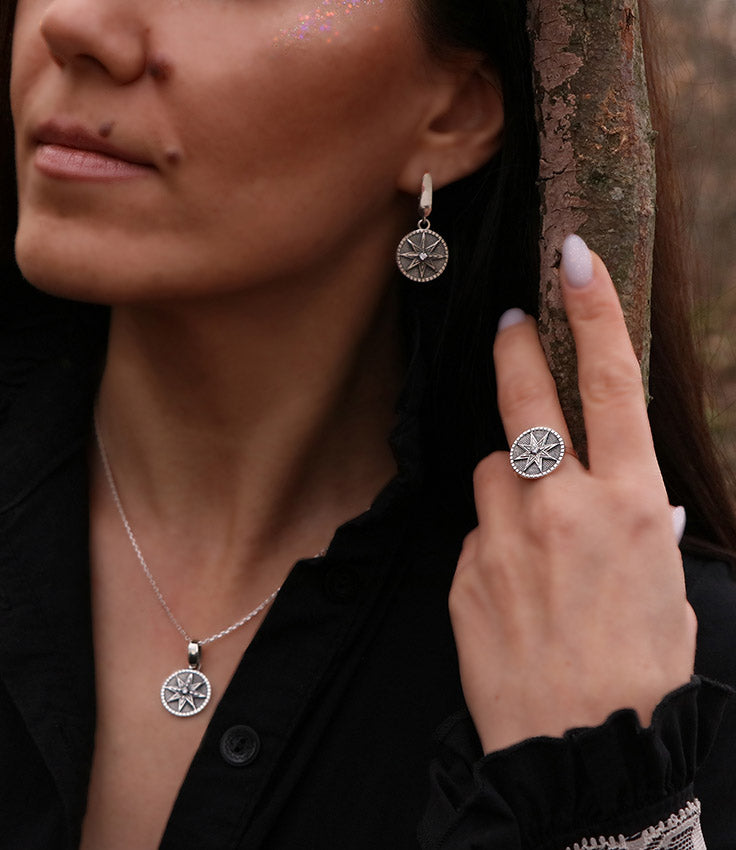
No purchase is required. A printed chart, notebook, sky map, and regular observation are enough. Jewelry can serve as a reminder of a planet, deity, or commitment when its symbolism is understood, but material objects do not make an astrological practice more valid.
Frequently asked questions
Is astrology part of Paganism?
It can be, but it is not required. Some Pagan traditions use astrology extensively, while others focus on reconstruction, land, ancestors, deities, or community without using natal charts.
What is the difference between Pagan astrology and regular astrology?
The chart techniques may be the same. “Pagan astrology” usually describes the religious or spiritual context in which a person relates astrology to deities, ritual, seasons, or nature-centered practice.
Which planet is connected with Ishtar?
Inanna and Ishtar are historically associated with Venus as morning and evening star. Their Mesopotamian tradition should still be distinguished from Greek Aphrodite and Roman Venus.
Is Hecate connected with the Moon?
Yes, especially in later antiquity and modern practice, but Hecate’s identity also includes crossroads, torches, keys, dogs, boundaries, and transition.
Can astrology predict the future?
Astrological traditions interpret patterns and timing in different ways, but no chart should be treated as a guarantee or used to replace evidence, professional advice, or personal responsibility.