

A grounded note: Astrology is a symbolic and divinatory tradition, not a scientifically validated method for predicting events or personality. Historical evidence, modern correspondence systems and personal interpretation are identified separately in this guide.
Astrology has intrigued humanity for centuries, offering insights into our personalities, relationships, and life paths. But how does it actually work? Let’s delve into the fundamentals of astrology and explore the ways it seeks to connect celestial movements with our earthly experiences.
The Basics of Astrology
At its core, astrology is the study of the positions and movements of celestial bodies—such as planets and stars—and their influence on human affairs. Astrologers believe that these cosmic elements can provide insight into individual traits, tendencies, and even life events.
The Birth Chart: Your Cosmic Blueprint
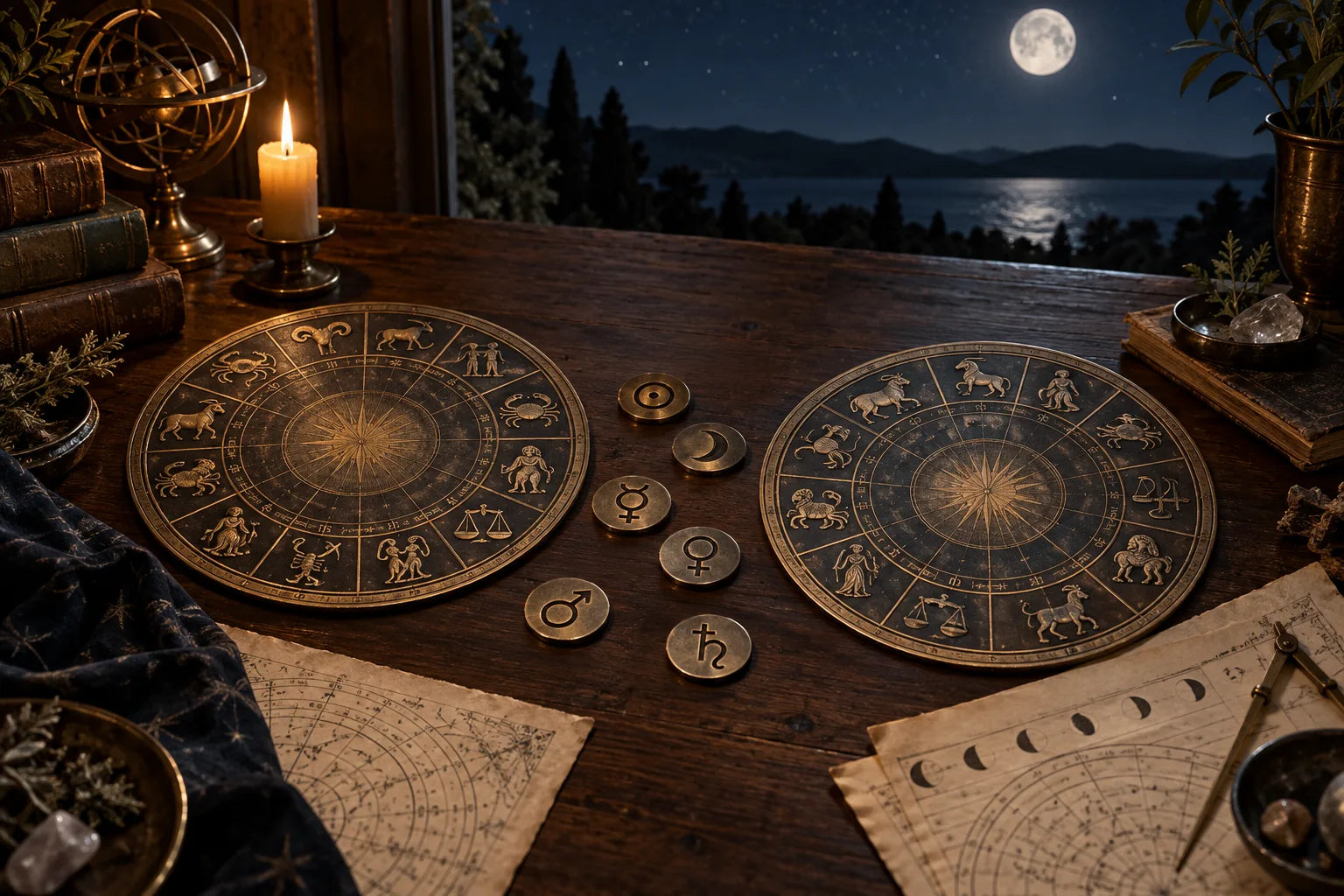
The foundation of astrological practice lies in the birth chart, or natal chart. This chart is a snapshot of the sky at the exact moment and location of your birth. It maps the positions of the Sun, Moon, and planets across the twelve zodiac signs and houses, creating a unique cosmic fingerprint that reflects your personality and life path.
Zodiac Signs: There are twelve zodiac signs, each representing different traits and energies. Your Sun sign (the sign the Sun was in at your birth) is often the most recognized aspect of your chart, but the Moon sign and Rising sign (or Ascendant) are equally significant in shaping your identity.
Houses: The birth chart is divided into twelve houses, each corresponding to different areas of life, such as relationships, career, and spirituality. The placement of planets in these houses influences how you experience these aspects.
Planetary Influences
Each planet in our solar system carries distinct energies and associations:
Sun: Vitality and self-expression
Moon: Emotions and intuition
Mercury: Communication and intellect
Venus: Love and beauty
Mars: Action and drive
Jupiter: Growth and expansion
Saturn: Discipline and responsibility
Uranus: Innovation and change
Neptune: Dreams and spirituality
Pluto: Transformation and rebirth
The positions of these planets at your time of birth, as well as their movements through the sky (transits), influence your life experiences and personal development.
Aspects: The Relationships Between Planets
In addition to their positions, the angles between planets—known as aspects—play a crucial role in astrology. Aspects can be harmonious (like trines and sextiles) or challenging (like squares and oppositions). These relationships highlight how different energies interact within your chart, shaping your experiences and challenges.
Transits and Progressions
Astrology is not static; it evolves with the movement of celestial bodies. Transits refer to the ongoing movement of planets through the zodiac and their relationship to your natal chart. For instance, when a planet transits your Sun sign, it can signify a time of growth or challenge.
The Role of Intuition and Interpretation
Astrology combines both mathematical precision and intuitive interpretation. While the calculations provide a framework, skilled astrologers rely on their intuition and experience to interpret the chart’s nuances. Each chart is unique, and the insights drawn depend on the astrologer’s ability to weave together the various elements.
Practical Applications of Astrology
Many people use astrology for self-discovery, personal growth, and understanding relationships. It can provide guidance during significant life changes, help navigate challenges, and enhance self-awareness.
Conclusion
Astrology offers a rich tapestry of insights into our lives, weaving together the cosmic and the personal. By exploring your birth chart and the movements of celestial bodies, you can gain a deeper understanding of yourself and your place in the universe. Embrace the journey, and let the stars illuminate your path!
Sources and further reading
- Encyclopaedia Britannica - Astrology
- Pagan Astrology for Beginners: Planets, Deities & Practice
- Pagan Knowledge Hub
Frequently asked questions
Is astrology scientifically proven?
No. Astrology is a symbolic and divinatory tradition, not a scientifically validated method for predicting events or personality.
What information is needed for a birth chart?
A chart normally uses the date, exact time and location of birth to calculate the positions of planets and the local horizon.
What is the difference between a birth chart and a horoscope?
A birth chart maps one specific time and place. A horoscope is an interpretation based on a chart or a selected astrological period.