

Sacred Winter Symbols of the Solstice and the Return of Light
As the wheel of the year turns toward the Winter Solstice, the ancient festival of Yule emerges from the darkness like the first returning light after the longest night. Deeply rooted in pagan, Norse, and Germanic traditions, Yule is filled with sacred symbols representing rebirth, protection, transformation, ancestral wisdom, and the eternal cycle of nature.
For centuries, people have decorated their homes with evergreens, lit sacred fires, crafted ritual objects, and honored solar symbols during this mystical season. Many of these traditions continue today, often hidden beneath modern winter celebrations, yet their ancient meanings still remain.
Yule symbols are more than decorations. In many pagan traditions, they are seen as carriers of spiritual energy and reminders of humanity’s connection to nature, darkness, and the rebirth of light.
Table of Contents

What Does Yule Symbolize?
At its core, Yule symbolizes:
- The rebirth of the Sun
- Hope during darkness
- Renewal and transformation
- The continuation of life
- The sacred cycle of death and rebirth
- Spiritual endurance through winter
The Winter Solstice marks the moment when darkness reaches its peak and the days slowly begin growing longer again. For ancient peoples, this celestial turning point carried profound spiritual importance.
Many Yule symbols reflect this balance between darkness and returning light.
The Yule Sun Wheel
One of the oldest symbols associated with Yule is the solar wheel or sun wheel.
The circular form represents:
- The eternal cycle of seasons
- The turning Wheel of the Year
- The rebirth of solar energy
- Cosmic balance and continuity
In many ancient cultures, wheels, spirals, and circular symbols were connected to the Sun and the movement of celestial forces.
During Yule, the returning Sun was often celebrated as a sacred victory over darkness.
Evergreen Trees & Branches
Evergreen trees remain alive through winter when much of nature appears dormant. Because of this, they became powerful symbols of immortality, endurance, protection, and eternal life.
Common sacred evergreens include:
- Pine
- Fir
- Cedar
- Juniper
- Holly
Ancient peoples brought evergreen branches indoors during winter to invite life force and spiritual protection into the home.
The modern tradition of decorating a winter tree may trace part of its origins back to these older pagan customs.
The Yule Log
The Yule log is one of the most iconic symbols of the Winter Solstice.
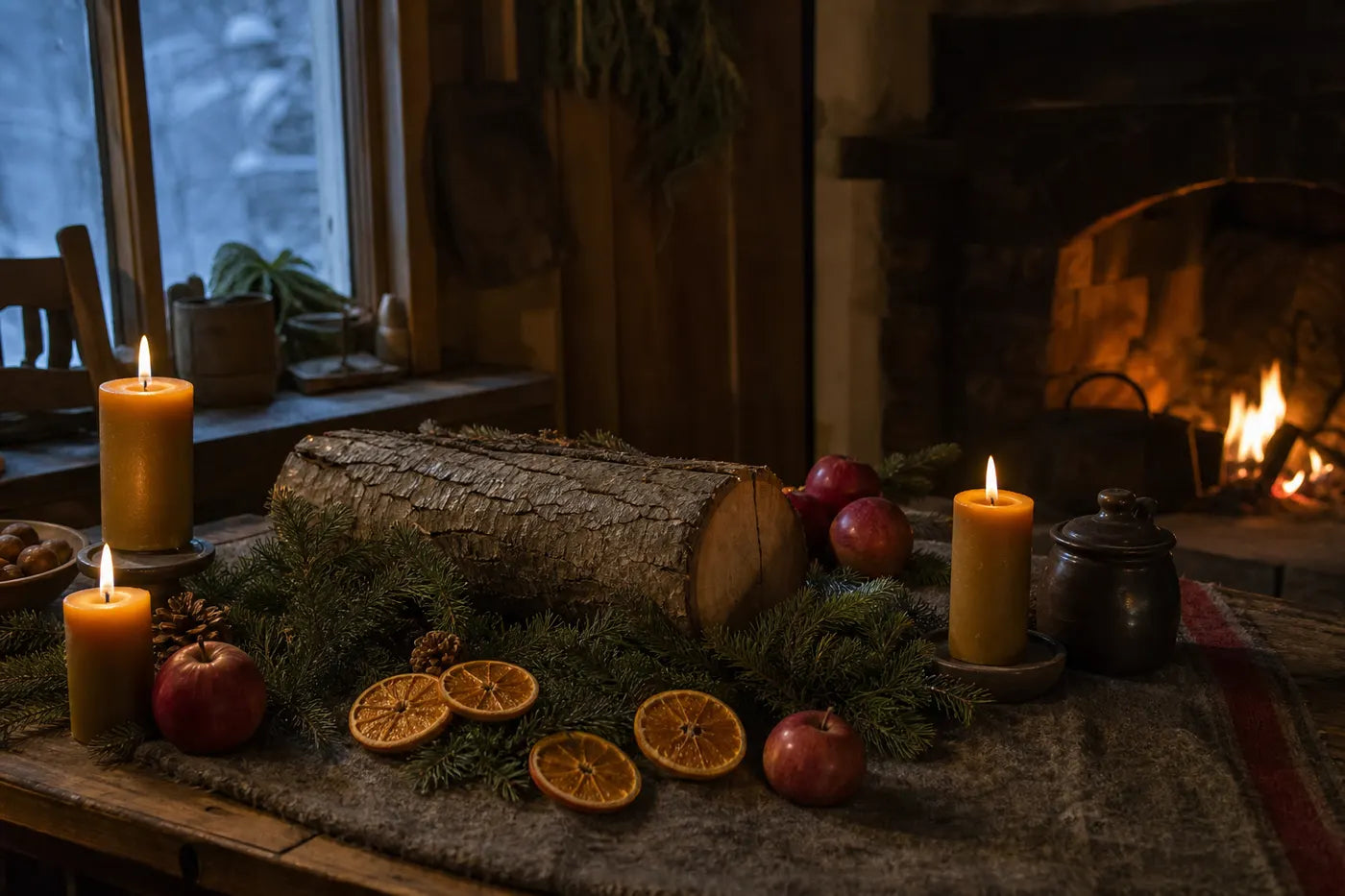
Traditionally, a large sacred log would burn through the longest night of the year. The fire symbolized:
- The returning Sun
- Protection from darkness
- Renewal of life energy
- Spiritual purification
Ashes from the Yule log were sometimes kept as protective charms or scattered over fields for blessings and fertility.
Even today, lighting candles or fireplaces during Yule echoes this ancient symbolism of sacred winter fire.
Candles & Sacred Fire
Fire has always held deep spiritual meaning during Yule.
Candles symbolize:
- Light returning to the world
- Inner spiritual awakening
- Hope during difficult times
- Protection against darkness
Many pagan practitioners light candles during the solstice night as an act of intention, meditation, remembrance, or prayer.
The flame becomes both an outer and inner symbol - representing the fire of consciousness surviving through winter darkness.
Holly, Mistletoe & Winter Plants
Winter plants carried strong symbolic meaning in ancient Yule traditions.
Holly
Holly represented:
- Protection
- Strength
- Survival through hardship
- Sacred masculine solar energy in some traditions
Mistletoe
Mistletoe was often viewed as magical and liminal - a plant suspended between heaven and earth.
It symbolized:
- Peace
- Fertility
- Blessings
- Spiritual connection
Ivy
Ivy represented:
- Endurance
- Fidelity
- The eternal cycle of life
Together, these plants formed sacred winter decorations believed to carry protective and spiritual power.
Deer, Stags & Horned Symbolism
In many pagan traditions, deer and stags were associated with wilderness, spiritual power, rebirth, and the sacred forces of nature.
Antlers symbolized:
- Renewal
- Strength
- Cycles of growth
- Connection between earth and sky
The horned figure appearing in winter folklore may also connect symbolically to ancient nature deities and the untamed spirit of the forest.
Runes During Yule
Runes were often used during winter rituals for:
- Divination
- Protection
- Spiritual guidance
- Connection with ancestral wisdom
Certain runes are especially associated with themes of Yule and renewal:
- Fehu - abundance and prosperity
- Jera - cycles and harvest
- Sowilo - the Sun and victory
- Algiz - protection
- Berkano - rebirth and new beginnings
Many practitioners carve or meditate upon runes during the solstice season.
The Meaning of Darkness During Yule
One of the deepest spiritual ideas within Yule is the sacred meaning of darkness itself.
In many pagan traditions, darkness is not viewed as evil. Instead, it represents:
- Rest
- Mystery
- Incubation
- Inner transformation
- Hidden wisdom
Winter becomes a sacred pause - a time when the soul turns inward before the rebirth of spring.
The return of light only becomes meaningful because darkness came first.
Modern Pagan Interpretations of Yule Symbols
Modern pagans continue to work with Yule symbols in both traditional and personal ways.
Some people create:
- Winter altars
- Handmade talismans
- Rune rituals
- Candle ceremonies
- Sacred ornaments
- Protection charms
- Nature-based decorations
For many practitioners, Yule symbolism becomes a way to reconnect with ancient rhythms in a modern world that often feels disconnected from nature.
Final Thoughts
Yule symbols carry ancient memories hidden within winter traditions that still survive today.
The sacred fire. The evergreen tree. The returning Sun. The silent forest. The wheel turning once more.
Each symbol reminds us that life continues even through darkness, and that renewal is always waiting beyond the longest night.
Yule teaches patience, endurance, reflection, and hope - not through loud celebration, but through quiet light carried carefully through winter.