Reviewed and updated Jul 27, 2026
Samhain and Halloween are related, but they are not identical. Samhain is a Gaelic seasonal festival associated with the beginning of winter, while Halloween is the evening before All Saints’ Day. In Ireland, the dates and customs became intertwined over centuries. Modern Halloween also developed through Christian calendars, Irish and Scottish folk traditions, migration, and North American popular culture.
This guide explains the relationship without treating every Halloween custom as an unchanged survival from an ancient Celtic festival. For the larger seasonal context, read our complete Samhain pillar guide or open the interactive Wheel of the Year.
Samhain vs Halloween at a glance
| Question | Samhain | Halloween |
|---|---|---|
| What is it? | A Gaelic seasonal festival marking the opening of winter. | The eve of All Saints’ Day, now also a global secular celebration. |
| When? | November 1, traditionally celebrated from the preceding evening. | October 31. |
| Name origin | Irish Samhain, associated with the winter season. | A contraction of “All Hallows’ Eve.” |
| Documented themes | Seasonal transition, gatherings, food, protection, divination, the dead and otherworldly danger. | Costumes, games, visiting, treats, lanterns, ghosts and later commercial entertainment. |
| Are they the same? | No. They overlap historically and culturally, especially in Ireland, but each term has a distinct history. | |
What was Samhain?
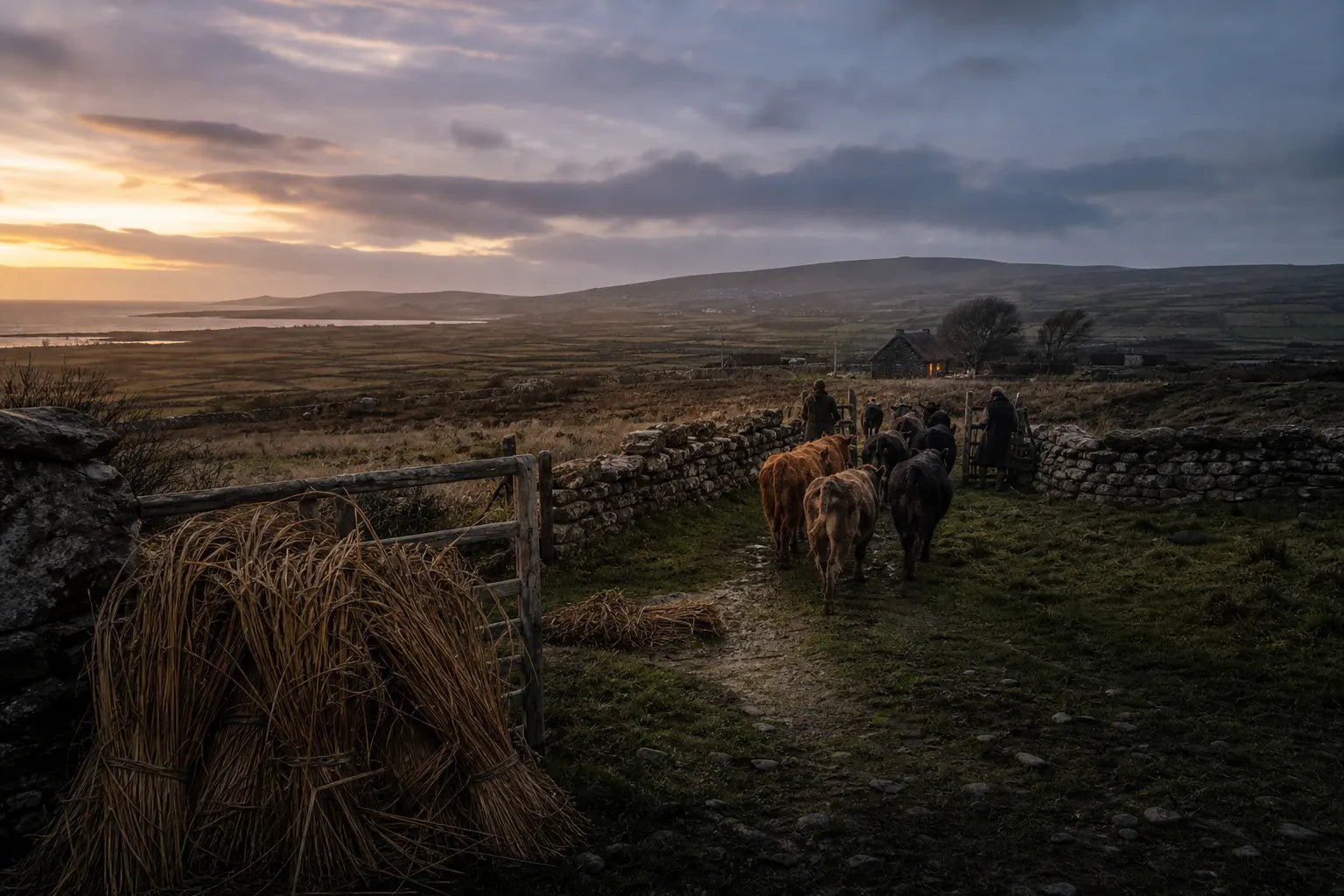
Samhain was one of the major seasonal markers in the traditional Gaelic calendar. In Irish tradition, November 1 marked the beginning of winter, and celebrations concentrated on the preceding evening, Oíche Shamhna. The surviving evidence comes from medieval literature, later historical references, and extensive folklore records. These sources belong to different periods and should not be flattened into one timeless ritual.
Samhain was a threshold in the agricultural year. Livestock, stored food, weather, household security and community relationships all mattered as winter began. Stories and later customs also connect the night with the returning dead, fairies, danger, divination and protective action. That combination helps explain why themes of darkness and the supernatural remained powerful.
Where does the name Halloween come from?
Halloween means All Hallows’ Eve: the evening before the Christian Feast of All Saints on November 1. All Souls’ Day follows on November 2. These Christian observances shaped the calendar and language of the period, while local seasonal customs continued and changed around the same dates.
It is therefore too simple to say that Halloween is either “purely Pagan” or “purely Christian.” Historical festivals are often layered. In Ireland and Scotland, seasonal customs, beliefs about the dead, Christian observance, games and household practices interacted for generations. Migration later carried many of these traditions to North America, where they developed in new social and commercial settings.
Which Halloween customs have Irish or Samhain connections?
Guising, masks and visiting houses
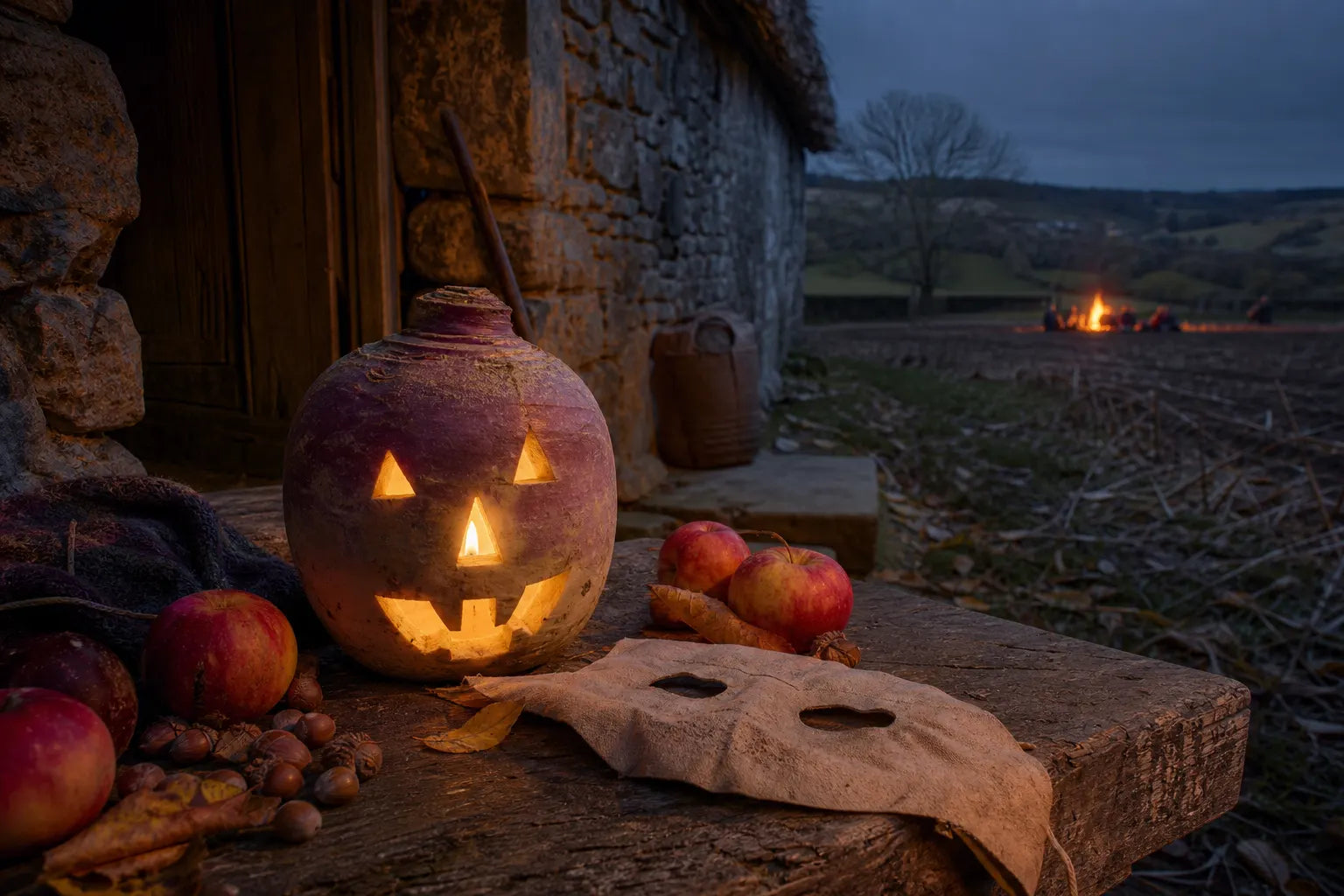
Irish folklore records describe groups wearing disguises or homemade masks, visiting houses and providing entertainment in return for food or money. These practices are meaningful ancestors of modern costumed visiting, but modern trick-or-treating was shaped by additional British and North American developments.
Turnip lanterns and pumpkins
Carved turnip lanterns are documented in Irish Halloween tradition. The National Museum of Ireland preserves an example associated with Donegal and notes that pumpkins are an American development of the lantern custom. A pumpkin is therefore a valid modern Halloween symbol, but it should not be presented as an ancient Irish Samhain object.
Food, games and divination
Apples, nuts, colcannon and báirín breac appear in Irish Halloween celebrations. Games tested skill or luck, and hidden objects could be used for fortune-telling about marriage, prosperity or the coming year. The Schools’ Collection at dúchas.ie records many local versions from the 1930s, showing both shared patterns and regional variation.
The dead, spirits and protection
Tradition held that the dead might return to the family home and that dangerous beings were active. Protective crosses, holy water, candles and rules about travel reflect a world in which religious, folk and household practices were not neatly separated. Modern claims about a universal “veil between worlds” are later interpretive language; the older evidence is more varied and concrete.
What popular claims are not securely proven?
- There is no evidence that every ancient Celtic people followed one identical Samhain ritual.
- Modern pumpkins were not part of ancient Irish Samhain.
- The surviving evidence does not prove that Halloween costumes came from one single practice of hiding from spirits.
- Samhain was not a historical “Celtic god of the dead.” It is the name of the festival and season.
- Claims that one exact night opened a universal metaphysical “veil” should be identified as modern spiritual interpretation.
How can modern Pagans observe Samhain without confusing it with Halloween?
You can enjoy both while naming them accurately. A Samhain observance may focus on seasonal change, remembrance, household preparation, ancestry, hospitality or the completion of harvest work. Halloween can remain a time for costumes, storytelling, decorations, treats and community play.
A simple, responsible observance could include:
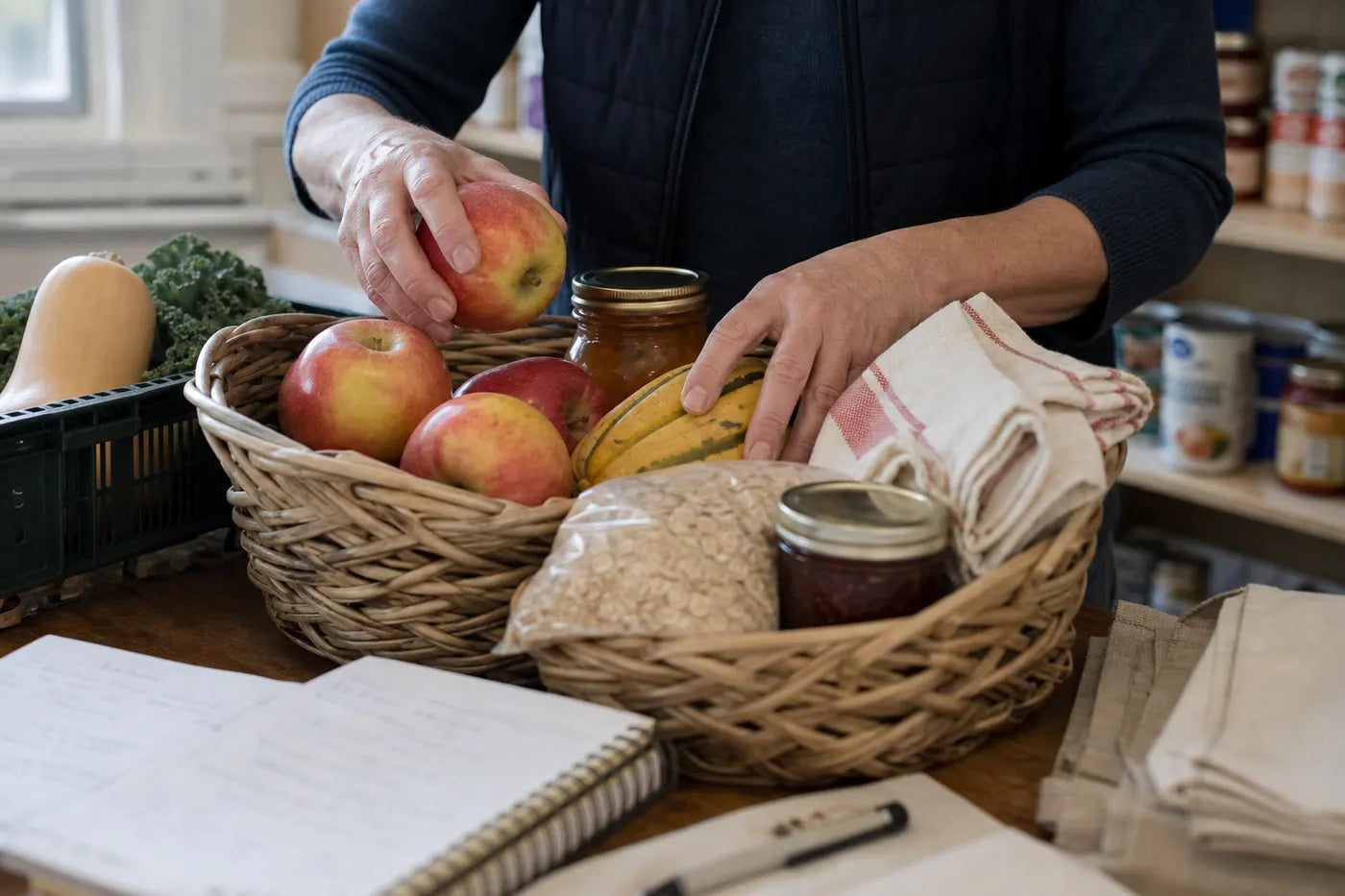
- prepare a meal connected to your family or local harvest;
- remember the dead without claiming that every ancestor shared your present religion;
- review household needs for the coming winter;
- use a candle or lantern safely instead of an uncontrolled fire;
- label a personal ritual as modern rather than presenting it as an exact ancient reconstruction.
Continue exploring Samhain
- Samhain: history, meaning, symbols and modern practice
- Was Samhain the Celtic New Year?
- Jack-o’-lanterns and the history of carved turnips
- Samhain feasting and offerings
Sources and further reading
- National Museum of Ireland — Traditions and customs of Halloween/Samhain
- National Museum of Ireland — Ghost turnip
- dúchas.ie — The Schools’ Collection: Halloween customs
Last reviewed: July 27, 2026. Historical evidence, later folklore and contemporary Pagan practice are identified separately throughout this guide.