



Reviewed and updated Aug 14, 2026
Samhain stands at the hinge of the year. In the Gaelic calendar it opens winter; in story it is a favored time for assemblies, otherworldly encounters, and events that change the course of a life. For many modern Pagans it is also the spiritual New Year: a night to complete what has ripened, remember the dead, and carry chosen seeds into the dark.
At a glance
- Seasonal place: the beginning of winter in the Gaelic year
- Threshold time: celebration begins on the preceding evening
- Spiritual themes: ancestors, endings, divination, protection, and preparation
- Modern meaning: the end of one ritual year and the quiet birth of another
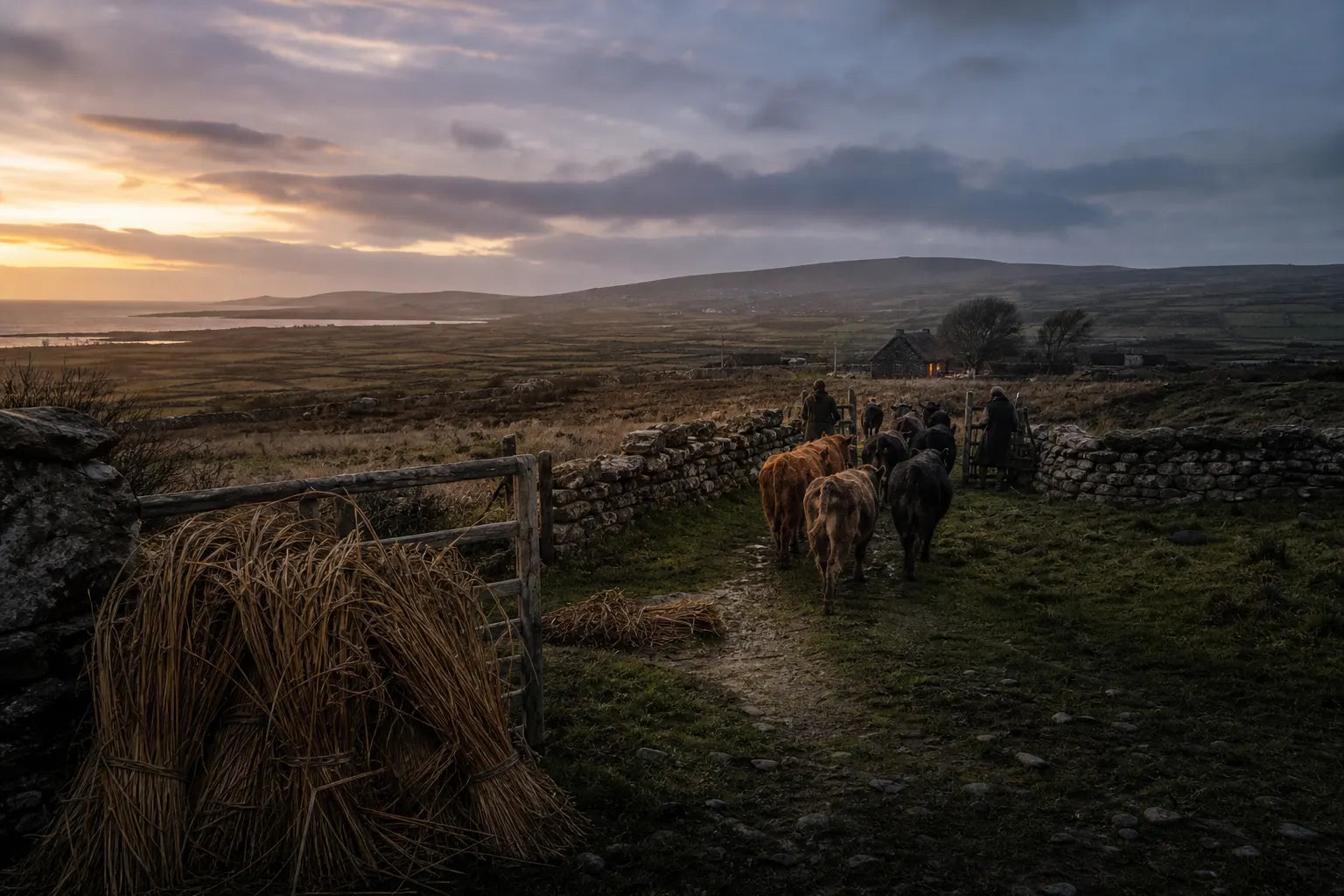
The year turns toward darkness
Agricultural time gives Samhain its gravity. Livestock were brought in, stores assessed, obligations settled, and households prepared for cold and difficult travel. Darkness was not an empty interval but the season in which survival depended on what had been gathered and how well a community held together. Calling Samhain a New Year recognizes this deep beginning: the next cycle starts in storage, silence, and unseen preparation.
A threshold in Irish story
Medieval Irish tales repeatedly choose Samhain for feasts, royal gatherings, battles, transformations, and openings into the Otherworld. At a threshold, ordinary boundaries become permeable and an encounter can redirect destiny. These stories give modern ritual a rich pattern: gather, listen, receive the unexpected, then cross into winter with greater awareness.
Ancestors and the household fire
The returning dead are welcomed through food, flame, memory, and an open place at the table. This is not only mourning. An ancestor altar can hold gratitude, unresolved questions, inherited skills, and the names of beloved dead who are not related by blood. A candle becomes the household fire seen from beyond the threshold, a sign that memory still has a home.
A Samhain New Year rite
Clean the threshold and set a table with seasonal food, water, and photographs or names of the dead. Write two lists: what is complete and what must be carried. Burn or tear the first safely; fold the second beneath a bowl of seeds. Share a silent portion of the meal, then use cards, runes, flame, or dreams to ask what the dark season will teach. Before closing, make one practical winter preparation. The spiritual year becomes real when vision is joined to care.
Practice with care
Adapt the rite to your body, home, climate, and community. Use contained flames, avoid releasing objects that may harm water or wildlife, identify plants before handling them, and never let fasting or ritual drinking override health or consent. A living tradition grows through attention, not through danger.
Books, history, and practitioner voices
- National Museum of Ireland - Halloween and Samhain traditions
- Ronald Hutton, The Stations of the Sun
- r/paganism: Samhain practice and meaning
Last reviewed: August 14, 2026. Historical sources, books, folklore, and contemporary practitioner experience are brought together here as parts of a living ritual conversation.
