


Reviewed and updated Aug 14, 2026
The Panathenaia gathered Athens into motion. A woven peplos traveled in procession toward Athena, musicians and athletes competed, animals were offered, and the city ate together beneath the protection of its goddess. Every part of the festival spoke Athena’s language: disciplined skill offered in public for the good of the community.
At a glance
- Season: Hekatombaion, in summer
- Deity: Athena Polias, guardian of the city
- Core actions: procession, presentation of the peplos, sacrifice, feast, and contests
- Greater Panathenaia: expanded games held every four years
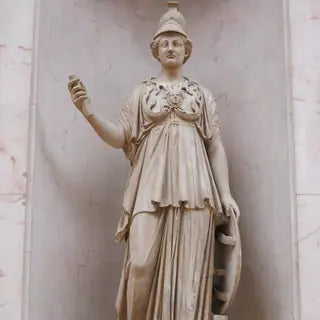
The peplos woven for Athena
Selected young women and skilled weavers prepared a new robe for Athena, traditionally decorated with scenes of the gods’ victory over the Giants. The cloth joined domestic craft with civic theology. When carried in the great procession, hours of quiet labor became a visible gift from the whole city. Weaving was not secondary to the spectacle; it was one of the festival’s central sacred arts.
A city walking toward its goddess
The procession moved through Athens to the Acropolis with officials, elders, young people, resident foreigners, musicians, sacrificial animals, and offerings. The Parthenon frieze is often read in relation to this civic movement. The route turned streets into ritual space and showed the city not as an abstraction but as people, animals, objects, and music traveling together.
Games of body, mind, and beauty
Athletic, equestrian, musical, poetic, and military contests honored Athena through excellence. Victors in athletic events received amphorae filled with Athenian olive oil, marked with the goddess’s image. Competition here was offering: trained ability was displayed before the deity and community, and achievement returned home carrying both material prize and sacred prestige.
A modern offering of skill
Choose one craft, study, or physical discipline associated with the qualities you honor in Athena. Practice it for a set period and offer the finished work or achievement-not merely the intention. Weave a small band, repair a useful object, write a hymn, solve a difficult problem, or organize a neighborhood service. Place olive oil, bread, and water on the altar, read a hymn to Athena, and dedicate the skill to wise protection of your community.
Practice with care
Adapt the rite to your body, home, climate, and community. Use contained flames, avoid releasing objects that may harm water or wildlife, identify plants before handling them, and never let fasting or ritual drinking override health or consent. A living tradition grows through attention, not through danger.
Books, history, and practitioner voices
Last reviewed: August 14, 2026. Historical sources, books, folklore, and contemporary practitioner experience are brought together here as parts of a living ritual conversation.