

Litha is the common modern Pagan name for the summer-solstice festival. Its rituals and correspondence lists are mostly contemporary syntheses, while the solstice itself and many regional midsummer customs are historically grounded.
Explore the interactive Wheel of the Year or visit the wider Pagan Festivals & Sacred Calendar.
A Litha altar
Use a solar marker, a bowl of local seasonal plants, water, and one object representing work at its fullest point. Avoid collecting protected plants or leaving offerings outdoors.
Colors and flowers
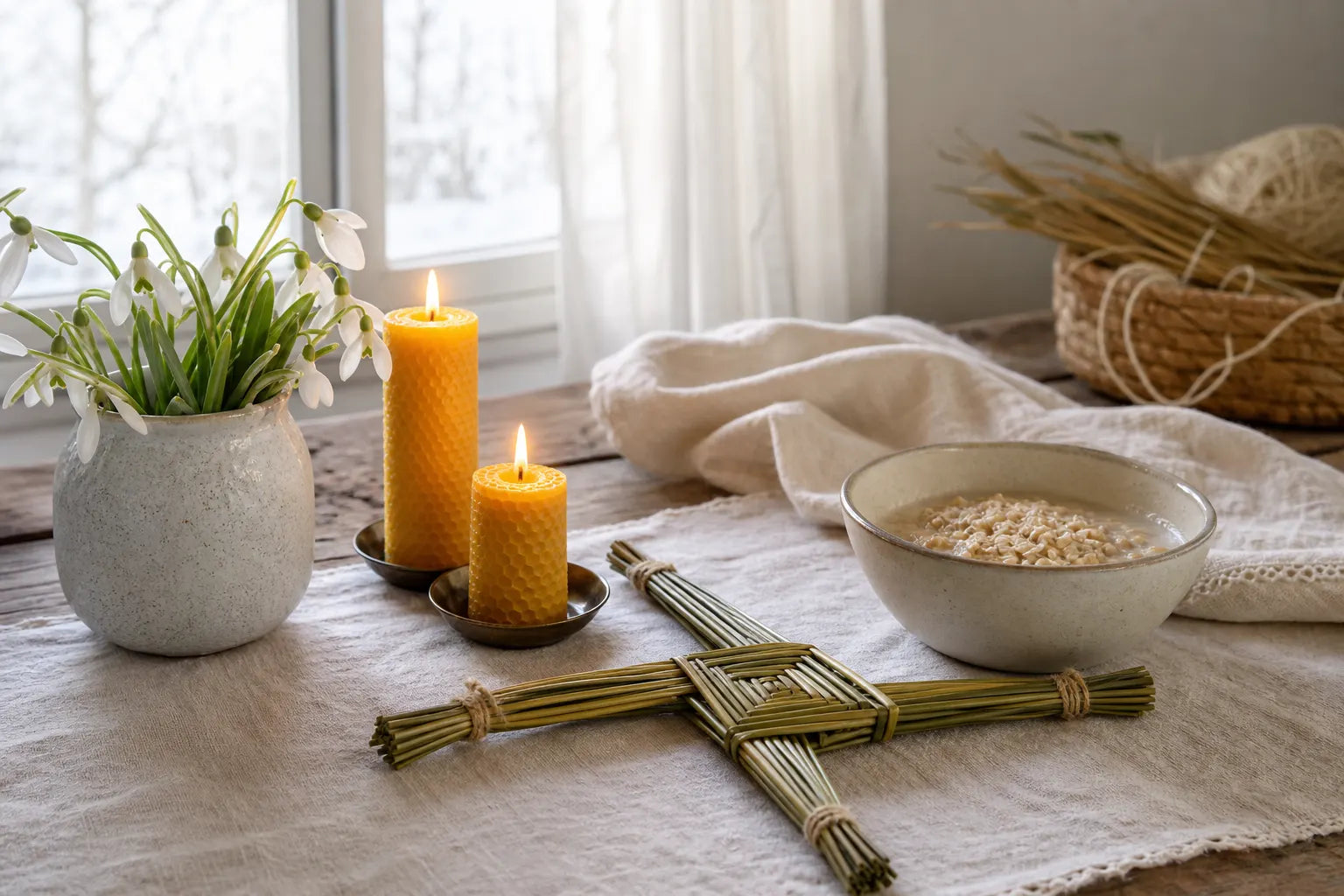
Gold, yellow, green, red, and white are common modern choices. Choose locally abundant flowers instead of claiming one universal ancient list.
Ritual ideas
- Observe sunrise or sunset without looking directly at the Sun.
- Name what has reached fullness and what now needs maintenance.
- Share food or support a community garden.
- Use a lamp or enclosed candle where fire is permitted.
Midsummer customs and cultural context
Bonfires, water customs, garlands, herbs, and communal celebrations belong to different regional traditions. Identify their place and source rather than blending them into a fictional universal ceremony.
Evidence and modern practice
Historical evidence, later folklore, reconstruction, and personal practice are labelled separately. Adapt observance to local ecology, law, fire safety, access needs, and cultural context.
Frequently asked questions
What colors are associated with Litha?
Gold, yellow, green, red, and white are popular modern Pagan associations, not one universal ancient code.
What flowers belong on a Litha altar?
Use legal, non-toxic, locally abundant summer flowers and identify regional traditions accurately.
Is Litha an ancient name?
Litha appears in Bede as a name for summer months; its use for the modern solstice sabbat developed much later.
Sources and further reading
Last reviewed: August 1, 2026.