

A modern Lughnasadh or Lammas observance can combine gratitude for the opening harvest with skill, community gathering, bread, games, and support for food producers-while keeping the Gaelic and English traditions distinct.
Explore the interactive Wheel of the Year or visit the wider Pagan Festivals & Sacred Calendar.
Lughnasadh and Lammas are not identical
Lughnasadh is a Gaelic festival associated with Lugh, Tailtiu, assemblies, games, trade, and seasonal gathering. Lammas comes from Old English “loaf mass” and has a Christian first-fruits context.
Five grounded practices
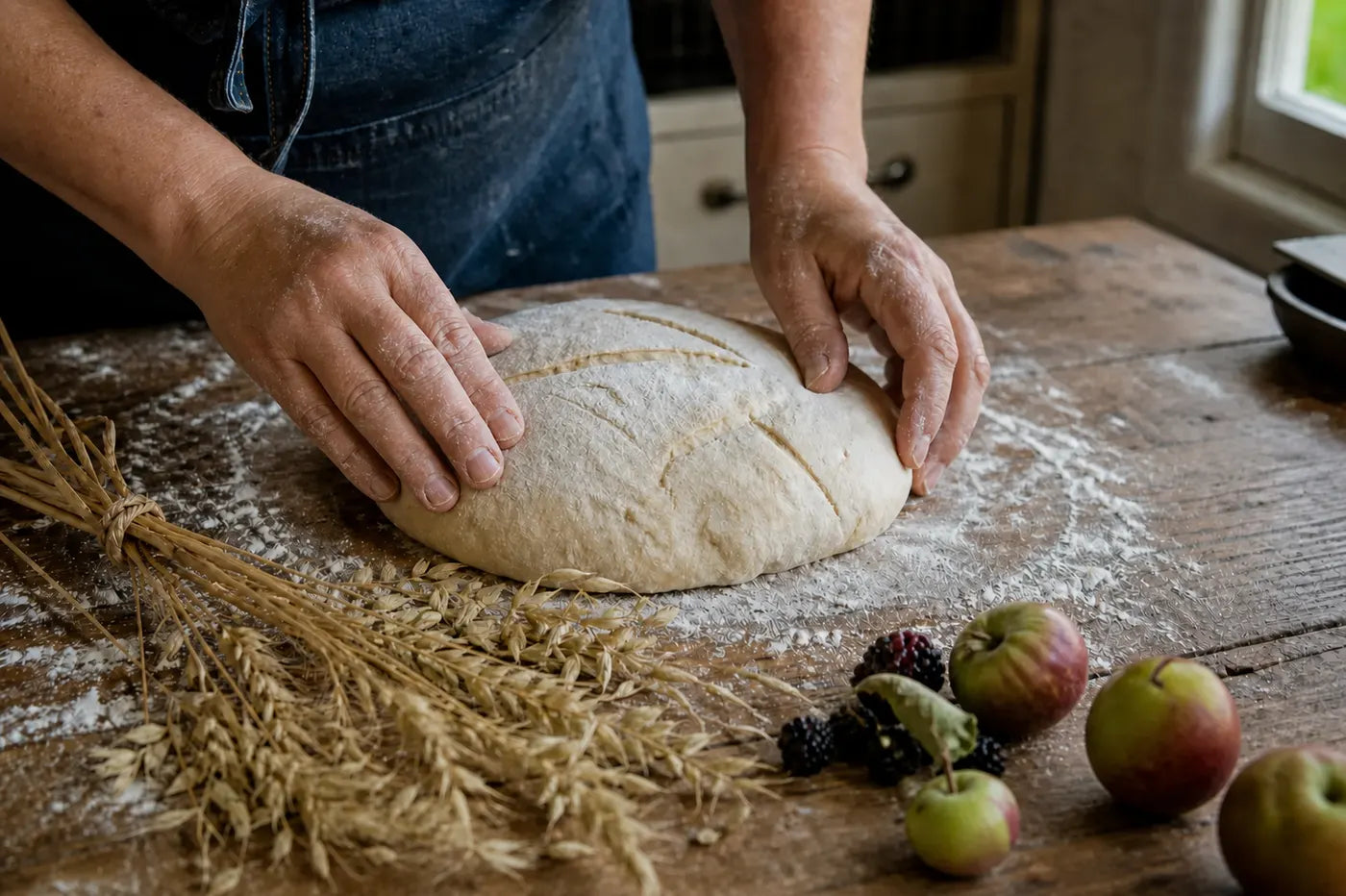
- Bake or share bread and name its material sources.
- Learn or demonstrate a useful skill.
- Visit a market and support a local producer.
- Hold a consensual game, walk, or community gathering.
- Donate food or time instead of leaving wasteful outdoor offerings.
An altar or table
Use grain, bread, a crafted object, a record of completed work, and a plan for the remaining harvest season. Keep symbolic food edible and share it afterward.
Avoiding false history
Do not call every bread ritual ancient Celtic practice. Label blended and personal elements honestly.
Evidence and modern practice
Historical evidence, later folklore, reconstruction, and personal practice are labelled separately. Adapt observance to local ecology, law, fire safety, access needs, and cultural context.
Frequently asked questions
What date is Lughnasadh?
It is commonly observed around August 1 in the Northern Hemisphere; dates and local practice vary.
Is Lughnasadh the same as Lammas?
They share an early-harvest position in modern calendars but have different linguistic and historical backgrounds.
Who is Lugh?
Lugh is an important Irish deity associated with skill, sovereignty, conflict, and mastery, not simply a grain god.
Sources and further reading
Last reviewed: August 1, 2026.