

Modern Ostara practice centers the spring equinox, emerging life, balance, planning, and renewal. Most fixed lists of colors, crystals, flowers, eggs, and hares are contemporary correspondences rather than a documented ancient ritual system.
Explore the interactive Wheel of the Year or visit the wider Pagan Festivals & Sacred Calendar.
Start with the equinox
The equinox is an astronomical threshold when the Sun crosses the celestial equator. Day and night are approximately, not perfectly, equal.
Build a local altar
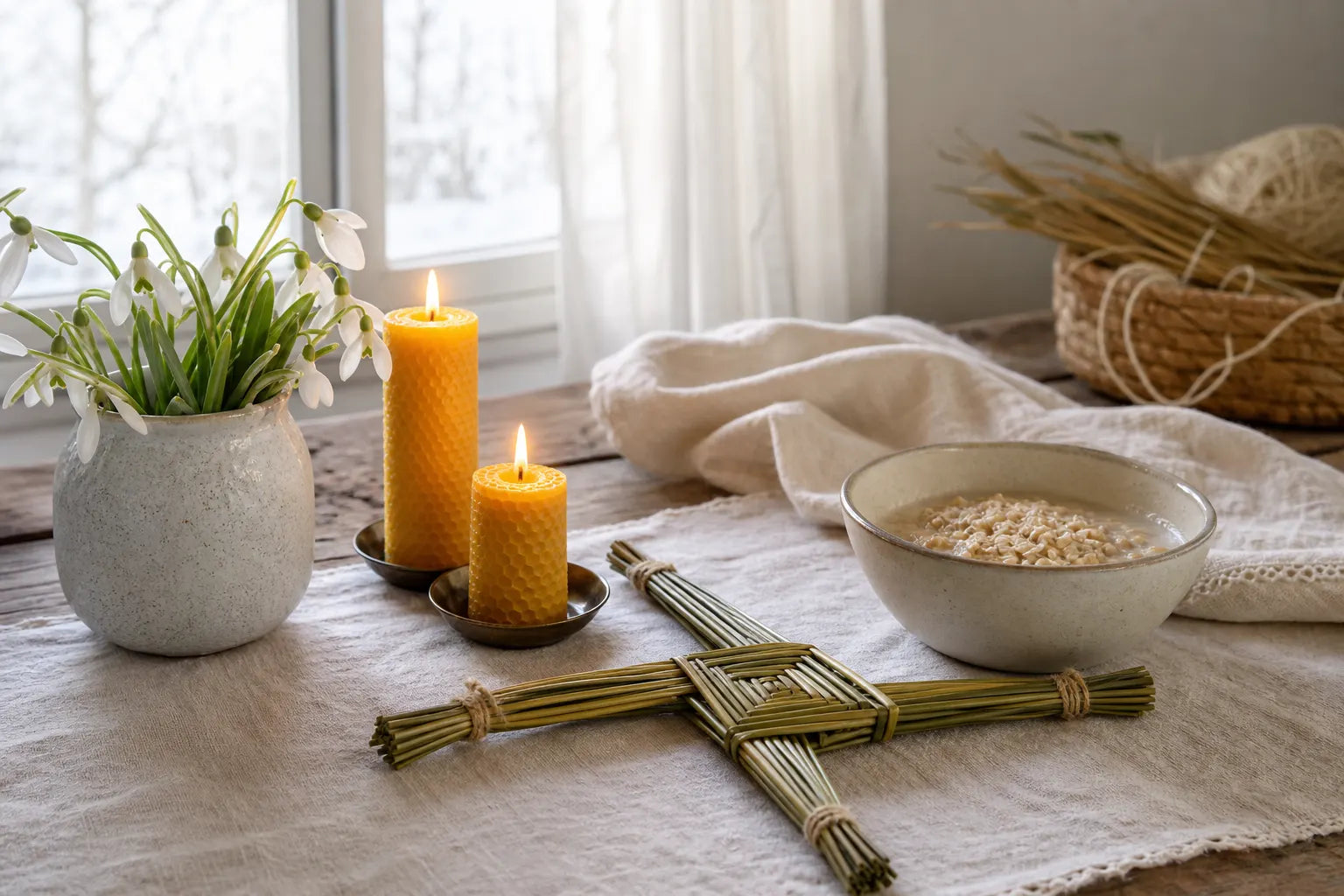
Use a sunrise observation, a seed or branch from a legal source, water, and a written plan for the growing season. Your actual ecology is more meaningful than an imported seasonal checklist.
Colors, flowers, eggs, and hares
Green, yellow, white, and pastel colors are common modern choices. Eggs and hares are broad spring and later Easter symbols; they are not established by Bede as attributes of Eostre.
Ritual ideas
- Clean and repair one practical area.
- Plant an appropriate local seed.
- Track sunrise and sunset for a week.
- Support habitat restoration or pollinator care.
Evidence and modern practice
Historical evidence, later folklore, reconstruction, and personal practice are labelled separately. Adapt observance to local ecology, law, fire safety, access needs, and cultural context.
Frequently asked questions
Who was Eostre?
Bede briefly names Eostre as a goddess associated with an Old English month; he does not describe her symbols or ritual.
What goes on an Ostara altar?
Use locally meaningful signs of spring, a solar or balance marker, seeds, water, and a practical seasonal intention.
Are eggs and rabbits ancient Ostara symbols?
They are widespread modern spring symbols, but direct claims about an ancient Eostre cult are not supported by Bede’s brief account.
Sources and further reading
Last reviewed: August 1, 2026.