


Reviewed and updated Jul 27, 2026
Aphrodite and Venus became closely identified, but they did not begin as interchangeable copies. Roman Venus had her own cult history and civic roles before and during the adoption of Greek mythology.
This guide belongs to the Aphrodite pillar. You can also select Aphrodite in the interactive Atlas of Deities to view documented relationships.
Quick answer
A clear comparison of Aphrodite and Venus that explains historical identification without flattening Greek and Roman religion.
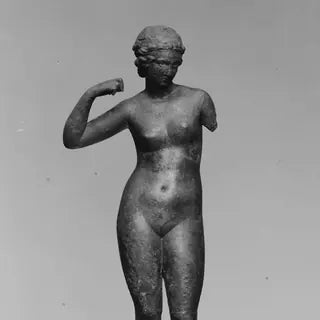
Greek Aphrodite
Aphrodite’s Greek cults addressed desire, sexuality, marriage, civic life, and maritime power through local titles and sanctuaries.
Roman Venus
Venus developed powerful Roman associations with gardens, victory, ancestry, and the political claims of families including the Julian line.
Why the myths overlap
Roman authors and artists translated Greek stories into Roman religious and cultural frameworks. Shared myths therefore reveal reception as well as equivalence.
How to label images and practice
Use Aphrodite for specifically Greek contexts and Venus for Roman ones. Modern devotion may connect them, but should state which source tradition it follows.
Ancient evidence and modern interpretation
Modern spiritual, psychological, and artistic readings can be meaningful. They are labelled separately here so that contemporary practice does not become a fabricated ancient quotation or universal historical rule.
Frequently asked questions
Are Aphrodite and Venus the same goddess?
They were identified in antiquity and share extensive mythology, yet their Greek and Roman cult histories remain distinct.
Did Venus come from Aphrodite?
Greek Aphrodite strongly reshaped Roman Venus, but Venus also had earlier Italic and Roman functions.
Sources and further reading
- The Met - Capitoline Aphrodite
- The Met - Aphrodite and ancient art
- Perseus - Homeric Hymn to Aphrodite
Last reviewed: July 27, 2026.