

Reviewed and updated Jul 19, 2026
Modern popular culture usually interprets Hecate as a goddess of magic, witchcraft, crossroads, ghosts, transformation, or difficult choices. Those themes have ancient roots, but novels, games, and comics reshape them for new stories. The most useful way to understand a modern portrayal is therefore to ask two questions: which historical attributes does it use, and what has the creator invented?
Why Does Hecate Work So Well in Modern Stories?
Hecate is unusually adaptable. Ancient evidence connects her with doorways and crossroads, torches, dogs, nighttime rites, magic, and boundary-crossing. Her roles also changed across time and place: Hesiod's honoured goddess is not identical to later literary and magical portrayals, and civic Hecate at Lagina cannot be reduced to a sinister witch-goddess.
For modern creators, that complexity provides a ready vocabulary for stories about choice, hidden knowledge, mentorship, danger, and transition. A crossroads can become a branching game path. A torch can represent magical instruction. Triple-form imagery can become multiple identities or powers. Adaptation starts from recognizable attributes, then reorganizes them around the needs of a fictional world.
Hecate in Macbeth and Its Modern Afterlife
Shakespeare's Macbeth is not contemporary popular culture, but it became one of the most influential bridges between Hecate and later images of witchcraft. In the play, Hecate appears as the mistress of the witches' charms and helps arrange the illusions that draw Macbeth toward destruction. The Folger edition also notes that many scholars question whether the Hecate scene and related passages were written by Shakespeare himself.
This theatrical Hecate is a dramatic character, not a neutral account of ancient worship. Nevertheless, the combination of Hecate, witches, prophecy, cauldrons, night, and fatal overconfidence shaped a powerful reception tradition.
Jo Nesbø's 2018 novel Macbeth demonstrates that tradition being adapted again. Its Hecate is not literally a Greek goddess: she becomes a powerful drug lord who sends three women to deliver a prophecy to Inspector Macbeth. The name signals manipulation and control over the plot while the setting and character have been completely modernized.
Hecate in Rick Riordan's Percy Jackson World
Rick Riordan's books translate Greek mythology into humorous contemporary fantasy. Hecate had appeared in the wider Riordan universe before becoming central to Percy Jackson and the Olympians: Wrath of the Triple Goddess, published in 2024. In that novel, Percy, Annabeth, and Grover must look after Hecate's polecat Gale and mastiff Hecuba in her magical Manhattan home.
The portrayal combines several inherited motifs with Riordan's inventions. Magic, torches, triple form, dogs, and moments of choice echo established Hecate traditions. The New York brownstone, recommendation-letter quest, magical school jokes, and pet-sitting disaster belong to the modern fictional setting. Even the pets demonstrate adaptation: Hecuba and Gale have literary or mythic associations, but the domestic comedy surrounding them is part of Riordan's story.
This version makes Hecate formidable but accessible to younger readers. She can be threatening, funny, demanding, and capable of teaching characters how to work with the Mist. That personality should not be mistaken for a single ancient Greek view of the goddess.
Hecate in Hades II
Supergiant Games gives Hecate one of her most visible recent game interpretations in Hades II. The game places witchcraft at the centre of its combat and story and presents Hecate as Headmistress at the Crossroads and an important mentor to Melinoë. Supergiant's own FAQ describes Hecate as central to the magical tradition that inspired the game.
This is an especially clear example of mythology being converted into game design. The Crossroads becomes a recurring base between journeys. Hecate's torches become part of her visual and combat identity. Her authority over training, wards, and witchcraft supports the player's progression. The game draws on real names and attributes while constructing new relationships, dialogue, conflicts, and rules for its Underworld.
Hades II should therefore be read as a creative conversation with Greek myth, not as a playable reconstruction of ancient religion. Its Hecate is memorable precisely because Supergiant selected, combined, and expanded the surviving material.
Hecate in DC's Wonder Woman Comics
DC Comics uses Hecate in the 2018 Wonder Woman and Justice League Dark crossover commonly known as “The Witching Hour.” In this storyline, Hecate is tied to a dangerous source of magic and to power placed within Wonder Woman. The result is a cosmic antagonist designed for a superhero universe.
The comic retains the recognizable link with magic and the name of the Greek goddess, but its power system, conflict, and relationship to Wonder Woman are DC continuity. This darker portrayal resembles a recurring pop-culture pattern: creators emphasize Hecate's frightening or occult aspects while leaving aside civic worship, household protection, and the more generous Hecate described by Hesiod.
Ancient Attribute or new creative interpretation?
Magic and witchcraft
These associations developed strongly in ancient literature and later antiquity, so modern magical portrayals have a historical foundation. The exact spells, schools, energy systems, and supernatural hierarchies in fiction are new creative interpretations.
Crossroads and thresholds
These are among Hecate's strongest historically documented associations. Modern stories often turn them into psychological choices, portals, alternate paths, or game hubs. Read the Hecate crossroads guide for the fuller context.
Triple form
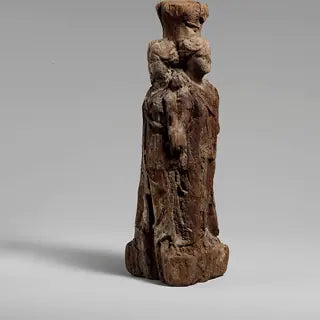
Triple-bodied and triple-faced Hecate imagery is ancient. The familiar Maiden-Mother-Crone formula is a much later interpretive framework and should not be projected backward as the universal ancient explanation. Our three forms of Hecate guide separates the two.
Triple moon and labyrinth wheel
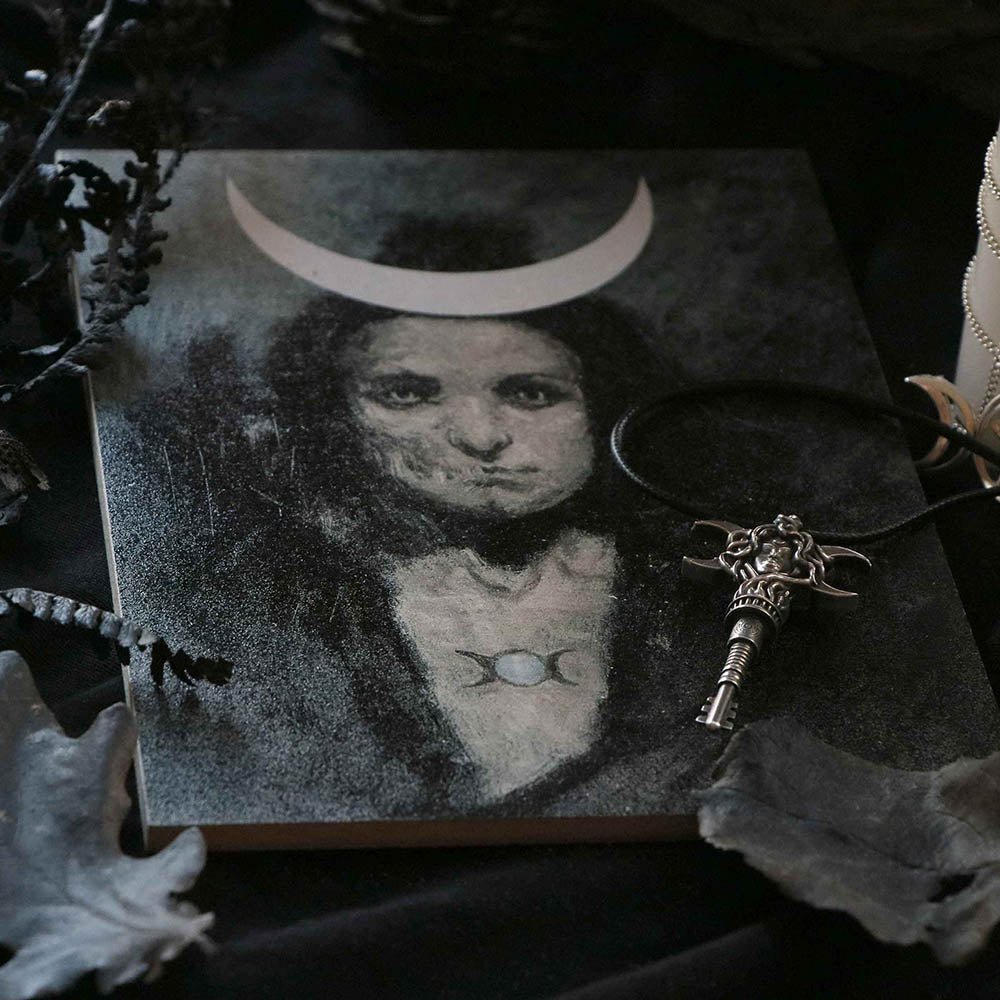
These are common in modern Pagan art, jewelry, and online imagery, but their current designs and meanings belong to the growing visual language through which modern devotees meet Hecate. The Hecate necklace guide explains historically grounded and modern motifs side by side.
From Fiction into Living Spirituality
Contemporary Hellenic polytheists, Pagans, witches, and independent devotees may honour Hecate as a religious figure rather than a fictional character. Their practices are diverse, and they cannot be summarized by a game, novel, fashion trend, or social-media aesthetic. At the same time, popular media can influence how new practitioners first encounter her.
Responsible reading keeps three layers distinct: ancient evidence, modern religious practice, and commercial entertainment. They interact, but none is a simple copy of another. Our guide to Hecate's historical and modern religious contexts explores this distinction in more detail.
How to Evaluate a New Hecate Portrayal
- Identify the medium and date. A classical text, early modern play, comic, novel, and video game answer to different audiences.
- List the attributes. Look for torches, keys, dogs, crossroads, triple form, ghosts, magic, or protection.
- Check the evidence. Determine which motifs are documented and which come from later occult or Pagan traditions.
- Notice the narrative function. Is Hecate a mentor, villain, gatekeeper, source of power, or symbol of choice?
- Avoid treating fiction as ritual instruction. Creative works may inspire research, but they are not primary evidence for ancient practice.
Frequently Asked Questions
Is Hecate in the Percy Jackson books?
Yes. She appears in the Riordan universe and has a central role in the 2024 novel Wrath of the Triple Goddess.
Is Hecate in Hades II?
Yes. Supergiant presents her as Headmistress Hecate, a major figure associated with the Crossroads, witchcraft, and Melinoë's training.
Is the Hecate in Macbeth the same as the Greek goddess?
The character uses the goddess's name and magical associations, but she belongs to an early modern dramatic portrayal of witchcraft. It is not a complete representation of ancient Hecate.
Do modern fictional symbols prove ancient worship?
No. A symbol can be meaningful in a modern story or practice without being ancient. Verify it through historical and archaeological sources before making that claim.
Continue the Hecate Knowledge Cluster
For the historical foundation behind these adaptations, return to Hecate: Goddess of Magic, Crossroads, Keys, and the Night. The Knowledge Hub connects that pillar guide with focused articles about iconography, symbols, ancient religion, modern practice, and related objects.
From the workshop