
Reviewed and updated Jul 19, 2026
A Hecate key protection ritual is a modern devotional practice that uses a key as a symbol of boundaries, access, responsibility, and safe passage. It can help you pause, name what protection means in a specific situation, and choose a practical next step. Let the ritual strengthen concrete protection: secure the home, seek medical or legal help when needed, contact emergency services in danger, and stay connected with people you trust.
Is the Hecate Key Protection Spell Ancient?
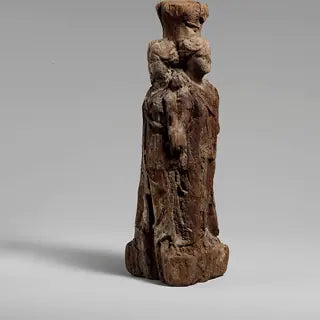
No surviving source gives us this exact candle, water, crystal, and key ritual. Hecate did have ancient associations with doorways, crossroads, transitions, and protection. At Lagina, a major sanctuary in Karia, the Procession of the Key connected her sanctuary with the city of Stratonikeia and expressed her civic role. Those facts give the key meaningful historical context, but the step-by-step practice below is a contemporary adaptation.
That distinction matters. A modern ritual can be personally valuable without being presented as a recovered Greek ceremony. For a fuller examination of the evidence, read Hecate's key meaning: history, symbolism, and modern practice.
What You Need
- A key or key pendant: use a clean household key, an old decorative key, or jewelry that is comfortable to hold.
- A light: a battery-operated candle is the safest default. A real candle is optional, not spiritually required.
- A small bowl of clean water: optional and used only as a visual symbol. Do not immerse jewelry unless its maker says the materials are water-safe.
- Paper and a pen: for one boundary and one real-world action.
- A quiet place: private enough for a few minutes of uninterrupted reflection.
Crystals, incense, special candle colours, an altar, and purchased jewelry are not required. If you choose obsidian, treat it as a modern spiritual association rather than a historically documented sacred stone of Hecate; see our Hecate and black obsidian guide.
Safety Before You Begin
If you use a real candle, place it in a stable holder on a clear, non-combustible surface, at least 12 inches (30 centimetres) from anything that can burn. Keep children, pets, loose clothing, hair, paper, herbs, and curtains away. Never leave the flame unattended, never carry a burning candle, and extinguish it before leaving the room or becoming tired. Do not let it “burn down completely.” A flameless candle gives the same visual focus without an open flame.
Keep metal, plated, glued, porous, antique, or gemstone jewelry out of water unless its care instructions explicitly allow immersion. Water may tarnish metal, weaken adhesive, damage finishes, or affect some stones. You can place the key beside the bowl instead.
A Seven-Step Hecate Key Protection Ritual
- Define the need. Write one sentence beginning, “I want to protect…” Be specific: your rest time, home routine, personal information, emotional space, or ability to make a calm decision.
- Set a boundary. Write one limit that supports that need. Examples include silencing notifications after a set time, declining unwanted contact, changing a password, locking a door, or asking someone for help.
- Mark the threshold. Place the key before you. Switch on the flameless light or safely light the candle. Take several slow breaths and notice the doorway, edge of the table, or other physical boundary near you.
- Name the symbol. Hold the key or rest your hand beside it. You may say: “Hecate of the thresholds, help me recognize what I may open, what I must close, and which road requires care.” Adapt the words to your beliefs, or use a non-theistic statement such as, “This key reminds me to choose and maintain clear boundaries.”
- Visualize and rehearse. Imagine yourself carrying out the boundary you wrote. Focus on the action rather than imagining an invulnerable supernatural shield. Protection is strengthened by preparation, awareness, and support.
- Choose one action. Write the smallest practical step you will take today. If danger is immediate, skip the ritual and contact local emergency services or move to a safer place.
- Close deliberately. Thank Hecate if that fits your practice, turn off the light, and extinguish any flame immediately. Put the key somewhere that will remind you of the action-not somewhere it creates a security risk.
A Completely Flameless Version
Place the key between two objects. Let one side represent what you welcome and the other what you refuse. Move the key toward the side that matches your chosen boundary, read your action aloud, and set a reminder to complete it. This version is suitable for dormitories, shared housing, travel, workplaces, homes with children or animals, and anyone who simply prefers not to use fire.
What Does the Key Mean in This Practice?
The key does not need to be treated as a battery that stores guaranteed protective energy. It can represent stewardship: the ability and responsibility to decide when access is given, withheld, or changed. That meaning connects naturally with Hecate's ancient threshold and transition associations while remaining honest about the ritual's modern form.
The key can also prompt questions: Which boundary is unclear? What have I left open by habit? Which path needs more information? Who can help me make this safer? This makes the ritual useful as a structured reflection even for someone who understands it symbolically rather than literally.
After the Ritual
Complete the practical action you identified. Revisit it after a day or a week and ask whether the boundary worked. Adjust it if circumstances changed. If fear, intrusive thoughts, or a sense of threat is persistent or overwhelming, seek qualified support; repeating a ritual should not replace appropriate care.
Do not leave food, glass, wax, sharp objects, or lit candles at a public crossroads. If offerings are part of your practice, choose a lawful, non-toxic, leave-no-trace option at home. Our Hecate crossroads guide explains the historical context and safer modern alternatives.
Frequently Asked Questions
Do I need a Hecate necklace?
No. Any safe key-shaped object can serve as the focus. A pendant is a personal choice, not a requirement for devotion or protection.
Must the candle be black or white?
No. Colour correspondences vary across modern traditions. Use a flameless light or whatever safe object helps you focus.
Can I dip my key necklace in water?
Only if the maker's care instructions confirm that every material is water-safe. Otherwise, keep it beside the bowl or omit the water entirely.
How often should I repeat the ritual?
Repeat it when reviewing a boundary would be useful, but prioritize the real-world action that the ritual identifies.
Continue the Hecate Knowledge Cluster
Return to Hecate: Goddess of Magic, Crossroads, Keys, and the Night for the pillar guide, then explore the canonical key article for deeper historical evidence. Related symbols and products are shown separately by the Knowledge Hub template so the educational text can remain clear.
From the workshop


1 comment
samantha
Hello,
I enjoyed this.
Hello,
I enjoyed this.