

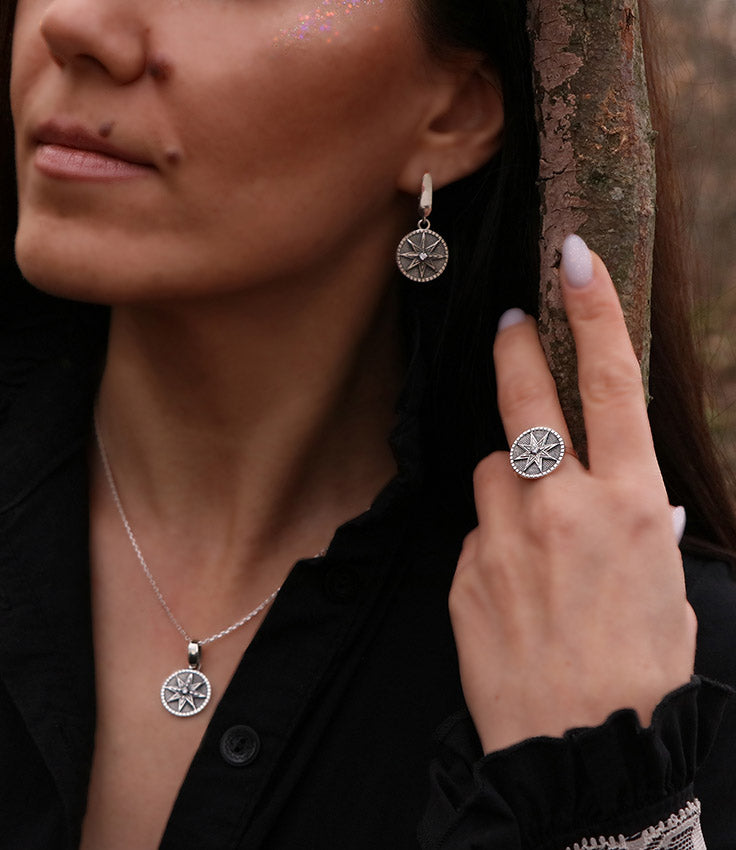

The short answer: the Twelve Days of Yule do not have one universally agreed modern Pagan calendar. Historical Yule was a Germanic midwinter observance whose timing and length varied. Today, many practitioners create a twelve-night journey around the winter solstice, Christmas period, or another locally meaningful midwinter span.
The Twelve Days of Yule at a glance
- Historical root: Germanic midwinter feasting and religious observance.
- Modern timing: often begins near the winter solstice, December 20-23, but other calendars are used.
- Not one ancient program: the popular list of one fixed activity for each of twelve days is usually modern.
- Core themes: hospitality, endurance, ancestors, household continuity, rest, light, and reciprocity.
When do the Twelve Days of Yule begin?
There is no single date used by all modern Pagans, Heathens, or reconstructionists. Three approaches are common:
- Solstice calendar: begin on the winter solstice and count twelve days or nights forward.
- Christmas-to-Epiphany calendar: December 25 to January 5 or 6, reflecting the later Christian Twelve Days of Christmas.
- Tradition-specific calendar: follow the dates used by a particular Heathen community, family, or regional custom.
A modern personal practice can choose one approach and state it honestly. The meaningful part is consistency and relationship with the actual winter season, not claiming that one internet calendar is the only ancient form.
Is Yule the same as Christmas?
No, though their histories became intertwined. Yule has roots in Germanic midwinter traditions. Christmas developed as a Christian celebration of the birth of Jesus, and regional European customs moved between religious, household, civic, and commercial settings over many centuries.
Evergreens, shared meals, fires, gift-giving, and winter hospitality can appear in several traditions without proving that every Christmas custom is directly copied from one uniform ancient Pagan festival. Our main Yule guides separate historical evidence from modern practice.
A grounded twelve-day Yule journey
The following sequence is a modern structure, not a recovered ancient ritual calendar. Adapt it to your climate, household, ability, beliefs, and local laws.
Day 1: Notice the turning point
Observe local sunrise and sunset times. Spend a few minutes outside or near a window. Mark the solstice as an astronomical threshold rather than demanding an immediate emotional transformation.
Day 2: Tend the household
Repair, clean, or organize one small area that supports winter life. Midwinter spirituality can begin with practical care for warmth, food, tools, and rest.
Day 3: Remember those who came before
Name ancestors, teachers, makers, or loved ones whose work continues to support you. An ancestor practice can include chosen family and cultural predecessors, not only idealized bloodlines.
Day 4: Practice hospitality
Share a meal, check on someone who may be isolated, or make space for a guest. Keep hospitality voluntary and within healthy personal boundaries.
Day 5: Give something useful
Choose a practical gift, donate needed supplies, or offer time and skill. Reciprocity is stronger when it responds to a real need rather than creating obligation.
Day 6: Honor the living world
Learn which animals, trees, and weather patterns define winter where you live. Feed wildlife only according to local ecological guidance and avoid removing protected plants.
Day 7: Tell a winter story
Read a primary source, regional folktale, family memory, or carefully researched myth. Ask where it comes from before turning it into a universal Yule tradition.
Day 8: Make light safely
Use a lamp, lantern, or supervised candle to reflect on endurance and returning daylight. A flameless light is fully suitable. Never leave fire unattended or place it near greenery, cloth, pets, or children.
Day 9: Review the year without judgment
Record what was completed, what changed, what was lost, and what remains unfinished. Midwinter review does not need to become a demand for constant productivity.
Day 10: Choose what to carry forward
Select one practice, relationship, skill, or responsibility worth sustaining. Write the smallest action that will keep it alive during the next month.
Day 11: Rest deliberately
Create a period without shopping, performance, or digital noise. Rest is not empty time; it is part of how households and bodies endure a difficult season.
Day 12: Close with reciprocity
Thank the people who shared the season with you. Return reusable objects to storage, compost safe natural materials, and complete one promised act of care.
Yule symbols and their meanings
- Evergreens: continuity and visible life during winter.
- Sun wheels: solar movement, cycles, and returning daylight.
- Yule log: household fire, continuity, and a modern focus for renewal.
- Stars and lamps: orientation, light, and attention during darkness.
- Shared food: hospitality, stored resources, and community.
Do I need an altar or special tools?
No. A seasonal table can hold a safe light, local evergreen fallen naturally or sourced responsibly, preserved food, family photographs, or a written intention. Purchased objects are optional. Do not bring poisonous plants indoors where children or animals can reach them.
Yule in the Southern Hemisphere
The December solstice is the summer solstice in the Southern Hemisphere. Some practitioners keep culturally inherited December Yule dates, while others move the seasonal observance to the local winter solstice in June. Either choice should be explained clearly. Local ecology and lived season are more useful than pretending the hemispheres experience the same landscape.
Sources and further reading
- Encyclopaedia Britannica - Yule festival
- Royal Museums Greenwich - Winter solstice
- Pagan Workshop - Wheel of the Year
Frequently asked questions
What are the dates of the Twelve Days of Yule?
There is no universal modern Pagan date range. Many begin at the winter solstice, while others use December 25 to January 5 or a tradition-specific midwinter calendar.
Are the Twelve Days of Yule historically ancient?
Yule has historical Germanic roots, but most fixed twelve-day schedules found online are modern reconstructions or personal devotional frameworks.
Is Yule the same as the winter solstice?
Modern Pagans often celebrate Yule at the solstice. Historical Yule was a wider midwinter observance and was not simply another name for one astronomical moment in every place and period.
Can I celebrate Yule alone?
Yes. Observation, study, a safe light, a meal, rest, household care, and contact with one trusted person can form a complete personal observance.
Do I need to celebrate all twelve days?
No. The twelve-day structure is optional. One deliberate midwinter observance can be more meaningful than completing a schedule through obligation.