
What Is the Symbol of Ishtar? Meaning of the 8-Pointed Star Explained
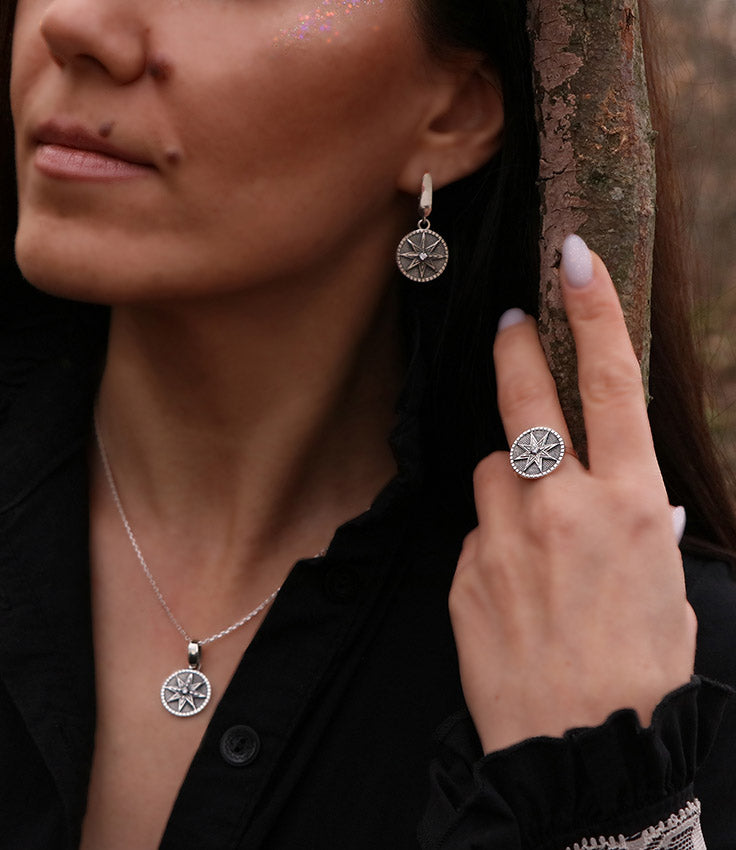
The primary symbol of Ishtar is the eight-pointed star, one of the oldest sacred symbols in ancient Mesopotamia. It is associated with the goddess Ishtar, the planet Venus, and the powerful dual forces of love and war. In many traditions, the Star of Ishtar represents divine feminine power, fertility, beauty, authority, and transformation.
- Main symbol: the eight-pointed star
- Associated with: Ishtar, Inanna, and the planet Venus
- Meaning: love, fertility, war, beauty, and sacred power
The symbol of Ishtar has fascinated people for centuries. In ancient Mesopotamia, Ishtar was one of the most important goddesses, connected with love, fertility, beauty, political power, and war. Her sacred imagery appears in temples, inscriptions, reliefs, and mythology, and among all her symbols, the most famous is the eight-pointed star.
Today, many people search for the meaning of the Ishtar symbol because they see it in historical art, jewelry, spiritual practice, or comparisons with other ancient sacred signs. Understanding this symbol means looking not only at its shape, but also at the goddess behind it and the culture that gave it meaning.
What is the symbol of Ishtar?
The best-known symbol of Ishtar is the eight-pointed star, often called the Star of Ishtar. It is one of the clearest and most widely recognized sacred signs associated with the goddess.
In ancient Mesopotamian religion, Ishtar was a major deity whose powers included love, desire, sexuality, fertility, political sovereignty, and war. The eight-pointed star became a visual sign of her divine presence and authority.
This symbol is also closely connected with Inanna, the earlier Sumerian goddess who later became identified with Ishtar in Akkadian and Babylonian tradition. Because of this, people sometimes search for the symbol of Inanna and the symbol of Ishtar as if they are separate questions, but in many contexts they refer to the same sacred star imagery.
When people ask, “What is the symbol of Ishtar?” the shortest correct answer is this:
The symbol of Ishtar is the eight-pointed star, representing the goddess and her connection to Venus, divine power, love, and war.
Meaning of the 8-pointed star
The eight-pointed star carries several layers of meaning. It is not only a decorative emblem but a sacred sign that expresses the nature of the goddess herself.
The meaning of the Ishtar star is often understood through the main qualities associated with Ishtar:
- Love and desire
- Fertility and creative force
- War and power
- Beauty and attraction
- Divine authority
- Transformation and duality
What makes Ishtar especially fascinating is that she embodies opposites. She is not only a goddess of tenderness and beauty, but also of battle and destruction. Because of that, her symbol often represents a balance of forces that seem contradictory: attraction and danger, creation and conflict, passion and sovereignty.
The eight-pointed star is therefore more than a general ancient symbol. It is a visual shorthand for the complex and powerful nature of Ishtar herself.
Why does the star have 8 points?
One of the most common questions about the Star of Ishtar is why it has eight points. The exact symbolic explanation may vary depending on historical interpretation, but the eight-pointed form is strongly associated with Ishtar’s sacred identity and cosmic role.
In ancient religious art, the eight-pointed star became a formal emblem linked to the goddess. The number of points helped distinguish this symbol from other star forms and reinforced its religious meaning.
Spiritually, many modern readers interpret the eight points as expressing the many aspects of Ishtar’s power. These interpretations are not always direct historical formulas, but they help explain why the symbol still feels meaningful today. The points may be seen as reflecting:
- love
- fertility
- beauty
- war
- sovereignty
- sexual power
- cosmic influence
- transformation
Even when exact ancient explanations are not spelled out in a single simple formula, the eight-pointed shape clearly functions as a sacred sign of the goddess and her far-reaching influence.
Connection to Venus
The Star of Ishtar is closely connected with the planet Venus. This is one of the most important keys to understanding the symbol.
In ancient Mesopotamia, Ishtar was associated with Venus as both the morning star and the evening star. Because Venus appears in the sky in striking and cyclical ways, it became linked with divine beauty, radiance, desire, and celestial power.
This connection helps explain why the symbol of Ishtar is not only religious but also cosmic. The star does not simply mark a goddess in myth; it also reflects a visible celestial body whose patterns influenced ritual, symbolism, and sacred imagination.
The relationship between Ishtar and Venus also deepens the meaning of the eight-pointed star. It becomes a symbol of:
- celestial beauty
- repeating cycles
- the union of heaven and earthly life
- divine feminine power expressed through the sky
That is why many people today understand the Ishtar symbol not only as a mythological sign, but also as a sacred emblem of cosmic rhythm and feminine force.
Other symbols of Ishtar
Although the eight-pointed star is the most famous symbol of Ishtar, it is not the only one. Other sacred images are also associated with her and help broaden our understanding of her mythology.
Rosette
The rosette is often linked to Ishtar and appears in Mesopotamian decorative and sacred art. It can symbolize beauty, femininity, life force, and divine radiance. In some contexts, the rosette works almost like a softer visual parallel to the star.
Lion
The lion is another major symbol connected with Ishtar. It reflects her power, royal strength, ferocity, and authority. While the star points more toward her celestial and divine identity, the lion expresses her strength and command.
Weapons and regal imagery
Because Ishtar is also a goddess of war, some visual traditions associate her with weapons, armed power, or royal symbolism. These images reinforce the fact that she is not only a goddess of love, but also a force of conquest and sovereignty.
Together, these symbols create a fuller portrait of Ishtar:
- Eight-pointed star — celestial power, Venus, sacred identity
- Rosette — beauty, life force, divine femininity
- Lion — strength, sovereignty, fearlessness
Ishtar vs Inanna
People often ask whether Ishtar and Inanna are the same goddess. In many practical discussions, the answer is yes — but with historical nuance.
Inanna is the earlier Sumerian goddess, while Ishtar is her Akkadian, Assyrian, and Babylonian counterpart. Over time, the two became deeply identified with one another, and many of their qualities, myths, and symbols overlapped.
Because of this, the eight-pointed star may be discussed as the symbol of Ishtar or the symbol of Inanna. In many cases, both are valid, depending on whether the source is emphasizing the Sumerian or Akkadian tradition.
- symbol of Ishtar
- symbol of Inanna
- Inanna star meaning
- Ishtar star meaning
In an article like this, it is useful to clarify that these traditions are historically connected rather than completely separate.
Symbol in modern spirituality
Today, the symbol of Ishtar continues to live far beyond the ancient world. Many people are drawn to the eight-pointed star because it represents qualities that still feel powerful and relevant: beauty, sacred feminine energy, confidence, desire, resilience, and transformation.
In modern spirituality, the Star of Ishtar may be used as a symbol of:
- feminine power
- inner sovereignty
- creative and sexual energy
- transformation through opposites
- connection with celestial cycles
It also appears in jewelry, ritual tools, tattoos, and spiritual artwork. For some people, it is a reminder of ancient mythology. For others, it is a living symbol of personal strength, attraction, and sacred identity.
This is one reason why Ishtar-inspired jewelry remains meaningful today. The symbol is ancient, but its emotional and spiritual language still speaks to modern life.
Frequently asked questions
The most common questions about the symbol of Ishtar are answered in the FAQ section below.
Ishtar Symbol Jewelry
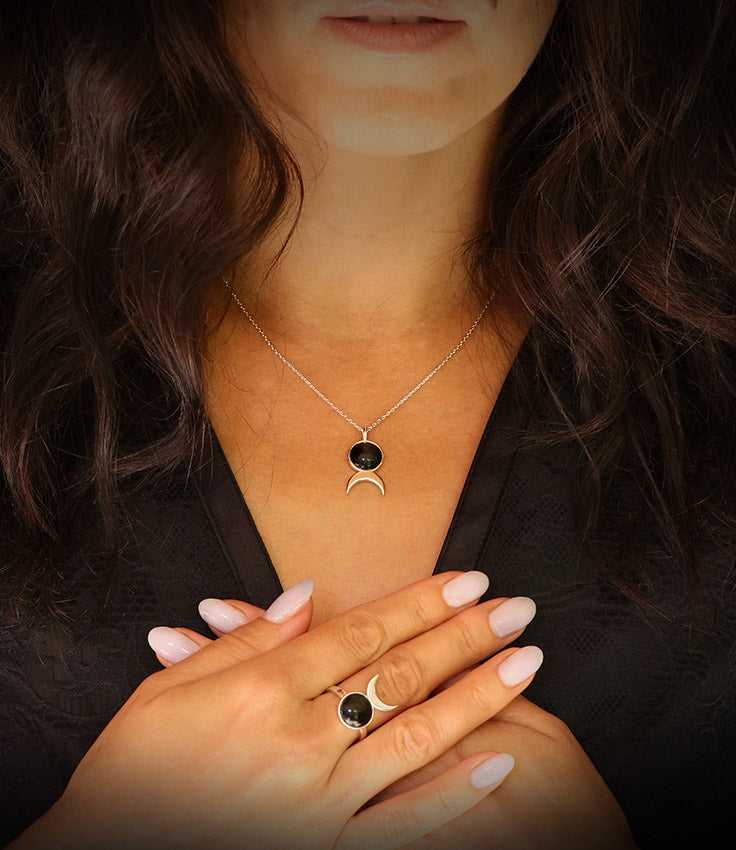
The Star of Ishtar has remained meaningful for thousands of years because it combines beauty, power, and sacred symbolism in one form. Many people are drawn to it not only for its ancient history, but also for what it represents today — feminine strength, transformation, celestial energy, and spiritual identity.
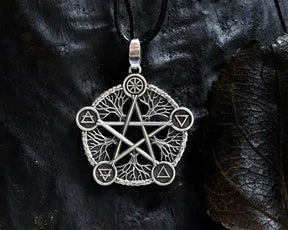
In our workshop, we create handcrafted jewelry inspired by ancient sacred symbols, including designs related to Ishtar and Mesopotamian symbolism. If you feel connected to the eight-pointed star, you can explore wearable pieces inspired by this ancient emblem and its deeper meaning.

3 comments
Milica
She appeared to me many times, so drown l traveled to London British museum. When l viewed her replica l was transfixed, in some way transformed to this day. BLESSINGS.
She appeared to me many times, so drown l traveled to London British museum. When l viewed her replica l was transfixed, in some way transformed to this day. BLESSINGS.
Gor
KatanAkuma, I’m not sure if I understand your question correctly, but if you’re asking “What are the symbols of Ereshkigal?”, here are some of my thoughts:
Ereshkigal, the goddess of the underworld in Mesopotamian mythology, is often symbolized by motifs representing death, the afterlife, and dark forces of the earth. While her specific symbols are less widely documented compared to other deities, several themes are closely associated with her:
The Lion-Headed Scepter: In some depictions, Ereshkigal is shown holding a scepter with a lion’s head, a symbol of power and rulership over the dead. The lion, often seen in Mesopotamian art, represents strength and authority, and for Ereshkigal, it emphasizes her control over the underworld.
The Owl: Owls are sometimes linked to Ereshkigal, as they are often associated with death and the night. In many ancient cultures, owls symbolized wisdom, darkness, and the mysteries of the afterlife, which align with Ereshkigal’s domain.
The Underworld and Gates: Ereshkigal’s connection to the underworld is also symbolized by gates. In the myth of Inanna’s descent, the seven gates of the underworld represent barriers to life, illustrating the inescapable nature of death. The gates and darkness often serve as metaphors for her power.
The Scorpion: In some interpretations, scorpions are linked to Ereshkigal, symbolizing her association with death, danger, and the harsh conditions of the afterlife. Scorpions also symbolize protection and the guarding of thresholds, fitting with Ereshkigal’s role as the ruler of the underworld’s entrance.
If you were asking specifically about Ereshkigal, I’m in the process of writing a short text about this mystical goddess, and it will be posted soon.
Gor
KatanAkuma, I’m not sure if I understand your question correctly, but if you’re asking “What are the symbols of Ereshkigal?”, here are some of my thoughts:
Ereshkigal, the goddess of the underworld in Mesopotamian mythology, is often symbolized by motifs representing death, the afterlife, and dark forces of the earth. While her specific symbols are less widely documented compared to other deities, several themes are closely associated with her:
The Lion-Headed Scepter: In some depictions, Ereshkigal is shown holding a scepter with a lion’s head, a symbol of power and rulership over the dead. The lion, often seen in Mesopotamian art, represents strength and authority, and for Ereshkigal, it emphasizes her control over the underworld.
The Owl: Owls are sometimes linked to Ereshkigal, as they are often associated with death and the night. In many ancient cultures, owls symbolized wisdom, darkness, and the mysteries of the afterlife, which align with Ereshkigal’s domain.
The Underworld and Gates: Ereshkigal’s connection to the underworld is also symbolized by gates. In the myth of Inanna’s descent, the seven gates of the underworld represent barriers to life, illustrating the inescapable nature of death. The gates and darkness often serve as metaphors for her power.
The Scorpion: In some interpretations, scorpions are linked to Ereshkigal, symbolizing her association with death, danger, and the harsh conditions of the afterlife. Scorpions also symbolize protection and the guarding of thresholds, fitting with Ereshkigal’s role as the ruler of the underworld’s entrance.
If you were asking specifically about Ereshkigal, I’m in the process of writing a short text about this mystical goddess, and it will be posted soon.
Gor
KatanAkuma
What of Ereshkigal?
What of Ereshkigal?